

5 Tips For Grilling The Best Burgers Possible
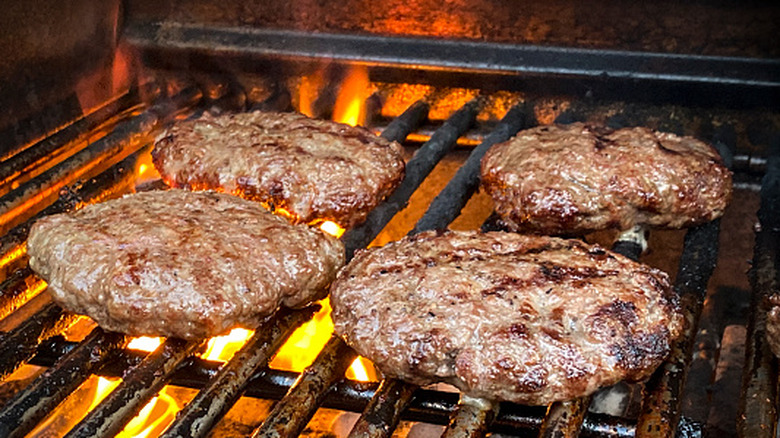
After ordering a burger for the third time this week, perhaps it is time to consider firing up the grill and making some at home. Or maybe you have made burgers before, and they were fine, but you know they could be good — great, even. You're already aware of what people do wrong when grilling hamburgers, so it's time to learn how to grill the best possible burgers at home.
Several tips cover different aspects of burger-making that will help elevate your burgers. You have to handle the meat with care, from purchasing the right kind to shaping it evenly. You have to know when exactly to season the meat for the best texture. You have to know how to control the temperature, and how to use the different areas of the grill to achieve that. And last, but certainly not least, you have to know how to construct the burger for the sturdiest build and most satisfying eating experience. Let's get into it.
Handle and shape the meat with care
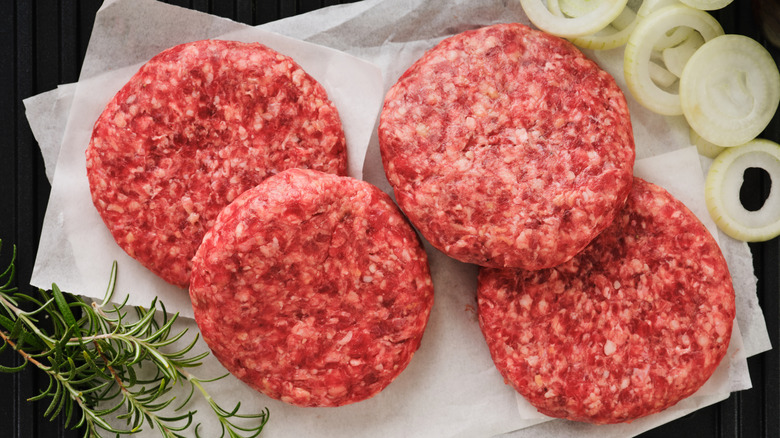
We are willing to wager that the most important part of the burger is the patty itself. You could get ready-made patties from the freezer section of the grocery store, and many brands today use high-quality ingredients. But if you really want the patty to not just shine, but also be a great cast member in your burger ensemble, then making your own patties is definitely the way to go. Skip the pre-ground meat at the chiller display, and ask the butcher behind the meat counter to grind the meat fresh. Tell them that you would like an 80/20 ratio of chuck meat to fat (or your own preferred fat percentages), and you are already halfway to a great burger.
Now that you have the ground beef, you have to shape the patties. If you are feeding a crowd, consistency is preferable so that everything cooks at the same rate, and everyone gets their fair share of meat. You can easily do that before forming the patties by dividing the meat according to weight. Take away the guesswork and use a kitchen scale to weigh out portions of ground beef at 5 to 6 ounces each (or more, if your guests are big eaters). Once the meat is divided, gently form patties about 4 inches across and ¾-inch thick, and make a little indentation in the middle of each patty. As the edges of a patty tend to cook faster than the middle, this last step helps make sure that the meat cooks evenly.
When to season the meat

Seasoning your burger patties is important: Equally important is when you season them. Folks fall into different camps for seasoning — earlier or later. Some people like to season the ground beef itself. As salt sits in raw meat, the muscle proteins leak out from the cells and make the meat more cohesive. This might be useful if you are grinding the meat yourself and have a very crumbly pile. However, if you perform this step too far in advance, your burger patties can end up being too cohesive, becoming chewy instead of tender.
But, as we said, seasoning is still important, and salt will make the fat in your patties that much more flavorful. So if you are new to the DIY burger patty game, save the experimenting on "the right time to season" for another day. We recommend grilling newbies stick with seasoning the patties right before or just as they hit the grill for the most flavor. You can also add ground black pepper to the mix, or red pepper flakes, but try not to go too wild with the flavor combinations, as you want to highlight the beefy flavors present in the freshly ground meat.
Pay attention to the temperature
Keep an eye on the temperature of the meat at all times. From purchasing the ground beef to forming the patties, you want to keep everything chilled. If you are not actively working with the meat, store it in the fridge. When the bits of fat in the ground beef begin to soften, it can leak out of the patty and you want to keep the fat in! Losing fat is not just losing flavor; it can make it difficult to properly form patties, as well as to keep your hands and surface areas as clean as possible.
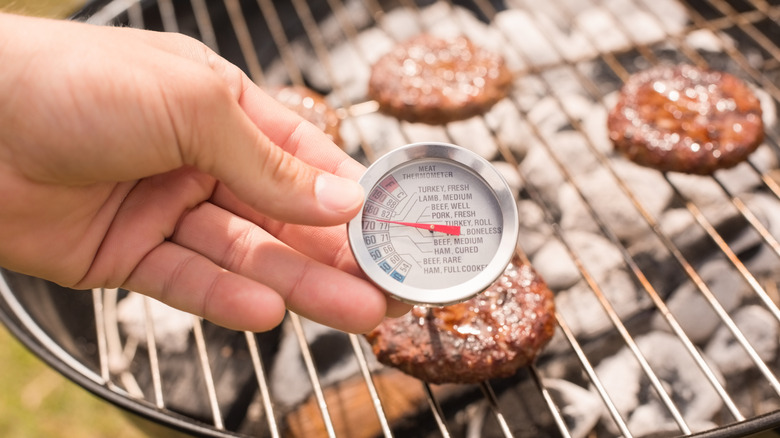
Speaking of temperature, make sure that the grill is preheated properly at the time of cooking. The ideal temperature for grilling burgers is between 375 and 400 degrees Fahrenheit (190 and 205 degrees Celsius). Place the patties on the grill and do not flip or press down. Leave them alone until they get nice grill marks (up to five minutes), then flip. Use a probe thermometer (preferably the instant-read variety) to get a reading on your burgers: 125 degrees Fahrenheit is the aim for medium-rare, and up to 165 degrees Fahrenheit for those with health concerns regarding undercooked meat. Pull the patties off the grill, and they will continue cooking with the carry-over heat.
Utilize different areas of the grill
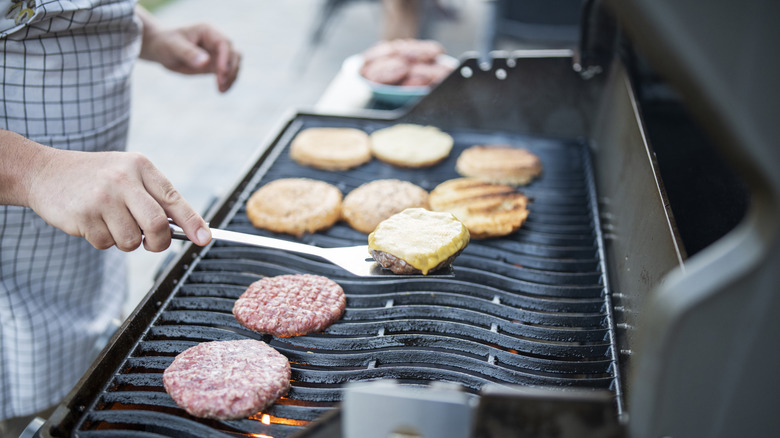
The grill needs to be set up for success. Whether you use a charcoal or a propane grill, designate two main areas: direct heat and indirect heat. This gives you the heat you need to sear the patties, while also providing a space for you to transfer the patties to if you need to quickly lower the heat. This is called a "two-zone fire," and its uses can and should stretch beyond just the patty itself.
What do we mean by that? Since you already have the fire going, you might as well grill some of your toppings too. Grilled onions and peppers are obviously delicious. How about grilled lettuce for an extra smoky flavor? Place your vegetables on the indirect heat zone, while utilizing the direct heat zone for the burger patties. If you need even more heat control, cover the grill for a minute to contain the heat and cook your ingredients evenly. If you've misplaced the grill cover to the darkest depths of your garage, use a small non-reactive bowl and place it upside down (using tongs!) over individual patties. This is also a great hack for melting cheese directly on top of the patty.
Construction matters
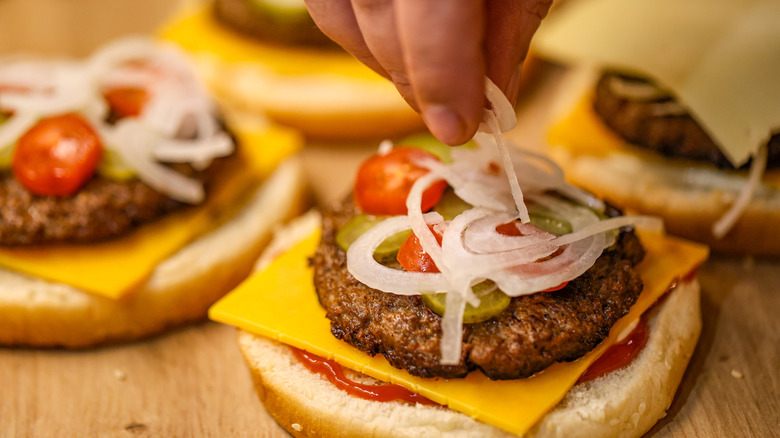
Thoughtful burger construction is the last step to burger greatness, starting with the buns. Whether you go for homemade or store-bought buns, they should be able to stand up to the thickness of your burger patties and the amount of toppings. Toast the halved burger buns lightly on the grill over indirect heat, then set them aside to wait for the patties. Next, consider the order of toppings. To prevent the bottom bun from becoming a soggy mess, judiciously swipe your preferred condiment on the bun, and place the lettuce at the bottom. This creates a practical and crunchy barrier between the rest of the toppings and the bottom bun. Tomato slices are classic, but if you want a thicker slice than Anthony Bourdain preferred, place the tomato below the patty, not above. Then comes the patty, the cheese, and all the other accoutrements, before crowning your masterpiece with the top bun.
As crucial as construction can be for your burger, pay no heed to anyone who tells you what should or should not go on a burger. Toppings are deeply personal. You want raw onions? Grilled onions? Crispy fried onions? No onions? Let the burger muses guide you. You want both ketchup and mustard? Go for it — just remember to be prudent, lest you risk making the buns too soggy. Go forth to build the burger of your dreams.