

What These Popular McDonald's Menu Items Cost In The Early 2000s Compared To 2026
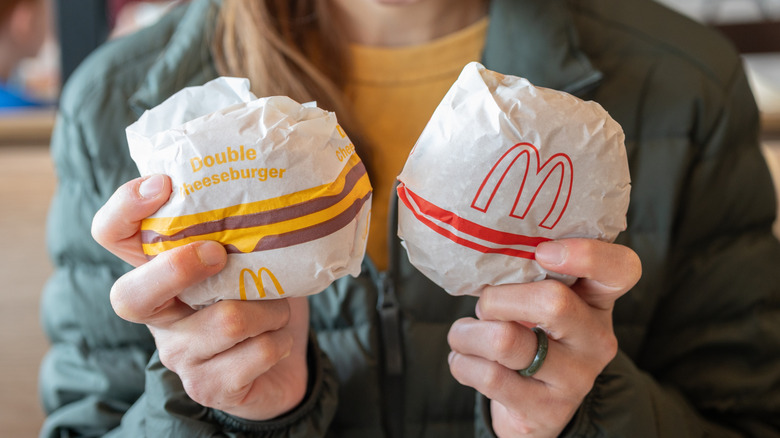
For years, McDonald's was the epitome of fast food dining. It offered what hardly any other business could: quick meals that cost significantly less than sit-down restaurants and left you feeling full and satisfied. Since its humble beginnings in the 1940s promoting 15-cent hamburgers, things have changed quite a bit.
Today's customers are less wowed by speedy food service and low prices than they were in the past. Actually, many customers find prices to be much higher than they feel justify the food service and quality, and frequently comment on the fact that they often pay what they would at a higher-end, non-fast-food joint.
McDonald's is one of the fast food chains raising pricing in 2006 and, yes, inflation has certainly played a role, but many menu items have climbed well beyond what inflation alone would suggest. From the Big Mac to fountain sodas and everything in between, here's what some of the most popular McDonald's items cost today compared to their price 20-plus years ago, in the early 2000s.
1. Big Mac
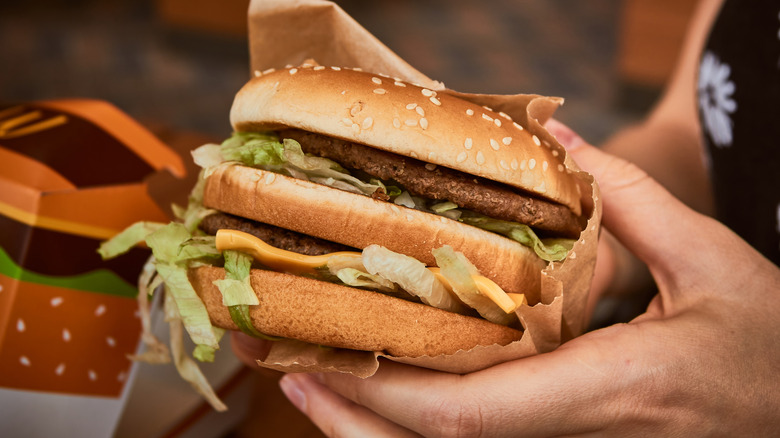
You can't have McDonald's without the Big Mac. While plenty of sandwiches have come and gone over the years, the Big Mac has remained a permanent fixture since its initial rollout in the late 1960s. It's become such a cultural icon that The Economist even created the Big Mac Index, which compares purchasing power around the world using that one sandwich as a benchmark.
Unlike many longtime fast food favorites, the Big Mac itself hasn't changed much. It's still made with two beef patties, shredded lettuce, cheese, pickles, onions, and that signature Big Mac sauce layered between three sections of sesame seed bun. It's a big sandwich, but at McDonald's, value is supposed to be the name of the game. Around the year 2000, a Big Mac cost approximately $2.24, which would be about $4.27 in today's dollars (at the time of writing), according to the U.S. Bureau of Labor Statistics. In 2026, the average price sits closer to $7, though the exact cost varies by location — it's as high as $7.99 at one Los Angeles location.
When a Big Mac meal, with fries and a drink, came to $18 at one location, fans made their unhappiness viral. According to the Wall Street Journal, McDonald's responded in August 2025 by lowering the price of some combo meals. But you'll still find a Big Mac meal for an average of about $12, which isn't too far from what an entree at a sit-down restaurant could cost you.
2. Chicken McNuggets
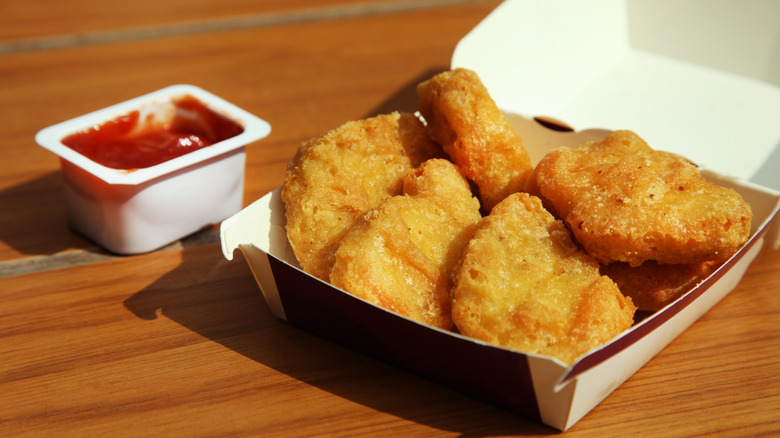
Chicken nuggets are a menu staple at almost every kind of eatery you can think of, even if they're just on the kid's menu. While McDonald's didn't invent the chicken nugget, they certainly revolutionized it, complete with a kitschy name to match: the Chicken McNugget. When they were originally rolled out in the 1980s, you could get six-, nine-, and 20-piece nuggets. Today, that lineup has expanded to four-, six-, 10-, and 20-piece options, plus a 40-piece box if you're feeding a crowd.
In 2001, a six-piece would run you $2.29, a nine-piece was $2.79, and a 20-piece cost $4.99, which comes to about 25 cents per nugget. McDonald's tweaked the recipe in 2003, then switched to antibiotic-free chicken in 2016, leaving us with the recipe we enjoy today. But today, the 20-piece costs about $10 at most U.S. locations, or roughly 50 cents per nugget — double the cost-per-nugget from two decades ago. That sounds alarming, but adjusted for inflation, that 2001 20-piece should cost about $9.52 today, so nugget prices have kept pace with inflation better than some other items on this list (via U.S. Bureau of Labor Statistics).
3. Fountain sodas
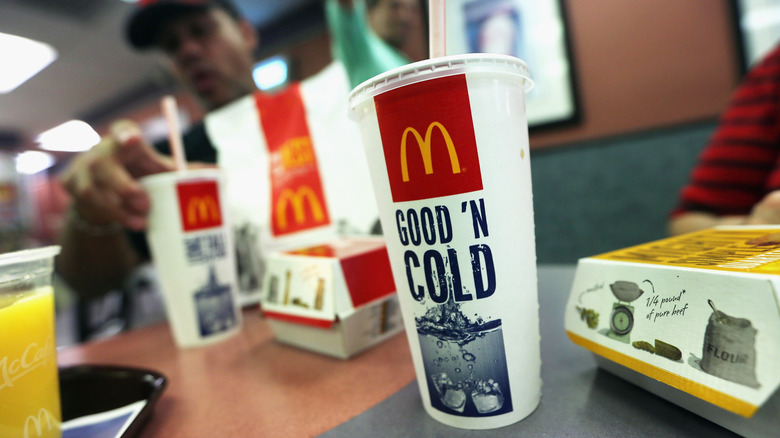
It's no secret that the margins on fountain soft drinks are sky-high. According to The Restaurant Warehouse, a $2.50 soda costs a restaurant as little as 15 cents to produce, leaving spots like McDonald's with a markup that can exceed 80%. So even when McDonald's was selling a medium soda for $1.29 back in 2001, they were already making a significant profit on every cup.
In 2001, sodas ran from $1.19 for a small and $1.49 for a large up to $1.59 for an extra large, with four size options on the menu. While there was a decent stint of McDonald's franchises selling all drinks for a flat $1 charge in subsequent years up until the early 2020s, that era seems to be over. Today at a Los Angeles location, expect to pay around $2.89 for a large Coke — almost double what a large cost in 2001, and nearly three times what it cost during the $1 drink era.
Even though some people think McDonald's Coke tastes better than other fast food chains, is a price hike that high on an already extremely high profit margin justifiable? You'd have to take it up with the Golden Arches head honchos.
4. Happy Meal
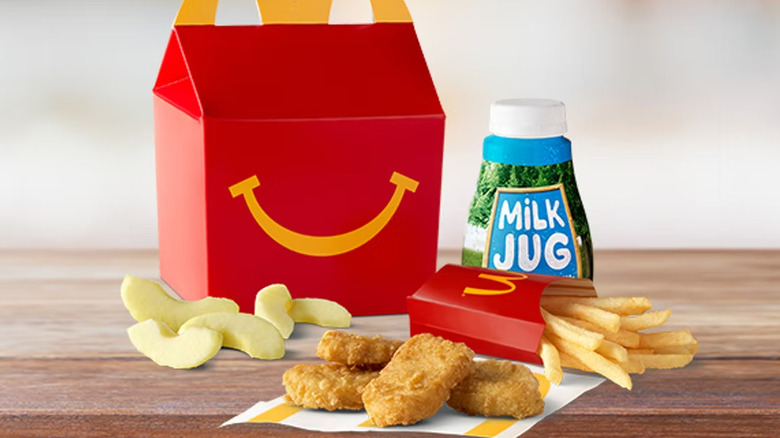
A balanced kid-sized meal that comes with a toy is a Happy Meal, indeed. A kid-sized meal at a price-point 50% higher than inflation accounts for, though? Perhaps not as joy-inducing.
Today, a McDonald's Happy Meal comes with either a hamburger or four or six chicken nuggets, plus a side of apple slices, fries, milk, and a seasonal toy. Though options have changed a bit — back in 2001, McDonald's wasn't yet offering milk or apple slices in its Happy Meals – prices have. In 2001, a Happy Meal with a hamburger would cost about $2.23 to $2.99; today, you're looking at something over $6 or $7, or even up to around $9 or more for the meal with six nuggets, depending on location.
Adjusted for inflation, that 2001 Happy Meal should cost around $4.25 today. The contents are arguably healthier than they used to be (apple slices and milk beat a soda and cookies), but whether the nutritional upgrade justifies the price increase is another conversation entirely.
5. Double Cheeseburger
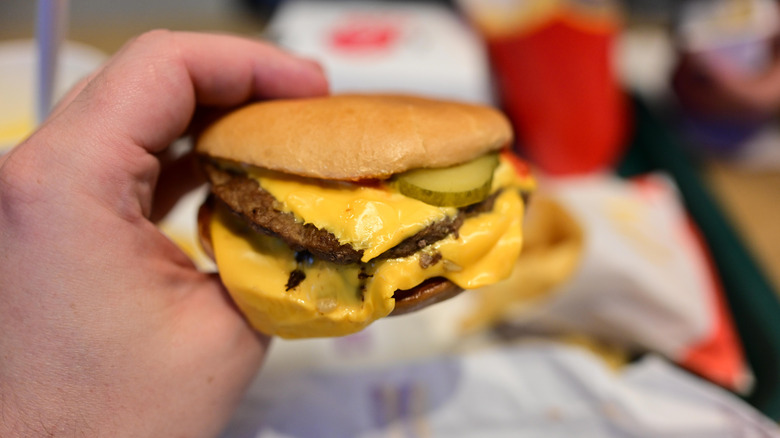
One of the most tell-tale signs of McDonald's prices legitimately increasing over the years is the stark absence of what used to be its biggest value-brag: the Dollar Menu. The truth about the McDonald's Dollar Menu is that it caused profit strains. After all, how much profit could you really make on a $1 double cheeseburger?
Yes, in 2001 (and up until 2008) McDonald's double cheeseburger used to only cost $1. That's impressive, considering it consists of two all-beef patties, ketchup, mustard, pickles, and onions. Plus the double cheeseburger, unlike McDonald's McDouble, contains not one, but two slices of American cheese. The Dollar Menu was dissolved into a Value Menu with slightly higher price points around 2013, and the double cheeseburger's price, of course, increased.
Per the U.S. Bureau of Labor Statistics, $1 in 2001 has the purchasing power of about $1.91 today. So, assuming the double cheeseburger was already underpriced in 2001, it might not surprise you that a double cheeseburger costs, on average, $4.29. But at pricier spots like a Los Angeles location, it could actually set you back more like $5 after taxes.
6. Fries
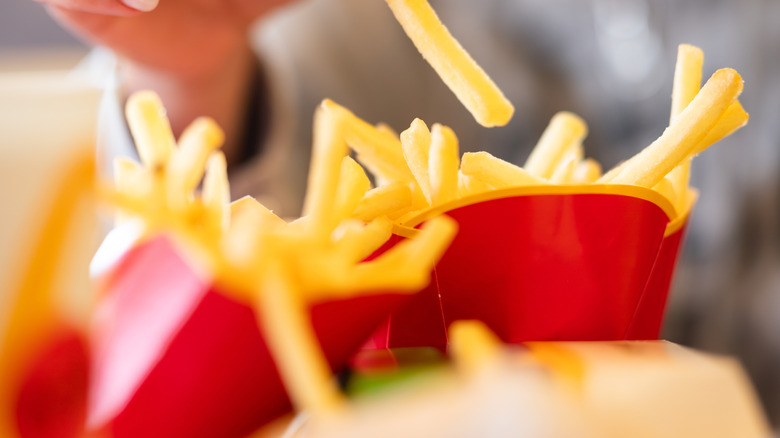
It shouldn't come as a surprise that fries are the most-ordered item at McDonald's, across the board. Even as prices steadily climb over the years, and among the many changes McDonald's fries have undergone over the years, the people just have to have that drool-inducing red fry carton.
In 2001, a small fries at one location cost 99 cents, a medium $1.39, a large $1.59, and a Supersize $1.69. Today, those same sizes cost $2.99, $4.19, and $5.39 for a large at an Illinois location — that's a whopping 239% increase on the large alone. Adjusted for inflation, the 2001 large should cost about $3.03 today, which means these fry prices have certainly outpaced inflation (via U.S. Bureau of Labor Statistics).
Of course, today, there's no Supersize option to compare to. That was discontinued in 2004, coincidentally (or not) after the release of the documentary "Super Size Me". At 7 ounces, it was the largest fry size ever offered at the chain. Today's large weighs in around 5.6 ounces — meaning you're getting close to 20% fewer fries than the Supersize for more than three times its 2001 price.
7. Milkshake
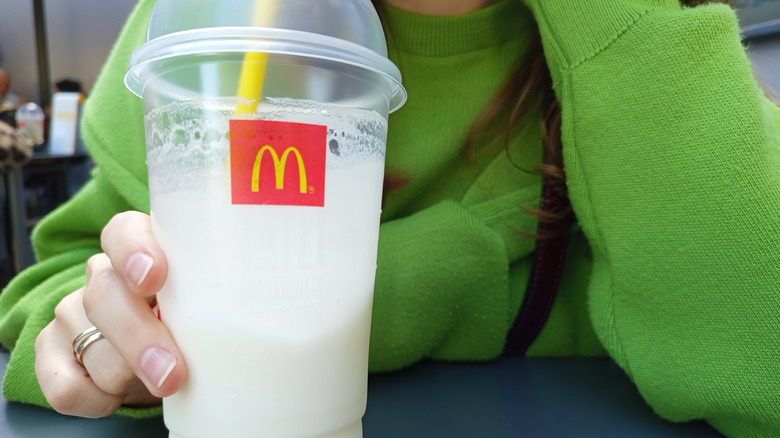
McDonald's calls its milkshakes "shakes," hold the milk. According to the company's own website, the term "milkshake" could land them in trouble in various states due to different requirements regarding the proportion of milkfat and milk solids. So, "shake" it is.
Semantics aside, these shakes have historically been a reasonably priced treat — shakes were even included on the Dollar Menu at one point in 2000. In 2001, whether you chose chocolate, vanilla, or strawberry, a small cost $1.49, a medium $1.69, and a large $1.89. Today, a small shake could you around $4.39 on average — almost triple the 2001 price — and a large can even creep past $5. Customers have also noted that the shakes themselves seem thinner than they used to be, which is not ideal when the price keeps climbing. Whatever happened to triple-thick?
Of course, the minty green Shamrock Shake deserves to be part of this conversation. Reappearing annually for over 50 years, it recently settled in the $3 to $4 range. In 2026 it came back even more expensive, pushing closer to $5 at some locations, though that didn't seem to deter fans who'd been waiting all year long for the treat. Apparently, the luck of the Irish doesn't extend to the price tag.
8. Egg McMuffin
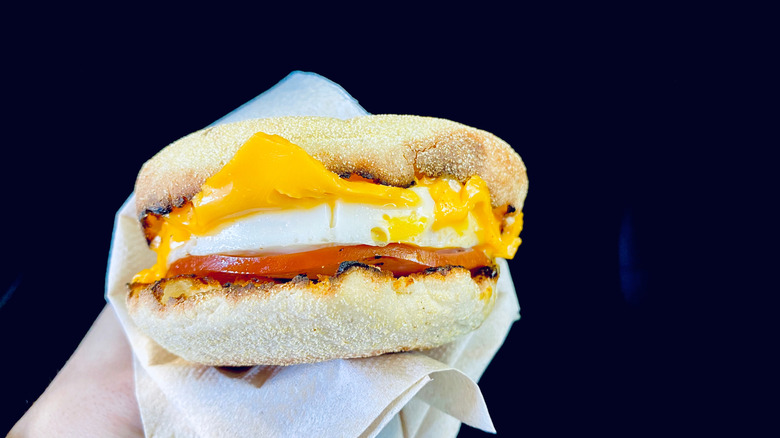
One of McDonald's most noticeable price hikes is on the breakfast menu. An early 2000s menu shows a single Egg McMuffin for as low as $1.89 in 2001, with a Value Meal (complete with the sandwich, a hash brown, and a coffee) for just a dollar more. By inflation standards, the sandwich itself should cost around $3.60, which feels reasonable for fast food, hand-held breakfasts (via U.S. Bureau of Labor Statistics). But today when you go to get a quick, cheap drive-thru breakfast and start to see numbers on the McDonald's board above $5, the value proposition starts to fall apart.
In 2026, a singular Egg McMuffin sandwich can cost around $6, or even more than $7 at locations across the country. The Egg McMuffin hasn't changed all that much since its 1972 debut: English muffin, egg, Canadian bacon, and cheese. The recipe is similar, but price is clearly a different story.
If you want something close to the old price, your best bet is the McDonald's app, which regularly features deals like a $1 Egg McMuffin or $2 breakfast sandwiches. Some customers even speculate that this is by design; McDonald's offers in-app deals, while featuring much higher prices on the regular menu as an incentive for more app downloads. Whether that's intentional or not, the Egg McMuffin is a good example of how it plays out in practice.
9. McChicken
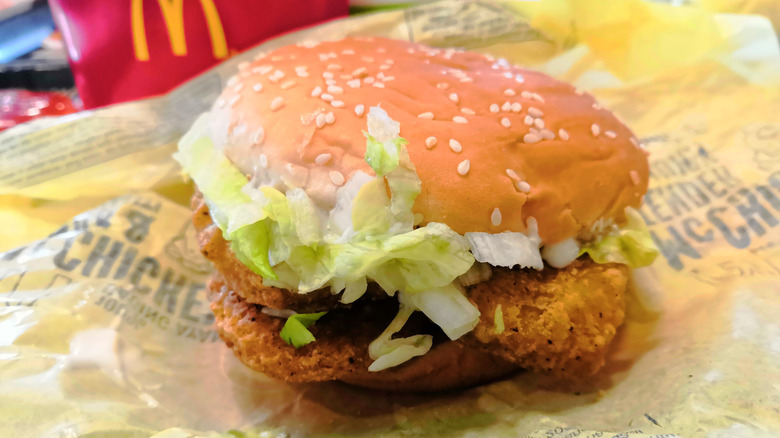
The McChicken is another widely lamented Dollar Menu casualty. For years, it was a highlight of the Dollar Menu — a full chicken sandwich for a single dollar, which felt almost too good to be true even at the time. That value started to fizzle out around 2013 when McDonald's rebranded the Dollar Menu to include prices beyond just a dollar. Like most other menu items, the price of this one has been creeping up ever since.
In 2026, a McChicken costs about $3.69 on average in the U.S., and closer to $5 in California. Adjusted for inflation, $1 in 2001 should only be about $1.91 today, meaning the McChicken has shot past inflation by a sizable margin (via U.S. Bureau of Labor Statistics). Still, McDonald's proudly touts it as part of its Value Menu, and the sandwich doesn't seem to be losing steam.
Just this year, McDonald's launched a limited-edition clear stadium-friendly bag for purchase that offers a McChicken, McDouble, and four-piece nuggets. It's clear McDonald's knows its most loyal fans love two things: a good deal and a McChicken. It's technically still one of the cheapest sandwiches on the menu, but it's far from the Dollar Menu glory days that McChicken stans are still mourning.
10. McFlurry
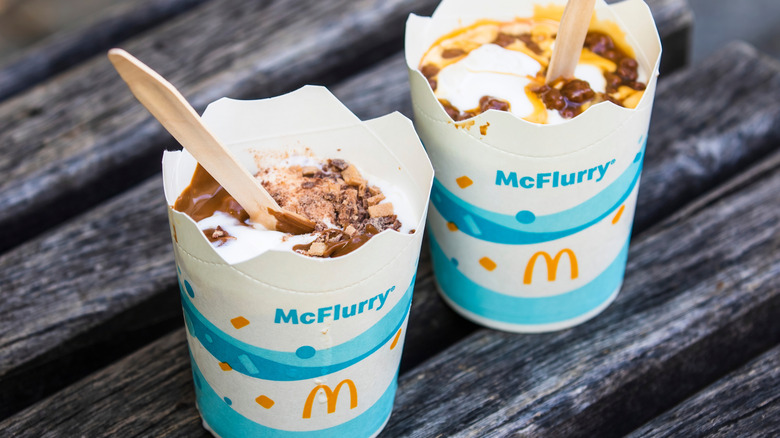
Did you know the McFlurry was originally created in Canada? After its release in Canada in 1995, the legendary McDonald's dessert was rolled out in the U.S. two years later. The original flavor options were Oreo, Nestle Crunch, Heath, Butterfinger, and Nestle Crunch. In 2001, just a few years after its release, a McFlurry would cost about $1.79 depending on location.
Today, depending on your location and flavor (now, there's a slew of seasonal and promotional flavors that come and go), you're looking at close to or even more than $6 for a regular size. The mini size, introduced in 2024, comes in at around $2.99, which is still more than what the full-size cost two decades ago. Adjusted for inflation, that 2001 McFlurry should be about $3.41 today, meaning today's price is nearly double what inflation alone would predict.
McDonald's also recently swapped out the classic plastic cup for a paper one in the name of sustainability. So you're paying more and getting an eco-upgrade you possibly didn't ask for — that is, if the ice cream machine at your McDonald's is working.
11. Apple Pie
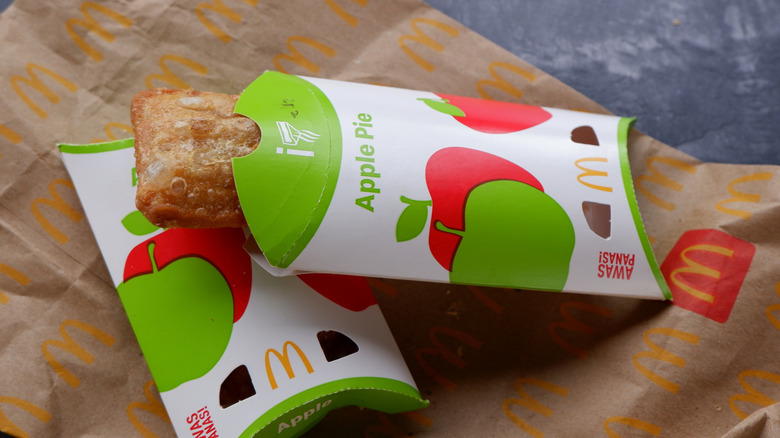
Once upon a time, you could get two McDonald's apple pies for a dollar. That wasn't even considered a deal, it was just the everyday price. In the early 2000s, the going rate at many locations was two for $1, or about 79 cents each if the deal wasn't running. The baked version that existed then was already a downgrade from the original: McDonald's switched from frying to baking apple pies in 1992. The general consensus is that the baked version's okay at best, but it's no match for that bubbled, crispy, molten-centered original.
In the summer of 2026, McDonald's did all those pie lovers a favor. To celebrate America's 250th birthday, the original fried apple pie returned for a limited time, for the first time in over 30 years, with a two-pack of the fried pies for around $5.59. While fans were thrilled that they returned, they did seem to be smaller than the original.
The regular baked pies are similar, around $1.89 or $1.99 at some locations, although some customers report single pies costing as much as $2.49. Even at $1.89, that's about 25% higher than inflation alone would account for (via U.S. Bureau of Labor Statistics). There's nothing comforting about that.
12. Filet-O-Fish
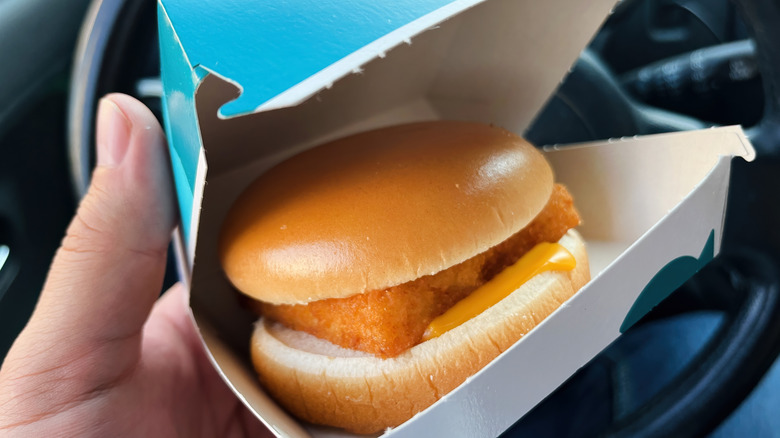
If you're one of the countless Filet-O-Fish lovers out there, you're probably relieved to know that the sandwich was originally proposed in the 1960s as a non-meat Lent option, and won the competition against a pineapple-and-cheese sandwich. We'd bet that pineapple abomination wouldn't have lasted, but more than 50 years later, the Filet-O-Fish is still selling strong. And, of course, it's costing you more.
Many McDonald's menu items have undergone changes over the years, and the Filet-O-Fish has, too. The original featured just fried fish (halibut) and tartar sauce on its bun. Today, the recipe features a steamed potato bun with crispy fried Alaskan pollock filet, tartar sauce, and exactly one half a slice of American cheese. Some customers also complain that it's smaller than it used to be.
In 2001, a Filet-O-Fish sandwich cost about $2.09, while a combo meal ran $3.64. Today, the sandwich alone costs $6.69 at an Illinois location — more than the entire meal used to cost. If you adjust for inflation per the U.S. Bureau of Labor Statistics, that 2001 combo should run about $6.94 today. When the sandwich alone costs almost the same as the full combo of sandwich, fries, and soda used to, something fishy is definitely going on.
13. Methodology
It's important to note that McDonald's prices will vary by state and by individual franchise overall. Prices from the early 2000s were pulled primarily from a photographed McDonald's drive-thru menu board from 2001, supplemented by early 2000s McDonald's commercials. For inflation comparisons, many figures were run through the U.S. Bureau of Labor Statistics inflation calculator.
Current 2026 pricing is based on a single Illinois location, which research suggests represents a reasonable national average for McDonald's pricing. Higher-end pricing from Los Angeles and New York locations is included throughout to show the full range of what customers are paying today depending on where they live. Reddit threads featuring 2026 receipt photos were also referenced to verify current real-world prices.