

Where These Popular Chain Restaurants Get Their Beef
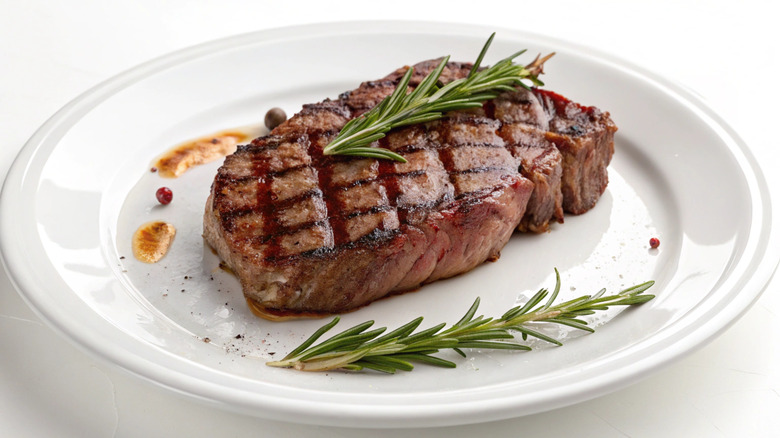
It's no secret that high-quality beef lends to a more flavorful steak or burger. When we ranked the best fast food cheeseburgers and best chain restaurant steaks, those that use quality beef typically landed near number one. But what does quality beef entail? You might think small, family-owned farms with ethically treated cows and locally sourced feed. And, yes, that is a good example of quality beef. But for huge companies like McDonald's and Longhorn Steakhouse, a single small farm isn't a realistic source for all that meat.
So where does it actually come from? The answer varies more than you'd expect. Some chains rely on massive multinational meat processors, others have cultivated long-standing relationships with specialty suppliers, and at least one has cut out the middleman entirely by processing its own beef in-house. Some chains are surprisingly transparent about their sourcing, while others guard that information closely. From fast food giants to sit-down steakhouses, here's where some of the most popular restaurant chains actually get their beef.
Culver's
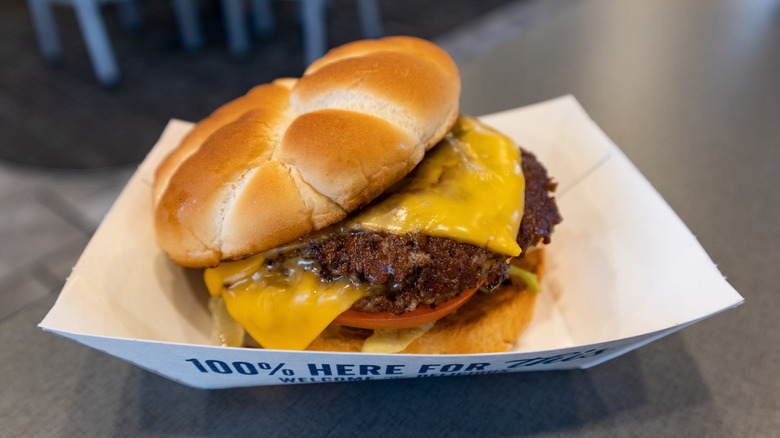
It's hard to skip a burger from Culver's. The famous ButterBurgers are delicious not because they're fried in butter (the butter comes into play on the bun), but because the chain uses a highly selective choice of beef that's never frozen, and always grilled to order. Culver's proudly uses a blend of sirloin, chuck, and plate beef in each burger, and the chain isn't shy about how much it values its beef partners.
True to its Midwestern roots, Culver's proudly sources beef from America's family farms and emphasizes long-term relationships with suppliers committed to humane cattle-raising practices. While many fast food giants focus their messaging on the finished product, Culver's has spent years highlighting the farmers and suppliers behind its ButterBurgers. A bottom line is important for any business, but Culver's clearly values the long-standing relationships it's cultivated with suppliers, some of which span more than two decades.
Culver's closely monitors the size of its U.S. cattle herd in an effort to ensure a consistent supply of beef. The chain's vice president of supply chain, Adam Shrif told the "Farm Food Facts" podcast that beef sourcing is a priority to maintaining the quality of Culver's fresh, never-frozen burgers. While the company doesn't publicly name its suppliers today, it frequently highlights its Wisconsin roots and America's family farms. From farm to distribution center to restaurant, the whole system is built around making sure the beef is as fresh as possible by the time it hits the grill.
McDonald's
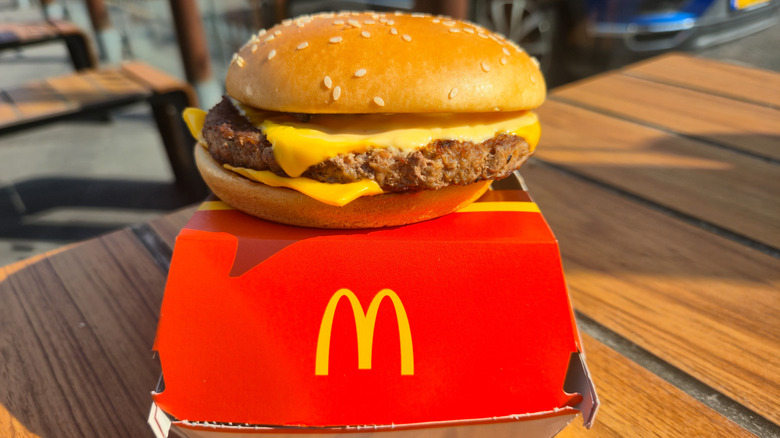
For a company as widespread and long-standing as McDonald's, you'd think it would be something like the globe's largest beef buyer. And, you'd be right — McDonald's has frequently been named the largest purchaser of beefin the United States, but possibly also worldwide. As such, the beef that makes up the classic Big Macs and Quarter Pounders doesn't come from quaint, local farms, but rather a handful of massive meat processors, including the multi-billion-dollar company OSI, which has been partnered with McDonald's since 1955.
Every single day, McDonald's serves tens of millions of customers around the world. Churning out all those burgers at more than 40,000 restaurants understandably requires an enormous supply chain. So, McDonald's has relied on several of the country's largest beef processors over the years, including Tyson Foods, JBS, Cargill, and National Beef. Those four companies alone make up around 80% of America's beef production, per Supply Chain Dive. In 2024, McDonald's actually sued these suppliers, alleging they conspired to restrict beef supplies and inflate prices. Lopez Foods is another of McDonald's long-time suppliers, and, notably the only beef supplier explicitly named on the company website.
Burger King
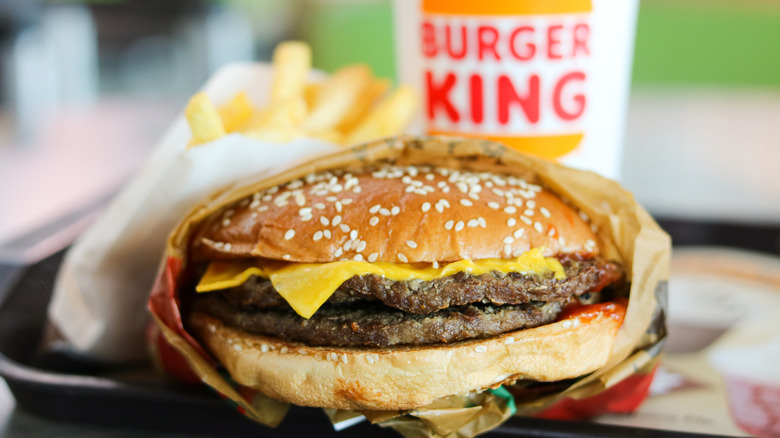
If you've ever found yourself in a Burger King-versus-McDonald's burger debate, you might like to know that the two fast food burger giants actually have at least one shared supplier. While Burger King doesn't publicly name its beef suppliers, we do know the brand has relied on major beef processors like Cargill. Per Burger King's parent company, Restaurant Brands International, the chain even partnered with Cargill in 2022 on some beef sustainability initiatives aimed at improving cattle-raising practices and reducing emissions across the supply chain.
Burger King has also worked with Keystone Foods, a global food processor that has provided beef and other proteins to some of the world's largest restaurant chains, including McDonald's and Burger King. Keystone was bought by Tyson Foods in 2018 for almost $2.2 billion — that's billion dollar-worthy burgers. It's plain to see that huge chains like Burger King have to rely on large processors capable of supplying its close to 20,000 restaurants, rather than one single beef source.
Of course, the star of Burger King's beef showcase is the Whopper, which the chain proudly touts as being made with 100% beef. On the other hand, OSI (a McDonald's meat processor since 1955) has worked with Burger King, but not necessarily for beef patties. Rather, OSI manufactures the Impossible Burger patty for BK's plant-based Whopper.
Wendy's
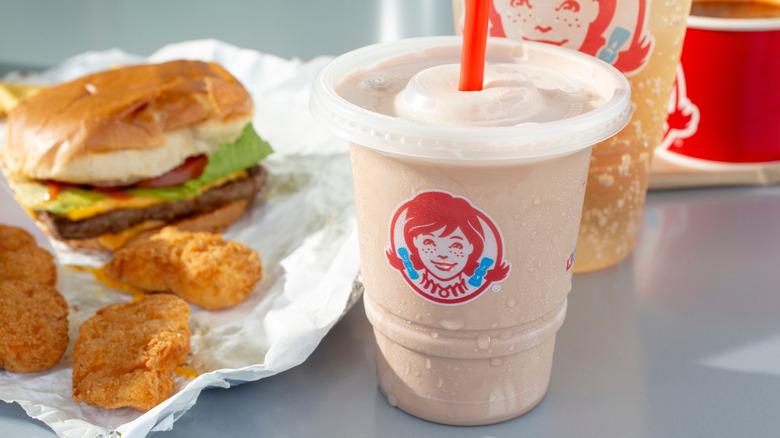
When it comes to the fast food chains that use the highest quality beef in their burgers, you're probably not surprised to find Wendy's on the list. Wendy's burgers aren't just famous for being square-shaped — they actually taste distinctly better than some other fast food burgers, and that might have something to do with its beef source.
Fresh, never frozen beef is the name of the game at Wendy's, but the chain is also outspoken about where that beef actually comes from. Wendy's sources its beef from North American producers and says all of its beef has come from Beef Quality Assurance-certified sources since 2018. These cattle producers follow established standards for animal care, handling, and environmental practices.
But does a more ethical or sustainably managed supply chain actually make a taste difference when you're biting into a Baconator? Not necessarily, but Wendy's makes it a point to use younger, grain-fed cattle, which can result in a more flavorful bite of beef. The chain has also worked with major industry suppliers like Tyson Fresh Meats' Progressive Beef program since 2018, which follows specific animal care and sustainability standards.
Wendy's has also worked with beef suppliers toward reducing the use of antibiotics in its cattle. Since 2020, a significant portion of Wendy's beef supply has come from producers who are committed to reducing the use of certain antibiotics, as the brand works toward its goal of eliminating the routine use of medically important antibiotics by 2030.
Five Guys
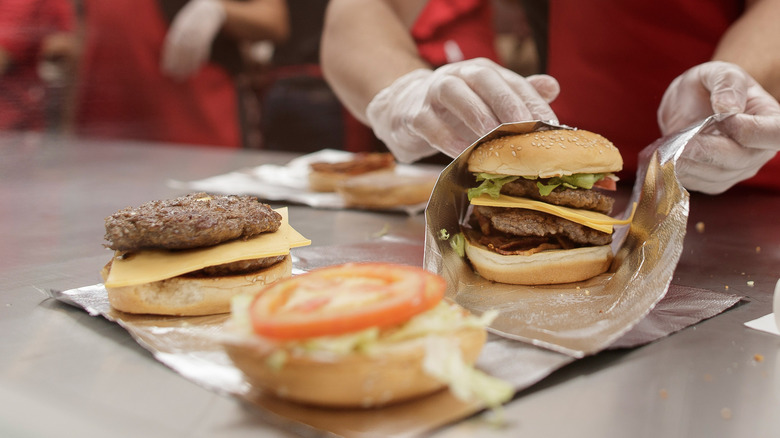
Five Guys specializes in making a small number of items very well. While there are numerous ways to customize your burger with myriad toppings and condiments, the burger patties themselves are the star of the show. Not only are they shaped by hand in-store daily, but they have been sourced from the same family-owned butcher and beef purveyor since the company's early days in 2002: Schweid & Sons.
Five Guys uses 80/20 lean ground chuck patties that have no seasoning, additives, or fillers included. Just great-tasting beef. This famously delicious, no-frills blend was actually developed by Schweid & Sons specifically for Five Guys. Of course, Five Guys has expanded considerably since 2002. Despite now operating more than 2,000 locations worldwide, the chain has continued working with Schweid & Sons to produce its signature burger blend. Five Guys burgers stand out amongst other fast food spots thanks to this custom blend you're simply not going to find elsewhere.
As Five Guys has expanded beyond the U.S., the company has not publicly declared whether international locations use the same beef suppliers or rely on regional partners. But what is clear is that the chain has prioritized fresh ground chuck, no fillers or additives, and the patty blend developed by Schweid & Sons that helped make Five Guys famous.
Shake Shack
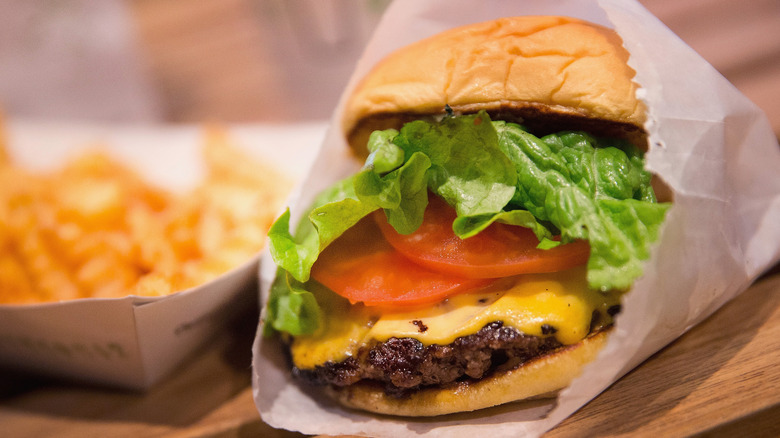
When it comes to our favorite chain shakes and smashburgers, Shake Shack is always on the list. It's another spot that sells burgers that have a standout flavor that goes beyond generic fast food expectations. This is likely because Shake Shack has historically worked with few suppliers. In the U.S., its signature burgers have long been supplied by New York's Pat LaFrieda Meat Purveyors. If the name sounds familiar, it could be because the company also supplies high-end New York restaurants like Union Square Café.
Pat LaFrieda developed Shake Shack's signature burger blend, which consists of 100% Angus beef made from whole muscle cuts rather than trimmings. The blend was created exclusively for Shake Shack, giving the burgers a rich, buttery flavor that helped put the chain on the map. Per Pat LaFrieda, all Angus beef is sourced from small, family-owned American farms.
That premium approach extends beyond the U.S. as well. While American Shake Shack locations use the Pat LaFrieda blend, the chain sources 100% Scottish beef for its burgers in the U.K. Wherever you order a ShackBurger, the goal is the same: antibiotic-free, hormone-free beef from suppliers that meet the chain's animal welfare standards.
Texas Roadhouse
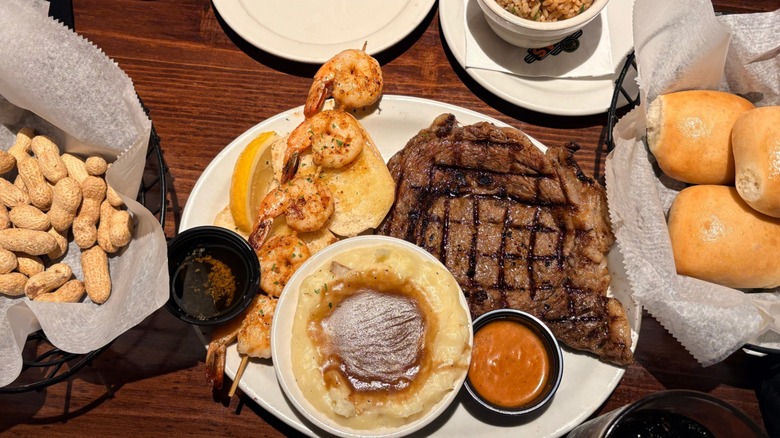
Without its quality, affordable steaks, Texas Roadhouse might veer into gimmick territory. Its comically large margaritas, bottomless buttery rolls, line dancing, and free peanuts could otherwise make it feel like just another over-the-top themed restaurant. But the steaks are what truly set Texas Roadhouse apart. Considering the surprisingly low prices, the quality of the beef becomes even more impressive. All but one cut is hand-cut in-store by trained butchers every day, and the chain exclusively serves USDA Choice beef, one of the highest grades achievable. So, how does Texas Roadhouse keep serving premium steaks without premium steakhouse prices?
Rather than sourcing from dozens of companies, Texas Roadhouse purchases the majority of its beef from four suppliers across the United States and Canada. According to its 2025 Corporate Sustainability Report, almost all of its beef comes from North America, and those suppliers are required to follow Beef Quality Assurance standards for animal care and responsible antibiotic use. Texas Roadhouse also says its suppliers are leaders in humane and sustainable beef production, and the company is a member of the U.S. Roundtable for Sustainable Beef.
The low prices likely come into play thanks to the way that Texas Roadhouse buys its beef. The chain uses notoriously long-term purchasing contracts which may help protect itself from volatility in beef prices, and it helps that the company purchases a whole lot of steaks.
In-N-Out Burger
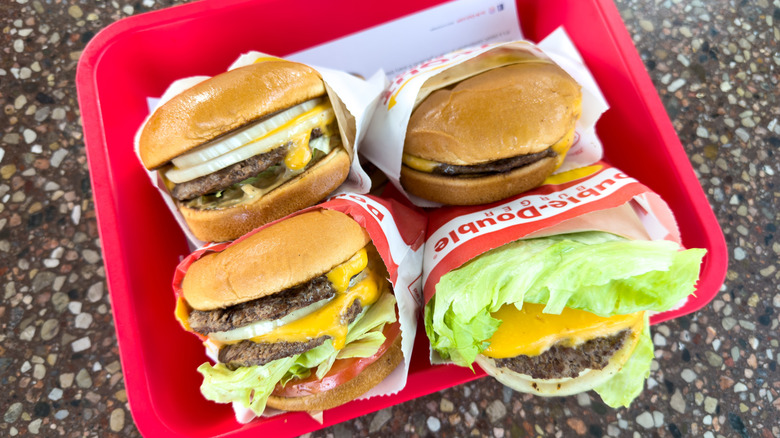
In-N-Out is a California-famous fast food joint known for its not-so-secret menu, cult following, and classic cheeseburgers and fries. While a Double-Double might be the chain's most viral order, it's the way In-N-Out handles its beef behind the scenes that really sets it apart from the rest.
Unlike most major burger chains, In-N-Out doesn't rely entirely on outside processors to turn its beef into burger patties. While the company purchases beef from producers (Harris Ranch is frequently rumored to be one of the main suppliers), it owns and operates its own processing facilities, located in both California and Texas. From there, In-N-Out employees inspect the meat, grind the 100% additive-free chuck into patties, and package it before delivering it fresh, never frozen, to restaurants. That level of control over the supply chain is almost unheard of in the fast food industry.
This could potentially be why In-N-Out has expanded much more slowly than its competitors. Rather than franchising restaurants across the globe, the chain only opens new locations within reach of its distribution network. According to a recent In-N-Out press release, the company says its focus on quality and freshness includes delivering ingredients to each restaurant using its own trucks, with deliveries taking no longer than a single day's drive.
Whataburger
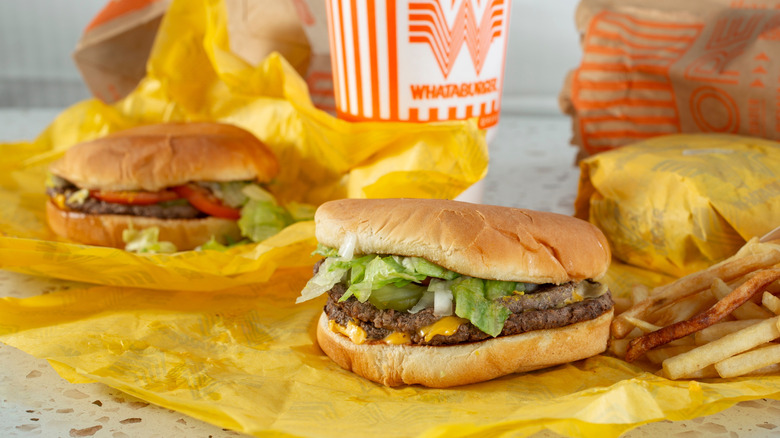
Whataburger has been serving its famously large burgers around the clock since 1950, and its commitment to freshness is a motto that helps set it apart from other fast food chains. Every burger is made with 100% fresh, never frozen American beef, freshly grilled.
What's less publicized is exactly where that beef comes from. While Whataburger doesn't identify its suppliers on its website, a federal antitrust lawsuit filed by the chain revealed that it purchased beef from some of the country's largest meat processors, including Tyson Fresh Meats, Cargill Meat Solutions, JBS USA, and National Beef Packing Company. Those same companies supply many of America's biggest restaurant chains.
That probably isn't surprising considering Whataburger's size. With restaurant locations spread across more than a dozen states and burgers being served around the clock, relying on several of the country's largest processors helps ensure a steady supply of fresh beef. Instead of emphasizing boutique suppliers or proprietary blends, Whataburger focuses on what customers actually taste — fresh, cooked-to-order beef that's free of additives and preservatives, and, as the company puts it, delivers "goodness 24/7."
Steak 'n Shake
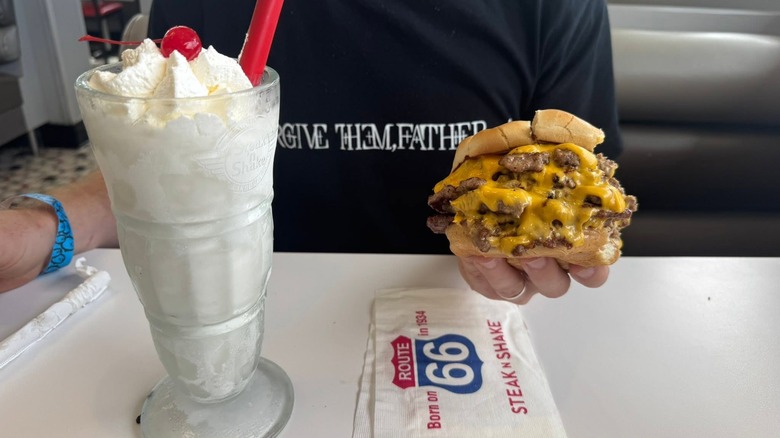
Steak 'n Shake has always marketed its Steakburgers as something a little different (is it a burger, or is it steak?), but in 2026 the chain made a major shift. The company announced that every Steakburger would be made with only grass-fed beef from pasture-raised cattle. The company hasn't publicly identified the farms or processors behind the beef, but a change like this likely means a shift in meat sourcing.
If you've heard conflicting claims about grass-fed beef, you're not alone. Steak 'n Shake has positioned the move as a healthier alternative, noting that its beef comes from pasture-raised cattle with no antibiotics or added hormones. The truth about grass-fed beef is that it actually can contain higher levels of omega-3 fatty acids and certain vitamins, compared to grain-fed beef. This isn't the first time that Steak 'n Shake has made major beef changes, either. In 2025, the chain announced it was swapping out all seed oils for beef tallow to cook its fries and tater tots in. It's unclear whether the beef tallow is sourced from the same provider as the beef itself.
Steak 'n Shake doesn't publicly identify the companies supplying its beef, but it does maintain control over where the beef comes from. According to the company's Franchise Disclosure Document, franchisees must purchase nearly all food products through approved suppliers, with many ingredients (which could include the signature Steakburger beef blend) available only through a sole designated distributor.
Outback Steakhouse
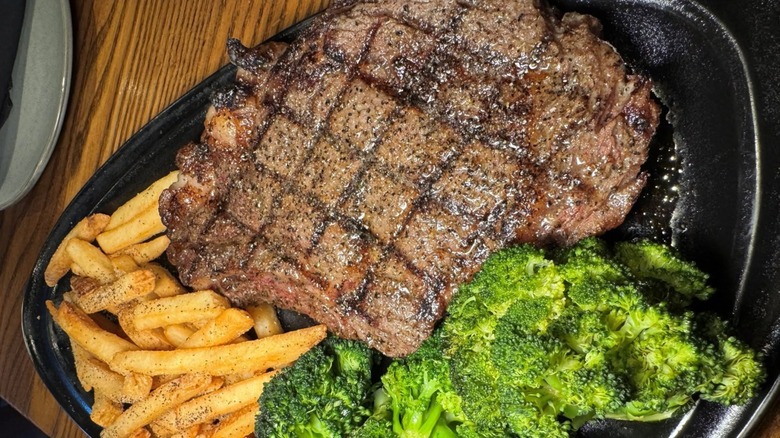
Outback Steakhouse is famous for its Australian catchphrases and iconic Bloomin' Onion, but at its core, it's a classic steakhouse. Despite the chain's Down Under theme, parent company Bloomin' Brands sources the vast majority of its beef much closer to home in the U.S. According to company filings, Bloomin' Brands purchases the vast majority of its U.S. beef (which is a lot of beef) from just four major suppliers.
Bloomin' Brands doesn't publicly identify its current beef suppliers, but one company has definitely been linked to Outback over the years: Standard Meat Company, a family-owned Texas meatpacker that's been in business since 1935. Standard Meat has supplied precut steaks to the restaurant industry for decades, and has previously been highlighted as a big part of Outback's supply chain. Outback claims to use USDA Choice beef, which is the second-highest rating behind Prime.
Keeping supplier names under wraps is fairly common among major restaurant chains, especially publicly traded companies like Bloomin' Brands. But one thing the company has been transparent about is the cost of beef. Executives have pointed to rising beef prices as one of the biggest pressures facing the business. This makes supplier relationships more important than ever as Outback works to keep its steaks affordable without sacrificing quality.
LongHorn Steakhouse
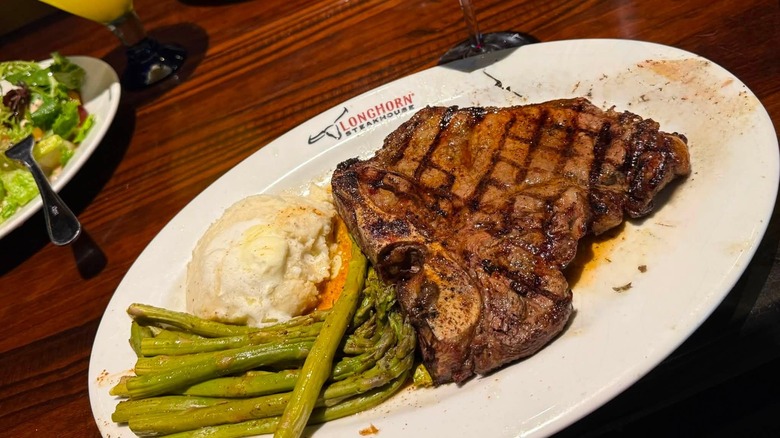
LongHorn Steakhouse has been owned by restaurant giant Darden since 2007. The group also operates Olive Garden, Ruth's Chris Steak House, The Capital Grille, Yard House, and many other recognizable brands. So, Darden is largely in control of the beef supply chain that trickles down to LongHorn's 500-plus locations across the country.
While LongHorn doesn't publicly identify the companies supplying its beef, it does share plenty about its standards. From ribeye to sirloin to filet and everything in between, the chain is proud about the quality of its steaks, as printed across most of its marketing materials. While the brand's website says very little about the actual grade or source of the beef, it does confirm that the steaks arrive fresh, never precooked or frozen, custom trimmed, and then grilled by trained Grill Masters. A LongHorn steakhouse manager confirmed on Yelp that the steaks are grass-fed, grain-finished, and USDA-safe.
We know from parent company Darden that one supplier has been publicly connected to LongHorn in the past. In 2015, Darden recognized Buckhead Beef/Sysco Specialty Meat Companies with a supplier award for excellence across several of its brands, including LongHorn Steakhouse. Whether Buckhead still supplies LongHorn today isn't publicly known. Darden oversees food sourcing and supply for its brands, but doesn't name its actual suppliers.