

13 Things To Know Before Buying A Cheap Bottle Of Wine
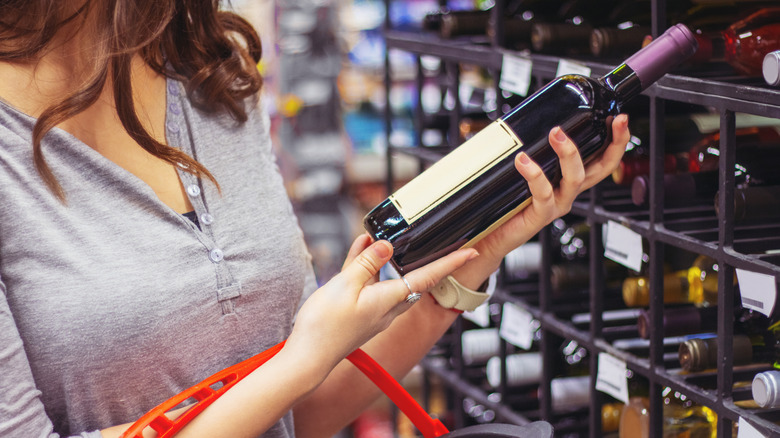
Shopping for the best bang-for-your-buck wine can be overwhelming. With so many varieties, styles, colors, and brands, it is often easier to stick with what you know than try something different. However, finding a wine with high-quality ingredients for a low price doesn't have to be an unpleasant experience. Merchants' shelves are stocked with hidden gems delivering much more than you'd expect for the low price you'll pay, but you need to know how to spot them.
As a Certified Sommelier, Certified Specialist of Wine, Spanish Wine Scholar, and someone who drinks wine on a budget nightly, I have spent over 20 years seeking out high-quality, affordable options. Of course, there are hundreds of cheap wines you should be buying. However, as a sommelier, I would recommend some over others. To arm you with the best information when looking for a bargain, I have put together a handful of tips and tricks to have on hand.
Since tastes differ, it may take time to find new options that suit your palate. You will likely pop the cork on bottles you don't care for. However, that is part of the learning process. Keep in mind that if you want to spend less than $10 on a bottle, it will likely be a bulk wine from a mass-production winery. This isn't a bad thing; some delicious bottles cost under $10 and are perfectly adequate for a Tuesday night. Still, these wines may not have the terroir-driven character that makes wine so desirable.
Seek out emerging wine regions
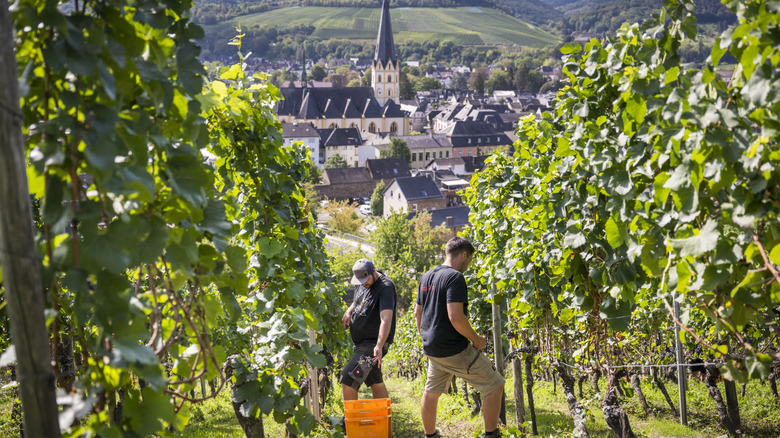
Well-known wine regions, such as Napa Valley and Bordeaux, tend to offer high-quality, terroir-driven options. However, these wines often come at a high price. Wines from lesser-known wine-producing countries worldwide – such as Chile, Argentina, Portugal, and Spain – can offer great quality at much more affordable prices.
If you are a fan of Bordeaux varieties, there are incredible cabernet sauvignons for under $15 and high-quality malbec wines for under $15 from producers such as Alamos, Tilia, and Trapiche in Argentina's Mendoza region. If your heart, like mine, melts for Barolo, try a nebbiolo from the greater Langhe area within Italy's Piedmont region, the home of Barolo. I suggest Vietti Langhe Nebbiolo Perbacco. If you prefer the full-bodied wines of the Rhône Valley's Côte-Rôtie or Châteauneuf-du-Pape, try a grenache-syrah-mourvèdre blend from the Languedoc in France, such as French Flair 'Le Solaire' Languedoc, or an affordable red blend from Portugal or Spain, such as Dow's Vale do Bomfim from the Douro Valley.
If white wines are your go-to, such as the rich white wines of Burgundy, try a cool-climate chardonnay from Oregon, such as Stoller or Chehalem. Or explore the wines of Chile's Casablanca Valley, such as Veramonte organic chardonnay. If you prefer a dry Loire Valley Vouvray, try the delicious wines of South Africa. MAN Family Wines and Mulderbosch offer solid, value-driven chenin blanc. These alternative wines will satisfy your palate because they are characteristically similar to higher-priced options.
Learn what the quality classifications on the bottle mean
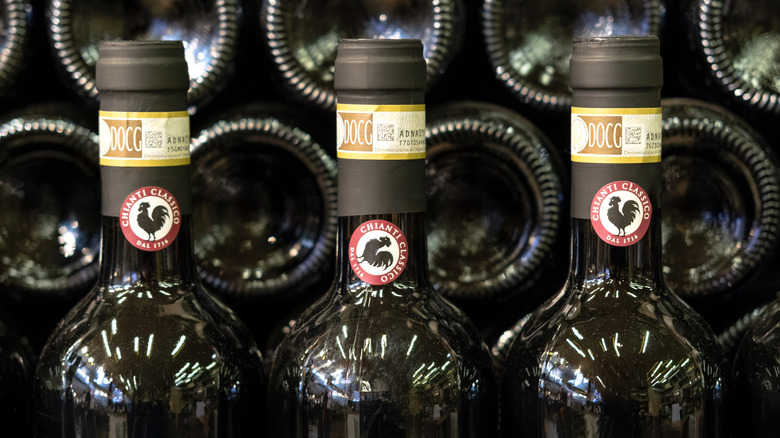
In Italy, the denominazione di origine controllata e garantita (DOCG), or Controlled and Guaranteed Designation of Origin, is the highest-quality designation with the strictest production standards. Just below it is the denominazione di origine controllata (DOC) designation. These wines are also very good, with producers following required production rules that are stricter than those for producers with an IGP or table wine designation. For example, wines labeled Toscana are IGP, while Chianti and Chianti Classico (which lies within the heart of Chianti in Italy's Tuscany region) are labeled as DOCG.
In Spain, there are roughly 70 denominaciones de origen (DO), or designation of origin, and two denominaciones de origen calificadas (DOCa), Priorat and Rioja. The 70 DO regions must follow production guidelines and standards that set them apart from areas outside the DO boundaries. The production rules for producers in the highest DOCa tier are even stricter and more defined, making it Spain's most tightly controlled category of wine.
For American wine, a wine with a specific region's American Viticultural Area (AVA), such as Paso Robles or Lodi, will have more specific production requirements than those of a county or state, such as a California appellation wine. In general, a wine's quality tends to be higher as the region becomes more specific and smaller. This is due to a reduction in the production variables.
Find wines with similar characteristics to your favorite, but cheaper
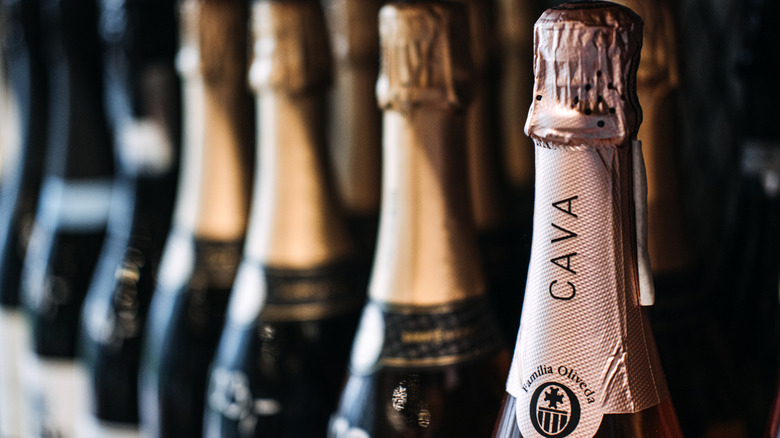
Champagne is one of the finest sparkling wines in the world, but it often comes with a high price. Before you pick up your next bottle, I suggest trying Cava from Spain. The Spanish sparkling wine is crafted using primarily Spanish grapes and the same production methods as Champagne. As such, the wines gain similar textures and flavors to the French sparkler. However, a Cava will likely cost you a fraction of the price. All Cava carries the DO designation of origin. This guarantees its quality and production standards, with all Cavas de Guarda Superior released from 2025 onwards also using 100% organically grown grapes.
Similarly, instead of zinfandel try jammy primitivo from Italy's Puglia region. The two red varieties are actually the same, and you can often find stellar deals on the Italian wine. Pinot noir is a difficult to grow variety, causing the price of quality pinot noir to be high due to increased production needs. Instead, try a light-bodied, high-acid barbera from Italy. Syrah fans should look no further than Sicily's nero d'avola. Producers such as Donnafugata, Cusumano, and Tenuta Regaleali craft excellent nero d'avola wines with bold tannin and dark fruit flavors at very reasonable prices.
There are plenty of alternative wines for sauvignon blanc lovers. However, few deliver similar attributes and unique, terroir-driven character quite like Quinta da Fonte Souto Florão. From Portugal's Alentejo region lying inland from Lisbon, Florão blends zesty arinto and citrusy verdelho to create a crisp, juicy wine that leaps from the glass with freshness for under $20.
Try a winery's second label
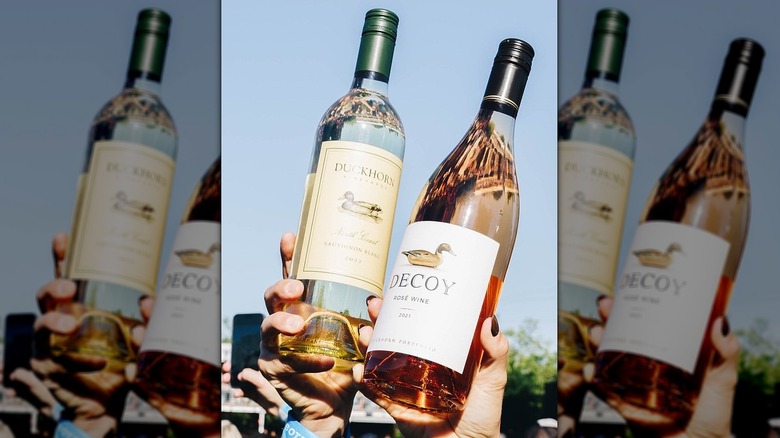
Wineries typically have a signature selection for which they are best known. However, not all of these wines are the kind you want to open with Friday night pizza. To offer customers an alternative, many wineries produce second labels to keep buyers engaged. These wines tend to be more approachable upon release, without the need for cellaring, and are less expensive. For instance, instead of the top-tier Duckhorn Vineyards, try the Decoy. Duckhorn initially created Decoy as a second label to serve as a gateway to the larger brand, introducing consumers to its portfolio with the idea they would eventually trade up. Now a standalone winery, Decoy delivers the quality you expect from its sister, premium Napa Valley winery, with much more affordable prices.
Similarly, Sea Smoke's Botella Pinot Noir label is about half the price of its signature Sea Smoke Southing Pinot Noir. Santa Barbara County's Jonata and The Hilt Estate wineries produce premium Bordeaux and Rhône blends and cool-climate pinot noir and chardonnay wines. However, sister winery, The Paring, crafts exceptional, well-priced wines using the same estate-grown fruit. It is one of the best $25 pinot noir wines from the area.
The deals aren't limited to American wines. From the Left Bank of Bordeaux, Château Lafite Rothschild can cost upwards of $470, while its Carruades de Lafite costs less than half that number. A bottle of Château Angélus in the Saint-Émilion region on the Right Bank of Bordeaux will set you back almost $300. Meanwhile, its entry-level Tempo d'Angelus Bordeaux wine costs about $30.
Use your wholesale club membership
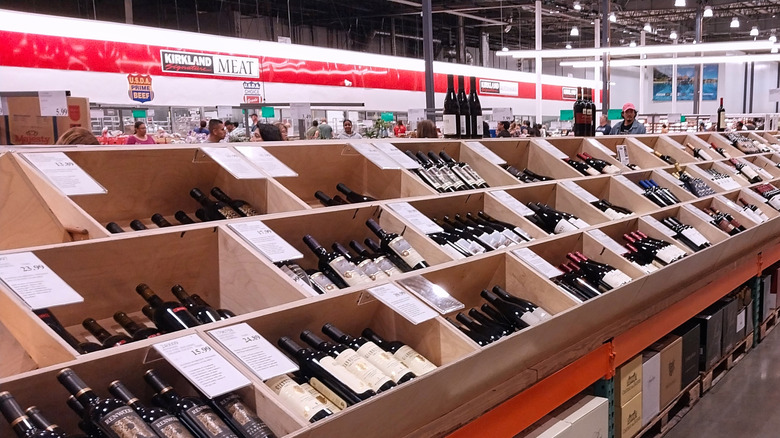
Costco has one of the most affordable wine departments because it can buy in bulk and pass those savings on to customers. The wholesaler offers well-known brands and some incredible, rare wines you would be hard-pressed to find elsewhere. These wines are often available for much less than at a liquor store. While Costco is renowned for its stellar wine department due to the expertise of its wine buyers, Sam's Club's selection is also acceptable, with many bargain red wines under $20 and white wines under $20 available to members.
Wholesale club stores in some states do require a membership to shop for alcohol, so factor in that cost if you decide to buy wine there. However, if you are a bulk buyer, it will likely be a worthwhile investment. And, in a handful of states, you don't have to be a member to shop for alcohol. It is one of the best unknown truths about shopping at Costco and Sam's Club.
Buy store branded, private-label wines
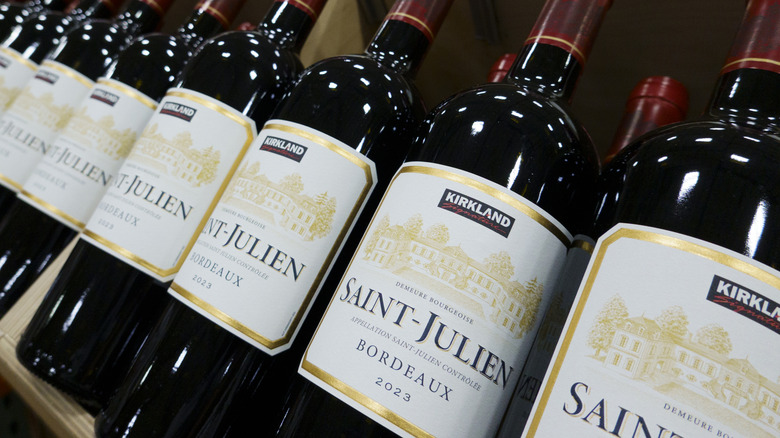
In addition to the brand-name items wholesalers carry, Costco and Sam's Club are known for their private-label Kirkland Signature and Member's Mark products. Like many of Costco's Kirkland Signature products, its wine comes from quality producers. The store may not be able to name the winemaker, as it may dilute a producer's core brand. Still, Costco prides itself on its Kirkland Signature product's value, partnering with producers who can deliver on customers' expectations, such as Gallo, Fonseca, and winemakers Glenn Hugo of Napa Valley's Girard Winery and Gilles Nicault of Walla Walla's Long Shadows Winery.
Like Costco and Sam's, Trader Joe's and Aldi also offer private-label wines for excellent prices. Aldi's private-label Specially Selected wines are some of the best values on the market. These are large-production bulk wines for the most part. Still, there are gems in the mix ready to be discovered.
Drink white wine
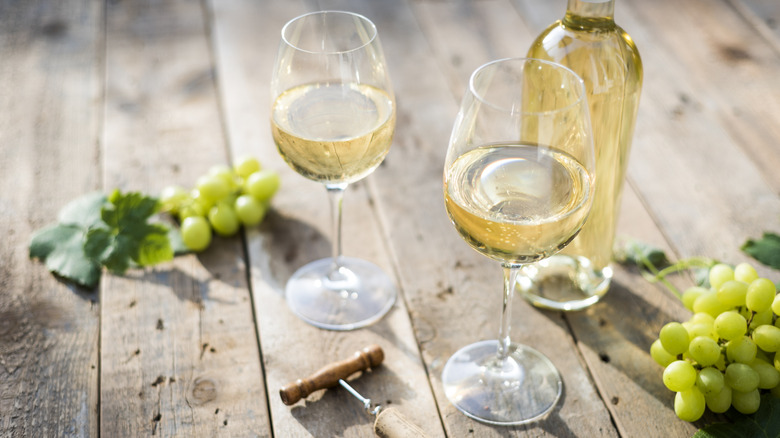
Drinking white wine has several advantages. For one thing, white wine is typically cheaper than red. This is due to the production costs typically associated with red versus white wine. Red wines are often barrel-aged for longer, which delays when they will become available on the market. Barrels are also expensive, particularly French oak barrels that many wineries favor for the characteristics and textures they impart to the wine. Still, even if a winery uses American or Hungarian oak, two less expensive options, it still adds an extra cost that a white wine may not incur. It's one of the main reasons it is often easier to find a cheap bottle of white wine.
Additionally, you typically serve white wines chilled. The crisp temperature of a white wine helps enhance its refreshing style. The colder the wine is, the more it will cover the wine's subtle nuances, elegant characteristics, and delicate complexities. However, with some cheap wines that may not match the quality of a higher-priced option, hiding those characteristics may be a good thing. As a cheap wine warms, you may notice unfavorable attributes that the chill of an ice bucket or refrigerator so generously hides.
Buy large formats
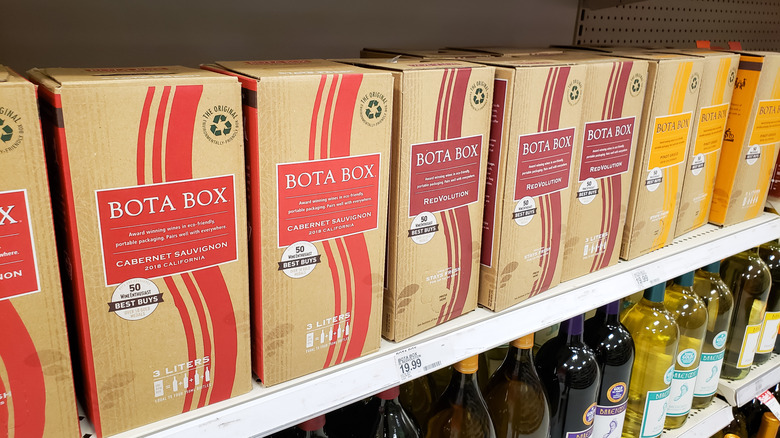
Large-format, bag-in-box wines might seem like a mass-produced product to avoid. However, many boxed wines deliver quality and affordability, especially if you are the type to open a bottle and not finish it. While you can always cook with leftover wine, it may not remain pleasing for drinking. The second you open a bottle, oxidation begins which can quickly turn a wine from beautiful to bad. With boxed wines, the bag is designed to keep oxygen out, maintaining its freshness for weeks rather than days after opening.
These boxed wine options usually aren't meant for long-term storage as you would bottle age a vintage Bordeaux. However, they are typically cheaper than many options packaged in traditional glass bottles. This is especially true when you account for the amount of wine you are getting in every box. For example, a 3-liter box of wine contains about 20 5-ounce servings, and many brands offer boxes of this size for under $20.
To help decipher the quality of a boxed wine brand, look for the best-by date to find the freshest option, plus check where the wine is from and the variety. Some boxed wines are better than others. However, treasures can be found when you least expect it. I recently tasted a newly released 1.5-liter box of limited reserve Napa Valley cabernet sauvignon from boxed wine producer Bota Box. While the wine was uncomplicated and fruit-driven rather than terroir-driven, it tasted comparable to other wines I have had from the region.
Buy from discount retailers and bulk buy
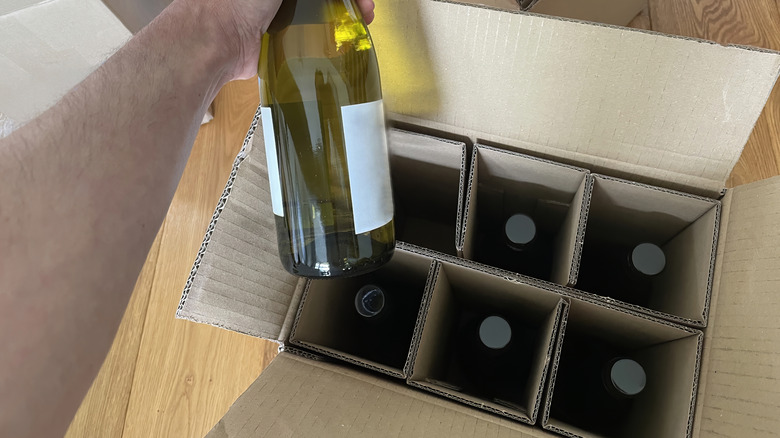
Online retailers such as WTSO (Wines 'Til Sold Out) and Last Bottle Wines offer select wines at greatly reduced prices, sometimes just one bottle at a time until it sells out. You will want to check the vintage dates. Depending on the wine style, older vintages may not hold up as well. Always check the vintage dates on bottles before you order. And, you still aren't guaranteed success.
In researching this feature, I placed an order with Wine Insiders that proved disappointing. Several 2-year-old white wines arrived greatly discolored, indicating improper storage in high heat or under direct light. You do take your chances when ordering wine online. Still, with a little hunting, you can find some incredible bargains from reputable wineries available for as much as 80% off the suggested retail price.
Beyond online buying from discount retailers, many brick-and-mortar stores offer multi-bottle discounts. Some of them will do this for mixed cases, giving you a chance to try multiple types of wine for a deal. Total Wine offers 10% off six or more bottles of specific wines. Albertsons, Kroger, and affiliated grocery stores often have similar deals, with some offering even larger discounts. Depending on your location, your bottle collection can include wine and hard liquor. Be sure to check for additional coupons for specific bottles in each store's inventory.
Buy from producers that re-package other brands' wines
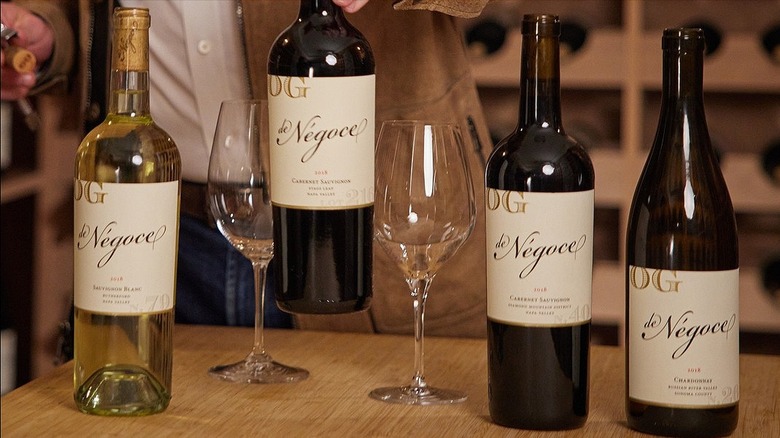
Wineries can end up with leftover inventory on hand, particularly if a vintage is larger than expected or if market demand and consumer buying habits shift. Rather than discounting their wines, some will sell remaining stock through brokers to companies such as de Négoce.
These companies buy surplus finished wine, including shiners, which get their name due to the fact the bottles are shiny and unlabeled. Shiners can get a bad rap as overproduced bulk wine. However, companies often buy wine from grapes grown in prized vineyards and made by award-winning winemakers. They repackage them with their own labels, then sell the wines for much cheaper than if you purchased them from the initial winery.
Companies don't typically disclose the winery or winemaker, as doing so would likely devalue the winery's product. However, they will share specific details such as where the wine is from, sometimes down to the specific vineyard, production details, and what the wine would have cost you if you purchased it from the original producer. The drawback is that the purchase will likely be a one-off, as there is no guarantee a winery will have leftover inventory each year. So, if you try one you like, go back and purchase more while you can. I have been a de Négoce customer since it began in 2020 and have been pleased with the quality of the wines I have purchased.
Join a liquor store's member club, sign up for emails, and download their apps

Grocery stores and wine merchants often offer lots of perks to customers who sign up for their rewards clubs. In addition to multi-bottle discounts, retailers will typically offer additional member discounts, discounted wine and spirits classes, points you can earn toward future purchases on things like gas and groceries, and free products. For example, it feels like every time I shop at Total Wine & More, I receive a free gift bag.
Shopping through a store's app may also grant discounts the retailer doesn't display in the store. Signing up for emails or referring a friend may also open up the opportunity for additional discounts. However, these are often only for your first purchase, so be prepared to stock up the first time you shop with them.
Be wary of in-store sales and specials
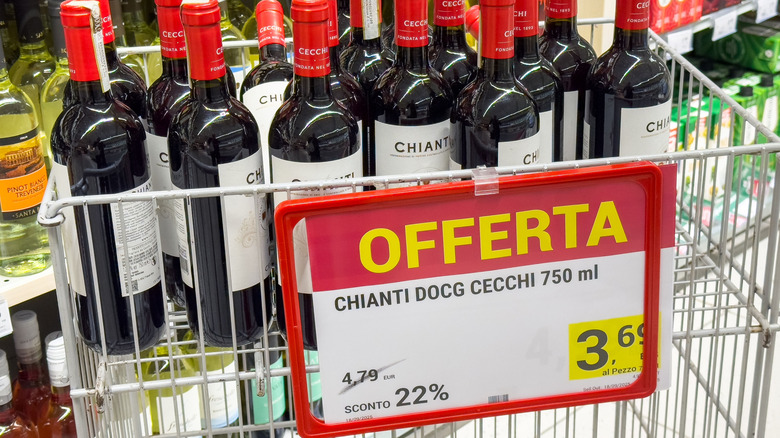
We all love a sale, especially when it applies to items that can be considered a luxury, such as bottles of wine. Merchants often put wines on sale to make room for new inventory, particularly as products shift from one vintage to another. (Follow your favorite retailers' social media to find out when these sales will happen.)
However, be wary of wine stores that lure you in with the promise of a discounted wine. These wines could be inexpensive options that the store originally marked up 30% or 40%, only to mark them down again to a sale price that is 20% off. The tactic creates the perception of being customer-friendly; however, you may still be paying more for a bottle than it is worth. Don't be afraid to Google search the wine you are considering to see what the average price is at other retailers. Wine-Searcher is a particularly helpful website to learn a bottle's average retail price.
Pay cash
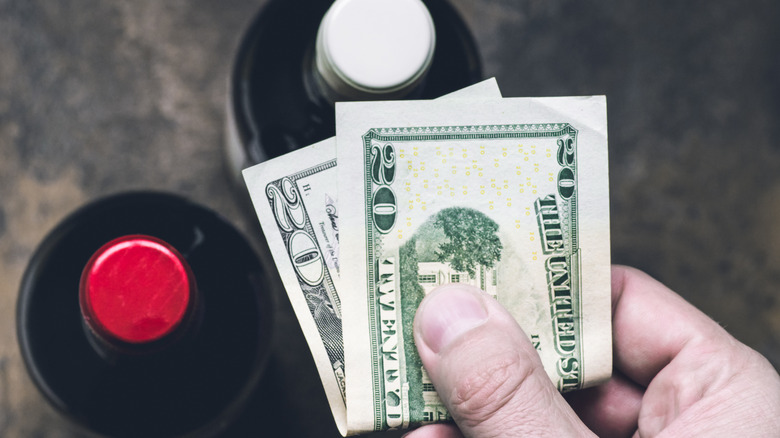
Paying cash for goods and services is declining as consumers move toward the convenience of paying with credit cards. However, some liquor stores offer lower prices on products if you pay with cash instead of a credit card. Merchants typically must pay credit card companies, such as Visa and Mastercard, a fee for accepting their cards in their businesses, to the tune of 2% to 4% each time a transaction occurs.
One such retailer is Texas-based liquor store Spec's. The retailer offers customers worthwhile savings for products if you pay with cash rather than a credit card when shopping inside the store. Of course, the cash price at a store with this kind of discount may still be higher than that of its competition, so be sure to double-check before assuming you're getting the best price possible. However, if you have loyalty to a specific store that offers an incentive for paying with cash, it may be worth it to visit a bank to make a cash withdrawal before wine shopping.