

14 Foods That Fueled America's Steelworkers
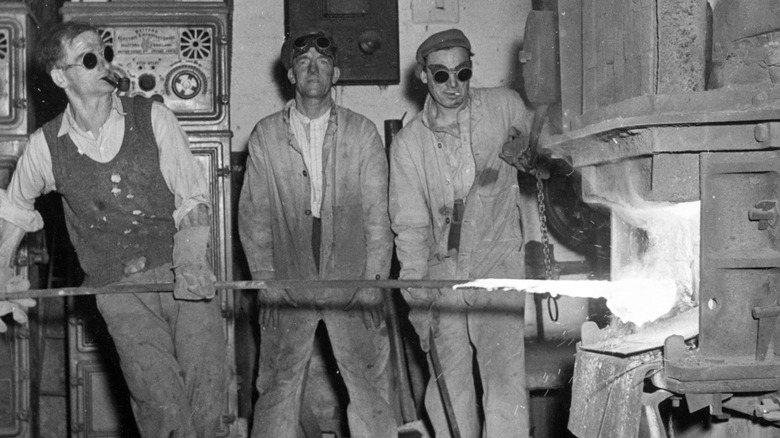
Working in the steel industry was sweaty, grueling work, and the wages were usually abysmal. For example, those who worked for the steel titan Andrew Carnegie often endured 12-hour shifts for seven days straight, just to take home a measly $10 per week. Since these workers were sweating buckets and burning a staggering number of calories daily, food was very much fuel that would help them power through an exhausting day. A combination of low wages and poor working conditions meant that the food consumed by steelworkers was creative, strategic, and — thanks to a large percentage of immigrants from various countries in the workforce — multicultural.
We asked three experts on the subject to shed light on the details of these workers' everyday diet: Mike Piersa, historian for the National Museum of Industrial History; Barney Terrell, curator of collections at Rivers of Steel; and Susan Lowery, reference archivist and collections manager at Youngstown Historical Center of Industry and Labor. Read on to explore 14 foods that fueled the steelworkers who modernized America from the ground up.
1. Fresh and pickled vegetables
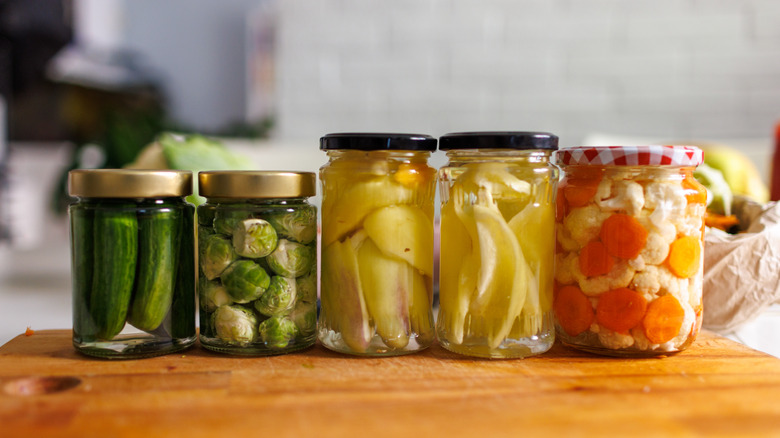
An unpleasant consequence of becoming a steelworker was being exposed to grime that got everywhere, including the mouth. As a result, steelworkers needed bold foods and drinks to feel refreshed, such as prepared horseradish. "In the 1800s, horseradish was popular due to graphite dust from the steelmaking process which coated the mouth and blunted the taste of food; anything spicy was preferable in those circumstances," Barney Terrell explained.
Pickles were another favorite taste bud revitalizer because steelworkers appreciated veggies with a delightful tang. Terrell elaborated, "Pickling vegetables (beets, green beans, cherry tomatoes and of course cucumbers) was a must for families who may not be able to afford to buy canned or fresh vegetables." Many steelworkers' families tended their own gardens to cut expenses and put food on the table during uncertain times. Since steelworking conditions used to be abysmal, the workers organized major strikes that left them without paychecks. "In times of strikes and economic uncertainty in the mills, having a garden was one way to provide healthy food to families," Terrell said.
Mike Piersa also highlighted the importance of gardens to provide workers with fresh vegetables, coupled with the spirit of teamwork. He added, "Workers' families often kept gardens, but the memories passed down by steelworkers more often revolve around the unofficial stores kept by fellow workers, communal meals, and how the guys looked out for one another." If one steelworker cooked a large meal for everyone, the rest of the team worked even harder to cover the cook's responsibilities.
2. Homemade cookies, Tastykake, and ice cream bars
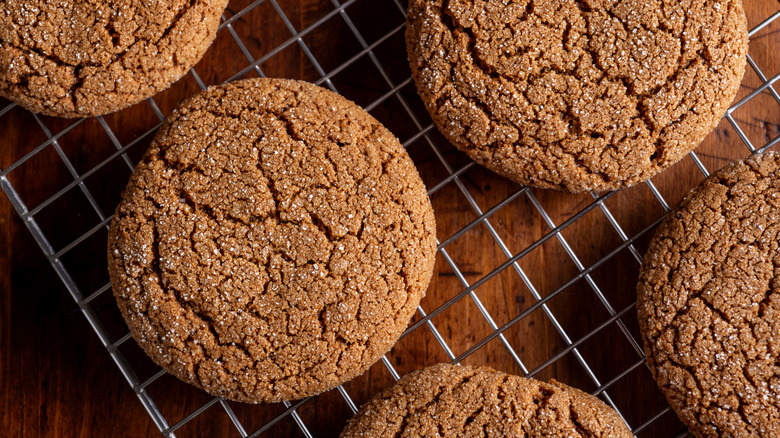
Being employed as a steelworker was tough, but there were moments of joy throughout the day. It's hard to be in a bad mood when you tuck into a sweet treat. Snacks varied across steel plants, but according to Barney Terrell, homemade cookies were always extremely popular. Vintage cookies that deserve to make a comeback often relied on shelf-stable, wholesome ingredients like oats, molasses, dried fruits, and jams. Molasses cookies and oatmeal cookies would've definitely hit the spot in the middle of an exhausting shift.
Mike Piersa noted that prepackaged sweet treats were also a worthwhile purchase. "Top of the list in Eastern Pennsylvania were Tastykakes," he explained. "Unofficial stores run by workers in the plant also sold snacks. Prepackaged ice cream bars such as Eskimo Bars were popular, as were self-admitted junk food." We've all enjoyed a refreshing ice cream on a blistering summer day, but imagine how divine it would taste after working with and around piping-hot equipment for hours on end.
3. Pretzels and potato chips

Steelworkers needed to eat a lot to replace the calories they burned. They also had to do everything they could to retain water because they worked in such hot conditions. According to Barney Terrell, working one shift could leave workers 5 to 10 pounds lighter from sweating.
As a result, steelworkers chowed down on lots of pretzels and potato chips, which are heavy in salt and would boost a worker's sodium levels. "Potato chips were probably the most popular convenience foods; PA still produces about 25% of the potato chips in the U.S.," Terrell said. Pittsburgh steelworkers bought chips from the Utz and Snyder's brands most often.
While mass-produced pretzels gradually became more popular (and more readily available) in the 20th century, steelworkers before then often bought fresh pretzels. Terrell highlighted that some of the beloved pretzel shops that served these workers are still around today. Dee Dee Pretzels and the Pretzel Shop are two examples. In addition to replenishing sodium, a big, carb-loaded pretzel provided a quick burst of energy.
4. Eastern European foods
Migration from Eastern European countries peaked in the late 1800s and early 1900s, and many men seeking quick employment fell into the steel industry. Mike Piersa reflected on how diets changed by location and time period. For example, some mills seemed to "survive on bacon and have a greater fondness for Polish and Hungarian food."
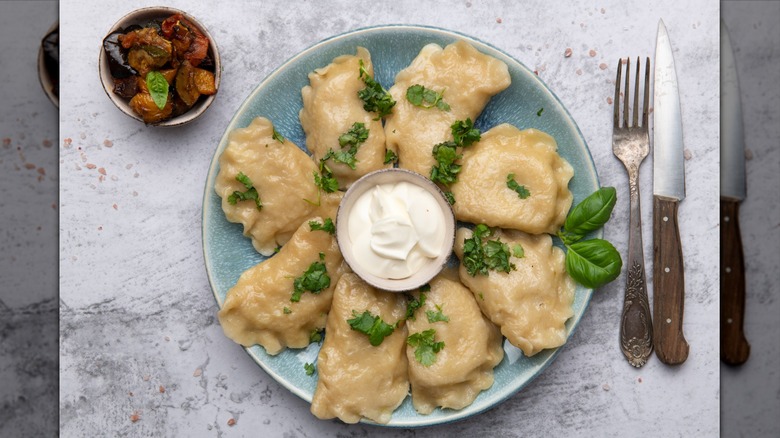
Barney Terrell provided more details about the most popular Eastern European dishes these workers enjoyed on the clock. "The humble pierogi, a dumpling usually filled with potato, which is boiled and then fried in butter with onions, remains a favorite throughout Pittsburgh." Haluski was another favorite, which has roots in Poland, Hungary, and other Eastern European countries. It's made with noodles and cabbage. For protein, steelworkers often added Polish kielbasa to soups and other dishes in their packed lunches.
5. Various soups

Convenience was king for American steelworkers throughout history. Barney Terrell noted that the standard diet evolved as immigrant populations changed over the years, yet one trend remained the same: Many steelworkers always packed a sandwich or soup as the main dish in their meals. He explained that many of the workers drank their soup directly from the containers, which allowed them to get back to work quickly.
When reflecting on the different types of soups they consumed, Terrell stated, "Cabbage soup (kapustnica or kapustniak) would have been popular with Slovak and Ukrainian workers; both usually included sausage." Soup was also popular among German immigrants – who participated in the steel workforce in Pennsylvania in particular — perhaps because it relied on cheap, abundant, and hearty vegetables. Any good soup can be adapted to include whatever ingredients are on hand, but traditional German potato soup also includes onion, carrot, celeriac, and leek. Salt pork, bacon, and Vienna sausage could be thrown in for some extra savoriness.
6. Roasted meats
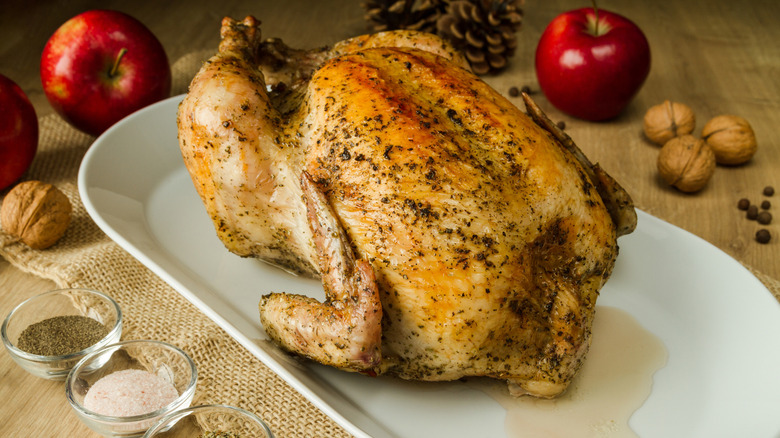
When you first think about roasted meats, your mouth might start watering, imagining a big roast turkey or a tender prime rib. While some steelworkers may have been lucky enough to bring some leftover roasts to work in their packed lunch, that's not what comes to Mike Piersa's mind when reflecting on their diet.
Piersa shared that many of these workers experimented with roasting a variety of meats at work using the hot equipment. Forget low-and-slow roasts in the oven. Piersa explained that a whole turkey could be roasted in only two minutes. "Machinery used near the Basic Oxygen Furnace, which reached 3,000 degrees Fahrenheit inside, was used to cook turkeys," he began. The coke pusher machine was another option, which reached 2,000 degrees Fahrenheit. Its purpose was to push coke from ovens where coal was heated for iron smelting, but the workers weren't afraid to experiment with cooking. If a shiver ran down your spine imagining the texture of those birds flash-roasted for two minutes, you're not alone.
Piersa elaborated that groundhogs were also on the menu. He said, "One worker recalled a groundhog being cooked in tin foil on an electric arc furnace while another described a foundry oven that was constantly heating a pot to boil hot dogs." With our modern sensibilities in mind, you may suspect that perhaps that steelworker hated the groundhog for predicting six more weeks of winter. However, eating groundhog meat used to be much more common during the 1800s and early 1900s, so steelworkers likely didn't get any strange looks.
7. Canned and fresh fruit
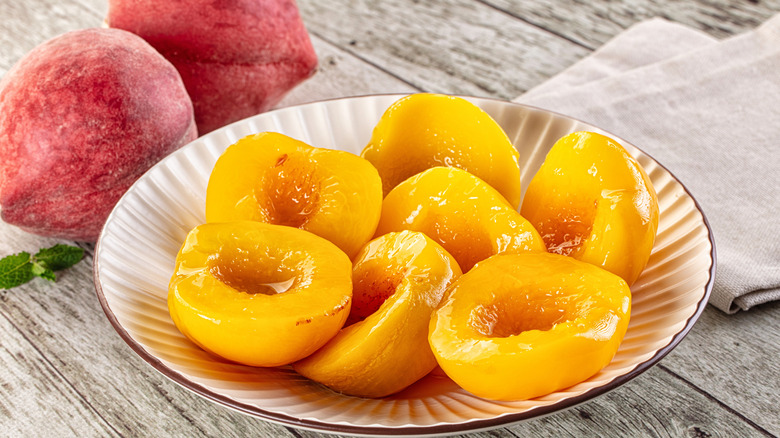
American steelworkers could refresh their palates and boost their energy by snacking on fresh and canned fruit. Fresh fruit could be affordable as long as it was eaten seasonally. In the Rust Belt, plenty of apples would've been harvested during the fall. In addition to apples, Mike Piersa said that bananas were another staple. Bananas made their flashy debut in America in 1876 as an exotic, expensive fruit at the Centennial International Exhibition held in Philadelphia. Yet just 30 years later, bananas were so affordable and widespread that peels could be found discarded throughout the streets.
The introduction of canning technology let people eat fruit out of season. The first cannery opened in America in 1812, and homemade canning with mason jars was becoming more popular by the late 1800s. By the time the steel industry took off, steelworkers and their families had plenty of options for fruit selection and affordability. Steelworkers appreciated canned fruit because they could sip directly from the can if their hands were dirty. As Barney Terrell explained, "Canned fruits gradually became available to more workers throughout the 1890s and early 1900s, with canned peaches and pears being the most popular."
8. City chicken (wiener schnitzel)
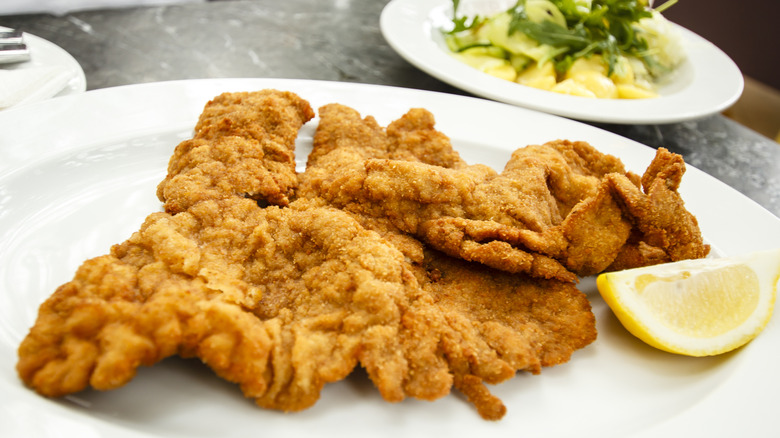
For much of the late 1800s, most immigrants who started a new life in America came from Western and Northern Europe. Since these people were often fleeing famine and poverty, they sought areas with promise. This meant the steel industry in the Rust Belt had a steady supply of workers to keep up with rising demand for steel. As these immigrants were settling into their new homes, routines, and jobs, homemade food helped them feel less out of place. For those from Central Europe, nothing could be more comforting and delicious than wiener schnitzel.
Since a classic wiener schnitzel would be difficult to eat without silverware, workers had to be clever. Barney Terrell explained, "During the 1920s and early 1930s, 'city chicken' was the name applied in Pittsburgh to wiener schnitzel." Instead of frying large veal cutlets, city chicken cubed the meat and served it on a skewer for on-the-go eating — perfect for busy workers.
9. Baked potatoes
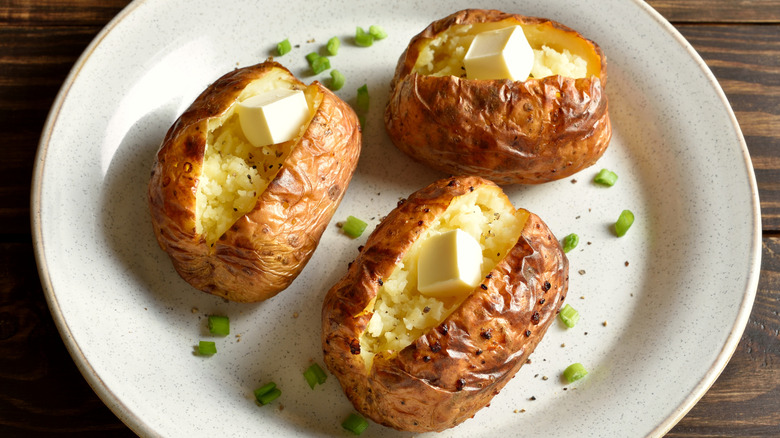
The humble baked potato deserves more praise. In terms of calories, it's hard to find a food that's more filling. In fact, BlueCross BlueShield of Tennessee reported that they had a higher satiety index than any other food tested. While many of us love to make sumptuous dishes like a twice-baked potato, a simple spud without any toppings could re-energize a steelworker. Plus, silverware isn't necessarily required.
Mike Piersa shared a wild story about baked potatoes, courtesy of Don Young, who worked as a historian and steelworker. He now volunteers at the National Museum of Industrial History. When Young was the foreman of their local plant, he recalled tension among the workers. The root cause, pun intended, was potatoes. "The workers had a bet about who brought in the largest potato," Piersa began. "After the score was settled and the bet paid out, the potato was cut open, only to find there was a hollow spot inside. Some men thought this should disqualify the winner, and a fist fight almost ensued." Young was baffled, wondering how on earth he would explain a petty yet dangerous scuffle to upper management, but the workers were somehow able to get back to work peacefully.
10. Hearty sandwiches
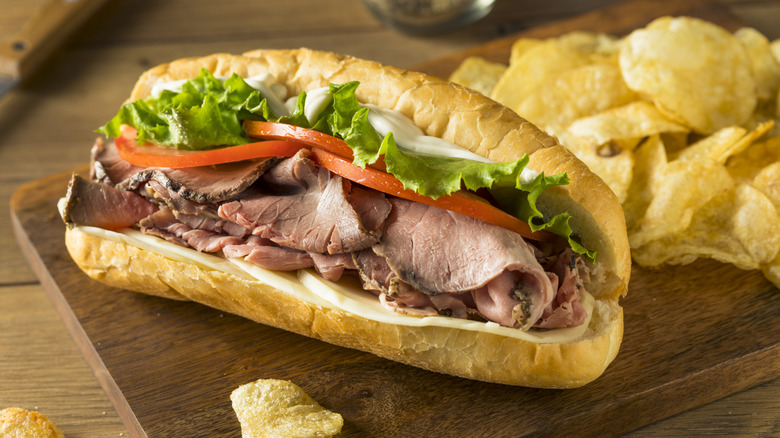
All three experts agreed that sandwiches were one of the most popular meals steelworkers ate across time and cultural backgrounds. You could cram anything between portable bread and consume a lot of calories quickly. Barney Terrell highlighted, "We know from the Pittsburgh Survey conducted in 1907 that the average family of a steelworker in Homestead, PA spent about 45% of their money on food, about $2.60 per week. Of that, nearly 50% was spent on meat and bread." In the Homestead, PA, region, West Virginia pepperoni rolls were a particular favorite.
Mike Piersa added that stopping by a local deli on the way to work was a small luxury for some workers. Roast beef sandwiches from Goosey Gander, which is still in business today, were one of the choices favored by workers in the Bethlehem, Pennsylvania, area. Susan Lowery shared that Isaly's is a well-known local brand founded in 1904. One of its most famous deli meats is Chipped Chopped Ham. "This lunch meat was very useful and convenient for to-go sandwiches and, more importantly, very inexpensive," she explained.
To make their sandwiches taste better, steelworkers tested their luck heating them with the piping-hot equipment. "At one point, someone had created a tool that sort of looks like a fly swatter made of metal with a long handle," Lowery said. "The men would lay their sandwiches on the flat end piece to heat their meal." Of course, this meant that their sandwiches came back nice and toasted but coated in soot.
11. Pizza
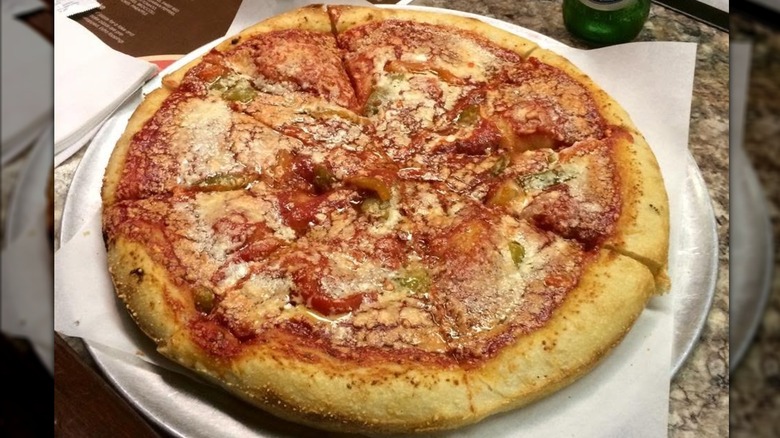
When asked about the large immigrant population among the steel workforce, Susan Lowery stated, "Yes, we had a lot of immigrants that came to Youngstown to work in the mills." She went on to explain that Italians in the region created their own style of pizza called Brier Hill Pizza. Its defining trait is the lack of mozzarella cheese. The exclusion of mozzarella likely wasn't a taste preference but more a financial choice as steelworkers didn't earn enough to comfortably purchase it regularly. But dairy lovers, don't despair, because these crafty Italians topped these pizzas with grated Romano for some richness.
Brier Hill Pizza was bulked up with veggies — potentially those that the steelworkers' families grew in the garden. While these gardens were vital to cut costs, there's no doubt that fresh vegetables and herbs tasted divine enough to make the workers forget about the mozzarella. Best of all, no silverware was required, so it was a quick, filling meal.
12. Empanadillas and pastelillos
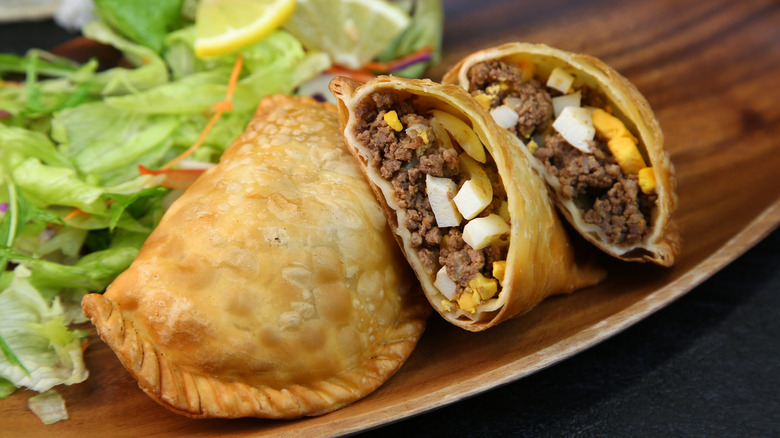
It's important to understand how America's changing political atmosphere affected the labor force. In 1924, the National Origins Act was passed, which tamped down immigration numbers. Since the Jones Act granted Puerto Ricans citizenship in 1917, Puerto Rican migration increased, with many moving to the Rust Belt, where plenty of steelworking jobs were available. Like other immigrants, they brought comfort food from home in their packed lunches. Susan Lowery learned more about the Puerto Rican steelworkers from a friend with Puerto Rican heritage, Stephanie Godsey, who works at another nearby museum, the Mahoning Valley Historical Society. Lowery shared that "Puerto Ricans had items like empanadillas or pastelillos. Puerto Ricans also ate a lot of rice and red beans with chicken."
Empanadillas and pastelillos are both pockets of dough filled with a savory mixture of meat, veggies, and spices. The exact definition can vary, but the main difference is often that pastelillos are thinner and flakier, while empanadilla dough has more oomph. These dishes were excellent choices for steelworkers because they're handheld and could be filled with whatever ingredients were available at the time.
13. Meals from local vendors
Barney Terrell and Mike Piersa both emphasized the fact that mill floor workers had to rely on packed lunches. Terrell said that this boiled down to logistics. These sites were so large that they stretched several miles. For safety, offices had to be separated from the boiling-hot mill floor. Anyone who worked in or near more accessible office buildings could treat themselves to a hot, fresh meal in the canteen, which started operating in the early 1900s.
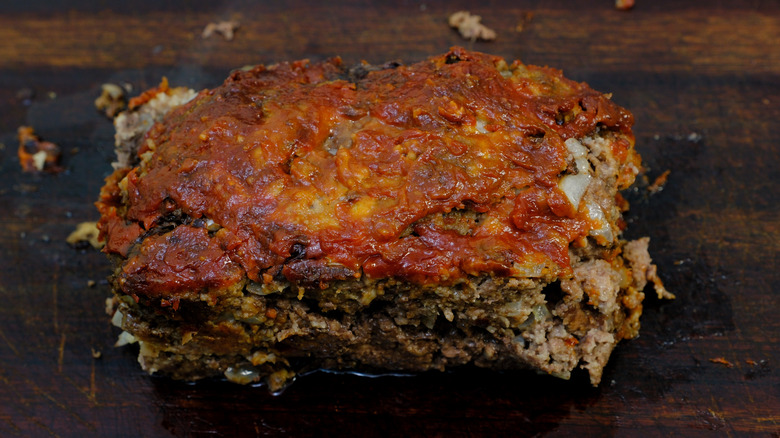
"Each mill had its own canteen, or several around the site," Terrell began. "Homestead employed 13,000 people in the 1950s and more or less operated like a small city with its own fire department, police department, etc." One 1970s canteen menu in the Rivers of Steel museum offered goodies like burgers, hoagies, meatloaf, and even breaded mushrooms. When employees worked overtime, Terrell said they would sometimes receive meal tickets as a reward.
Mike Piersa mentioned that food trucks also existed, but they weren't as glamorous as the ones we know today. These vehicles were called roach coaches. "This was a private vendor who came into the plant, serving food from a one-ton pickup truck with a food body on the back," Piersa said. "The food was 'on this side of edible.'" Office workers and plant workers typically made a beeline for the cafeteria instead.
14. Water, liquor, and everything in between

Although most beverages aren't technically a meal, their importance deserves attention. Water was life-saving because the heat was unbearable. Barney Terrell said, "Into the late 1910s, waterboys as young as 11 or 12 would tote water buckets around the steelworks for the workers." Regular water wasn't enough to replenish electrolytes, though. Susan Lowery added, "What we know is that steelworkers used salt tablets for their drinking water. This is because the workers lost a lot of sodium through their sweat." Of course, once Gatorade was invented in 1965, it became a common electrolyte drink. Sodas and coffee were other much-needed pick-me-ups.
What's most interesting is the steelworkers' thirst for alcohol. Mike Piersa said that "a local drink was known as a 'puddler and a helper' in reference to the job title of the person who worked the puddling furnace where wrought iron was made. This was a shot of whiskey and a glass of beer." Terrell also mentioned this alcohol pairing. He explained, "Steel plants produce all sorts of dust, and at shift change shots and beers would be lined up on the bar waiting for the workers." Beer also helped the workers unwind after a long day. Piersa said that up to eight steelworkers would pile into the same vehicle and, except for the driver, drink a quart of beer while carpooling home.