

Mistakes Everyone Makes With Sweet Potato Casserole
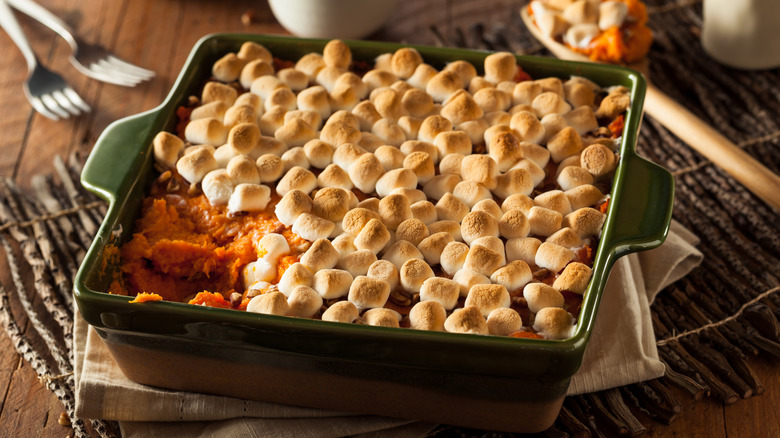
As the holidays rear their head, sweet potato casserole might be on your mind. While you could eat it at any time of year, it's a major player on the Thanksgiving table, yet so many people get it wrong. There are some common mistakes people make with sweet potato casserole, leading to it not coming out quite the way it should. Too sweet, too savory, too many marshmallows, not enough marshmallows — there are so many potential stumbling points.
Of all the sweet potato recipes out there, sweet potato casserole is among the most divisive. That's why we reached out to four experts to get their opinions on the common pitfalls. Carrie Barnard is the founder and recipe developer at Eating on a Dime. Heather Richie is a food writer from the U.S. South and founder of Les Dames d'Escoffier Ireland. Alicia Charolle is the owner and executive chef of Copper & Thyme in Charlotte, North Carolina. Meredith Kruse is a recipe developer and founder of Our Love Language Is Food. Between them, they have all the sweet potato casserole know-how you could dream of.
Once you learn more about these mistakes everyone makes with sweet potato casserole, you'll discover what to do instead to make yours the best on the block. Don't blame us when everyone comes knocking for your recipe.
Using old sweet potatoes
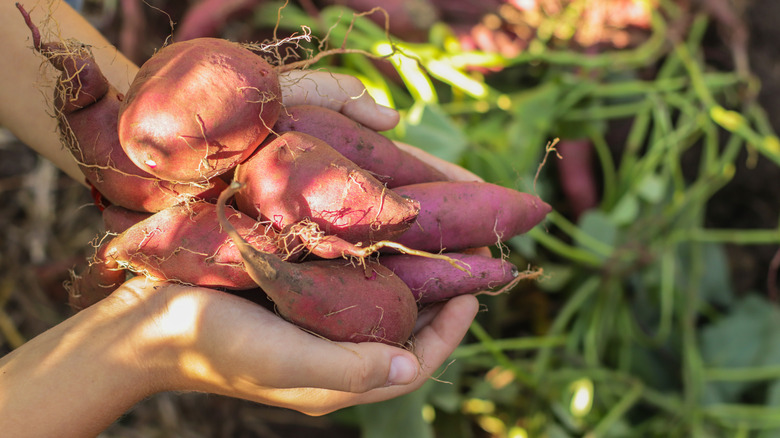
Sweet potato casserole is naturally heavy on the sweet potatoes. And, since they carry a lot of the flavor, you should start with good ones. If you use sweet potatoes that have been sitting around for a long time, you're setting yourself up for failure. They don't necessarily have to be farm-fresh on the day you use them, but if they're shriveled and tired, or they've been languishing in your fridge for weeks on end, it's best to buy a new batch.
"Starting with good, fresh sweet potatoes is important," Heather Richie tells us. "Older potatoes may not give you the flavor or texture you're looking for," she adds. If your sweet potatoes are old, they can be blander and therefore won't give you the most flavorful casserole. Don't fall down at the first hurdle when you're going to all the effort to improve your execution of this classic dish.
Cooking your sweet potatoes the wrong way
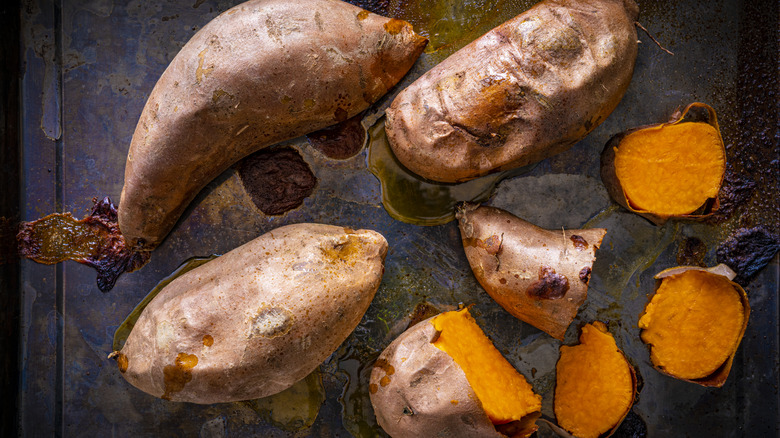
When making mashed potatoes, it's pretty usual to chop them into chunks, boil them, and mash. But, if you do this to sweet potatoes, you're making a mistake. It's extremely common to cook these veggies the wrong way, which leads to a watery casserole. Putting the extra effort in when cooking them improves both the texture and flavor.
Most of our experts recommend roasting sweet potatoes whole, with the skin on. "Prolonged cooking in the oven helps dry the potatoes out and also helps bring out more of their earthy notes, giving the dish a subtler and more complex flavor," explains Carrie Barnard. "While some home cooks opt to boil their potatoes, as they would for traditional mashed potatoes, this can result in a mushier and more watery texture," she adds. This extra water dilutes the flavor of the dish, as well as messes with the texture.
Heather Richie also recommends roasting, but has another method: boiling them whole, with the skins still on, until tender all the way through, which takes roughly an hour, depending on size. "The biggest thing to watch for when boiling is excess water," says Richie. "If the potatoes become waterlogged, you can end up with a loose filling that doesn't set properly." However, leaving the skins on during boiling reduces the amount of extra water they take on, so you shouldn't run into issues.
Undercooking your sweet potatoes
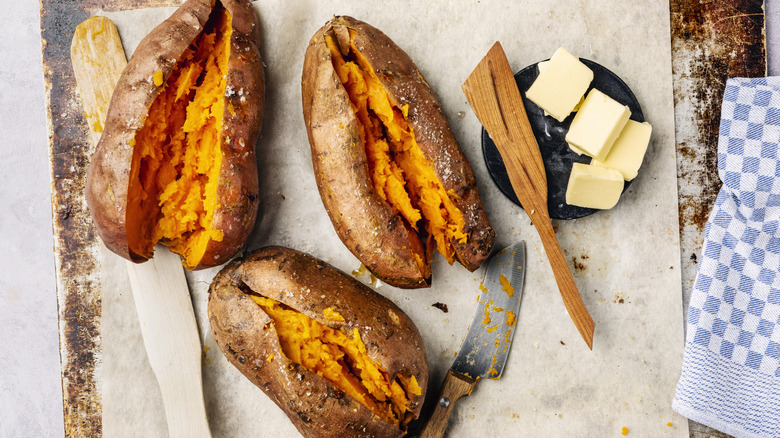
One of the best things about good sweet potato casserole is its wonderfully creamy texture. But, to get this, those sweet potatoes had better be perfectly cooked. Too many people make the mistake of undercooking them, and end up with a casserole that's lumpy or slightly grainy.
"For me, it starts with cooking the potatoes until they are completely tender," says Heather Richie. Although it's good to know roughly when you can expect them to be done, you should also be flexible, since there are variables that affect cooking time, such as oven temperature and potato size. Rather than just watching the clock, make sure you check your potatoes for doneness. A sharp knife should easily slide through when they're ready to go.
From there, you can start mashing and beating them. Richie notes that the texture you're aiming for is almost like pudding. It's not the rough mash that you might do for an everyday side of mashed sweet potatoes.
Making sweet potato casserole overly sweet
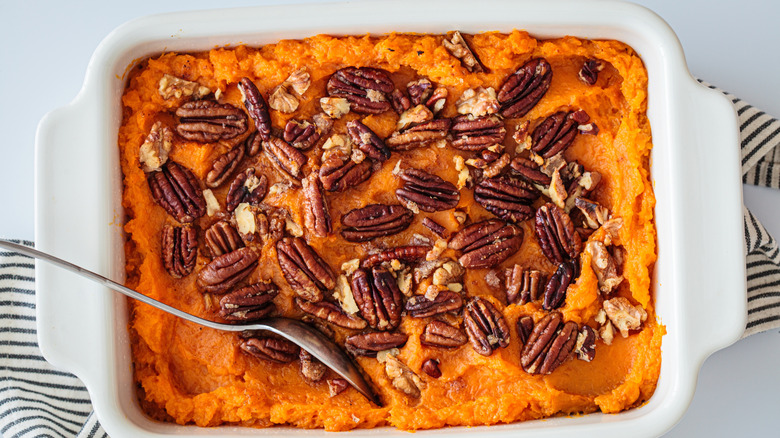
Sweet potato casserole holds a strange position on the dinner table. It's traditionally served with the main course; and while it wouldn't be right if it was totally savory, it's also a mistake to make it so sweet that it's a straight-up dessert. If you're wondering how to keep your sweet potato casserole from getting too sweet, there are ways around it.
Meredith Kruse remarks that it's easy to overdo it because sweet potatoes contain a lot of natural sweetness, and the casseroles usually call for a sweet topping, as well. "I keep the sugar in the filling fairly modest so it's just lightly sweetened, then let the toppings bring the bigger hit of sweetness," says Kruse. "Thinking about the filling and topping as one dish, rather than sweetening each one fully on its own, keeps the whole thing from tipping into overly-sweet territory," she advises.
Marshmallow toppings are popular on sweet potato casserole, but Carrie Barnard points out that this can easily make the dish dessert-like. She recommends a pecan topping instead for those concerned about overdoing the sugar. "If you are planning to use marshmallows, you can offset their sweetness by boosting the savory flavor of the potatoes through long roasting and adding warm spices such as sage, thyme, rosemary, or bay leaves," Barnard suggests. "I would also recommend broiling the marshmallows to achieve a more deep caramelization, which adds more complexity to the sweetness," she adds.
Using a blender to mash the potatoes
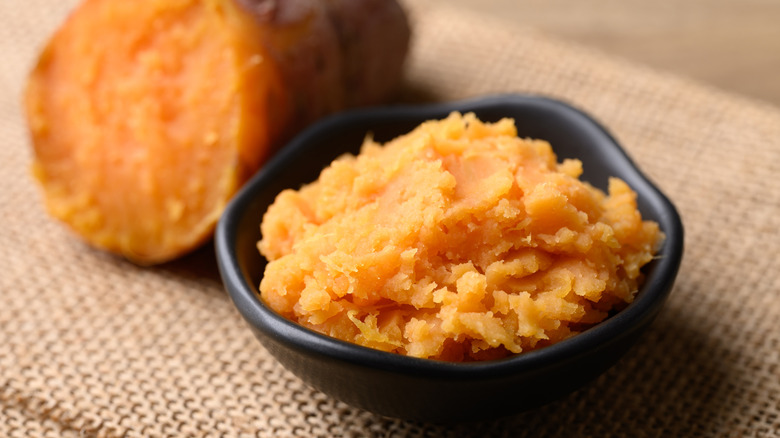
It makes sense that you might think to reach for a blender when you want the smoothest sweet potatoes. However, blending can actually make them turn gluey rather than creamy. So, stay away from the blender and mash them some other way. It might take a little more effort, but the results will be worthwhile.
"The high-speed action of blades in a blender or food processor destroy the starches in the potato, leading to a sticky and paste-like mixture," explains Carrie Barnard. There's just too much power behind a blender, and that can leave you with a disappointing texture.
"Overworking cooked potatoes is what makes them gummy," says Meredith Kruse, who recommends using a potato ricer to get smooth potatoes. "The ricer gives you a silky smooth, fluffy base with very little effort," Kruse remarks. She notes that using a ricer is not only easier than mashing and beating, but also results in smoother potatoes. That said, if you only have a masher, it's a better choice than a blender, it just takes a little more elbow grease.
Adding all the liquid in the recipe at once
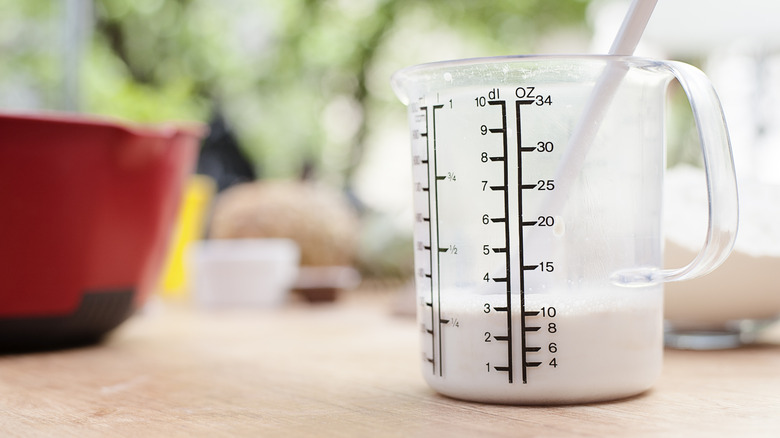
Most novice cooks follow recipes to the letter, and usually this works out. The trouble is that cooking isn't really this straightforward. Lots of variables can change the way a recipe turns out from one time to another, so adding all the liquid in a recipe at once can sometimes result in a soggy, watery casserole.
Say you have a favorite go-to recipe. Nine times out of 10 it may turn out perfectly when you make it as written. But, that one time you might have larger, moister sweet potatoes — or ones that may have absorbed more liquid during the cooking process — can throw off the usual balance of moisture.
According to Heather Richie, you should "pay attention to the moisture in the filling," rather than adding everything in without a second thought. "Add the milk gradually rather than automatically pouring in the full amount, and remember that your potatoes may be wetter or drier than mine," she says. The fact is that no two sweet potatoes are identical, so you can't expect identical results every time.
Use your senses when you're adding the liquid to the potatoes. Do it gradually, and stop when it looks like it has reached a good consistency. This can take some trial and error, but being aware of the potential problem is a step in the right direction.
Adding too few herbs and spices
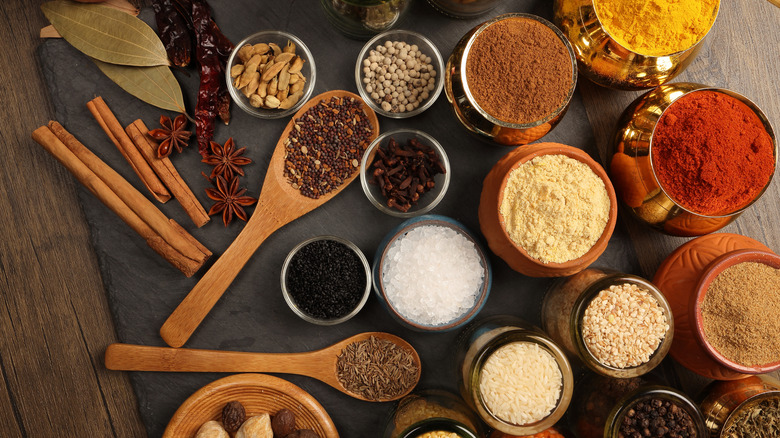
Sweet potatoes are delicious as they are, but that's not what sweet potato casserole is all about. If you add too few spices and herbs, you'll end up with a run-of-the-mill mashed sweet potato with some marshmallows or pecans on top, not the sumptuous casserole that your guests are expecting.
Everyone has their own blend of spices that they opt for, which could be a family recipe or just a preference developed over time. Heather Richie uses a blend of cinnamon, nutmeg, and vanilla, which brings a sweetness and warmth to the dish. You want this to come through strongly, but without totally overtaking the potatoes.
The Thanksgiving hack Marcus Samuelsson swears by is swapping out the sweet spices for savory ones. Instead of loading up on sweet spices like cinnamon and nutmeg, he has a preference for using herbs and chili powder. This brings more savory notes to the dish to balance out the sweetness of other elements of the recipe.
"Sage, thyme, rosemary, and bay leaves all work nicely, as they are a natural complement to the potatoes," says Carrie Barnard. "The goal isn't to have them be a dominant note, but just to add a little bit of complexity and savoriness to the dish," she adds. She recommends getting them into the dish by steeping them in heavy cream, if you don't want to overdo it.
Not thinking about your topping options
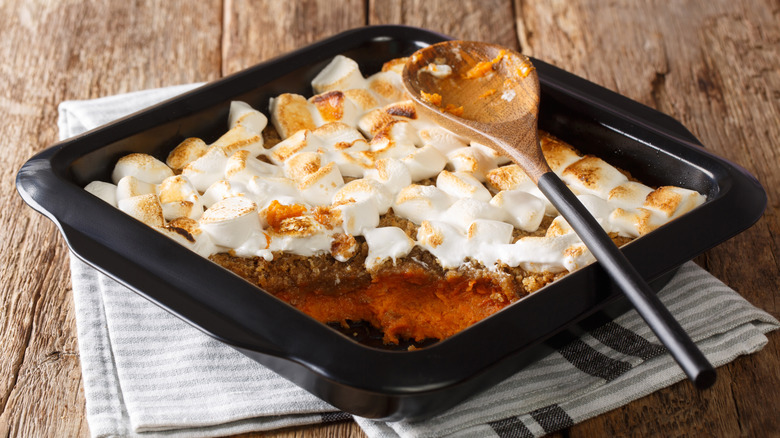
Some ingredients take sweet potato casserole to the next level — including those in the topping. Some believe there's only one way to go, and others don't give it much thought at all, and just follow a recipe. While there's no correct choice, it's important to put some thought behind it.
Heather Richie's go-to is a pecan topping. "I like this topping because it gives you a lovely contrast of textures: A creamy sweet potato filling underneath and a buttery, crunchy topping with the flavor of toasted pecans," she says. "The brown sugar also adds a little caramel-like richness."
But, you don't necessarily have to go down the classic route with a pecan topping. "To zhuzh up the traditional pecan topping, chop the pecans into pieces and mix them with panko, brown butter, brown sugar and a little Aleppo pepper," Alicia Charolle suggests. "You still get some sweetness, but the panko adds crunch and the Aleppo pepper gives it a little sweet heat."
Marshmallows are the other classic topping for this kind of casserole. However, you don't have to choose just one or the other when you could have both, like Meredith Kruse does. "My streusel is made with flour, brown sugar, old-fashioned oats, and cold salted butter, so it bakes up crumbly and golden with a great texture," she says "Then right at the end I add mini marshmallows and toast them under the broiler." This gives a combination of crunch and gooeyness.
Failing to balance flavors
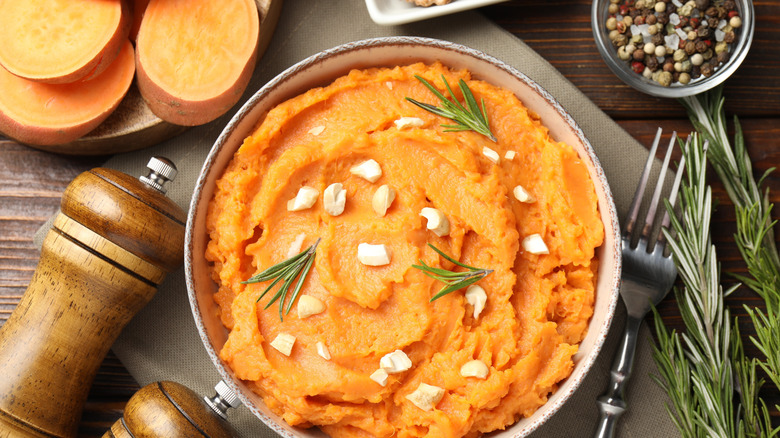
If you're not careful, your sweet potato casserole can end up too sweet — and not much else. This might be fine, but the result can lack complexity, and can also leave the dish underwhelming. The mistake is not balancing the flavors. Once you figure out how to do this, you'll see vast improvements.
"A subtle touch of acidity is a powerful tool for counterbalancing sweetness," says Carrie Barnard. "Adding a dash of lemon juice or some apple cider vinegar to the potato mixture will brighten up the flavor without adding too much sourness," she tells us. You don't have to use a lot to taste a significant difference. She also advises home cooks not to shy away from adding savory notes to the casserole. "Being a tad more generous with the salt than you might think will yield a more complex and vibrant dish," Barnard adds.
There are various ways of creating a more balanced casserole. Alicia Charolle recommends either cutting down on the sweetness from ingredients like brown sugar and maple syrup, or adding in more savory elements, such as herbs or parmesan. "You could also try using Japanese sweet potatoes, which are less sweet and have a nuttier or earthier taste," she remarks.
"I think balance comes from the combination of ingredients rather than sugar alone," says Heather Richie. "Brown sugar brings depth, white sugar adds straightforward sweetness, butter gives richness, and the spices make everything taste warm and familiar."
Not using enough butter
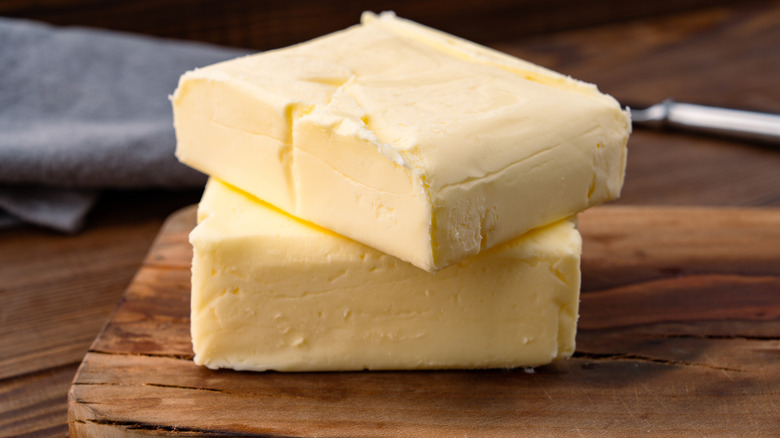
A common mistake people make with sweet potato casserole is not adding enough butter. We're often taught to use it modestly in cooking, but this casserole is all about excess, so it's not the place to cut back. Taylor Swift's go-to sweet potato casserole from Del Frisco's Grille, for instance, contains a full pound of butter, so don't skimp.
"One of the major lessons I've learned over the years is not to be shy with butter when making your sweet potato mixture," says Carrie Barnard. "Butter adds a light richness that boosts its savory, nutty flavor while also contributing to a creamy texture," she says. It brings a lot more to the dish than you might initially realize. And, using a salted butter adds some extra savory notes to help balance out this dish.
If you ever have issues incorporating it into the dish, especially if you let your potatoes cool before mashing, there's a simple solution. "Melting the butter and combining it with warm milk or cream before adding it to the mix will help ensure that it mixes uniformly with the potatoes," Barnard tells us. Just take whatever liquid is in the recipe, and warm it with the butter to melt it before mixing it into the potatoes.
Not embracing the over-the-top nature of sweet potato casserole
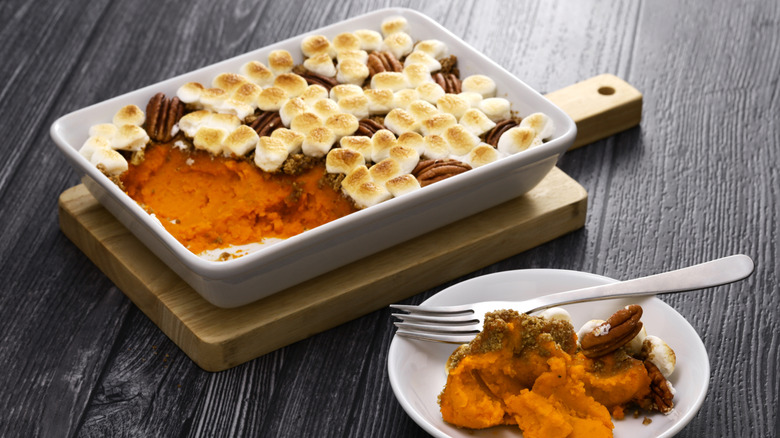
If you're desperately trying to tone down sweet potato casserole, or you've made it a bunch of times and find it too dessert-like, perhaps the best thing you can do is relax into it. Sure, it could be considered a little jarring to eat sugary sweet potatoes topped with marshmallows next to savory foods, but if you want to include it on your holiday table, you just have to embrace it.
"When I first started making Thanksgiving dinner, I used a recipe that was overly sweet and it was just too much for me," Alicia Charolle tells us. "I honestly didn't make sweet potato casserole for many years because of this," she adds. Of course, you can adjust the sweetness so it's at a level you like, and you can add more savory or acidic notes to create balance, but it is what it is, and that's why it's so beloved.
There's nothing wrong with embracing the classic, over-the-top nature of sweet potato casserole. "If you have a tried-and-true family recipe you like, then stick with that," Charolle says. "Or, use it as a baseline to make some small changes and play around with changing the flavors a little."