

10 Old-School Halloween Candies That Make Boomers Nostalgic
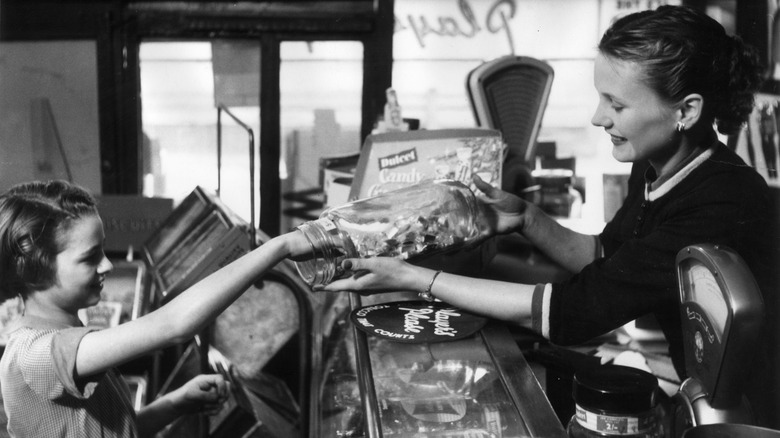
Candy still reigns supreme in our world of sweet tooths, but different candies have defined each generation as tastes continue to evolve. Boomers, born roughly between 1946 and 1964, enjoyed some sweets as kids that have since become timeless classics, while others were gradually overshadowed by more enticing confections. Since the time when boomers were growing up, popular Halloween candies have taken many forms, from chocolate sweets filled with nuts or caramel to chewy, fruit-forward gummies. Packaged individually, some of these treats would have been particularly well-suited to trick-or-treating, though many were sought out around Halloween for the annual excuse to simply enjoy more candy. Many of these Halloween goodies on our list were already popular candies Americans ate in the 1960s. Others date back much further and had become nostalgic classics by the time boomers first tasted them.
Though many of these retro treats defined the boomer generation, some have since become hard to find, and their scarcity makes them all the more sentimental when they do make the odd appearance. Sweet and sour, crunchy and chewy, here are 10 old-school Halloween candies that are sure to make boomers nostalgic, and whose enduring appeal speaks to a taste for sweets that transcends generations.
Chuckles
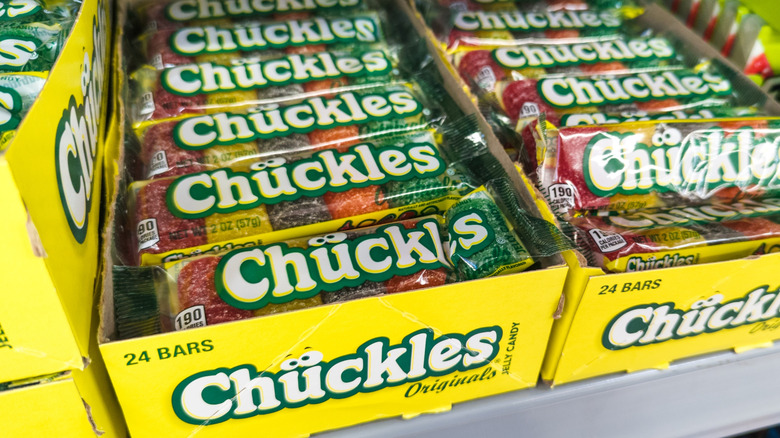
First introduced in 1921, Chuckles were a refreshing, fruit-flavored addition to popular candy profiles at the time. Sold as a selection of cherry, lemon, lime, and orange, these gummies were balanced with the wildcard fifth flavor: licorice. Invented by Fred Amend, who had already made a name for himself as a marshmallow maker, Chuckles were the result of candy experiments for textural innovation. With a chewiness similar to Dots or Jujubes, this confection was a precursor to many different variations as one of the first successful jelly candies. Dusted with sugar, the first bite offers a satisfying crunch, an effect which, combined with the variety of flavors, ensured long-lasting popularity in the following decades.
The treat made a resurgence during World War II, during which the Chuckles were distributed to servicemen and volunteers overseas — as many as 85,000 boxes. It is perhaps this resurgence during the 1940s that set them up to be a preferred candy among boomers, who would have grown up in the wake of Chuckles' renewed popularity. Since the beginning, the flavors have not changed, and the five varieties evoke nostalgia for many who grew up in midcentury America. Though enjoyed at any time of year, Chuckles were no less delightful to recieve through trick-or-treating efforts once Halloween rolled around. Overshadowed by more contemporary candy brands and the smorgasbord of chewy, jelly gummies available today, Chuckles might not be a Halloween go-to anymore, but despite being increasingly hard to find in stores, they are still around.
Nik-L-Nips
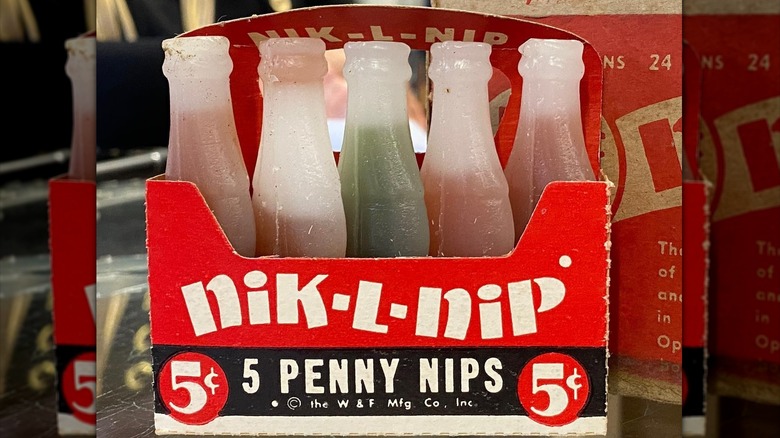
Nik-L-Nips are a candy as unusual as their origins. While other sweets require feats of chewing to navigate varying degrees of sticky, gooey, or crunchy textures, Nik-L-Nips were candies meant to be sipped. Sweet drinks sealed into minuscule wax bottles, these treats were a resourceful solution to address an abundance of petroleum byproducts. Paraffin was what was left over from the process of refining kerosene, a major fuel source in the mid-19th century. As a way to make use of this waxy byproduct, paraffin became abundantly used in everyday items like candles, sealing wax, and, eventually, candy.
Nik-L-Nips appeared in the early 20th century, and were one of the most enduring versions of paraffin-based candy. The wax bottles, made with food-grade paraffin, became an iconic fixture for many childhood memories. Sold in five-and-dime stores, these bottles were a huge hit post WWII, with a pack costing a nickel, easily purchasable with pocket change. Therein lie the origins of the candy's name: The "Nik" comes from nickel and the "Nip" is the nibble that's necessary to get to the syrup inside. Though not intended to be edible, the wax bottle is no less delightful to chew. Though best to avoid swallowing, these satisfied many a sweet tooth after all the syrup was sipped from inside. Today owned by Tootsie Roll, Nik-L-Nips are still available, but don't typically appear as a Halloween treat, which would have been more mainstream when boomers were growing up.
Cherry Mash
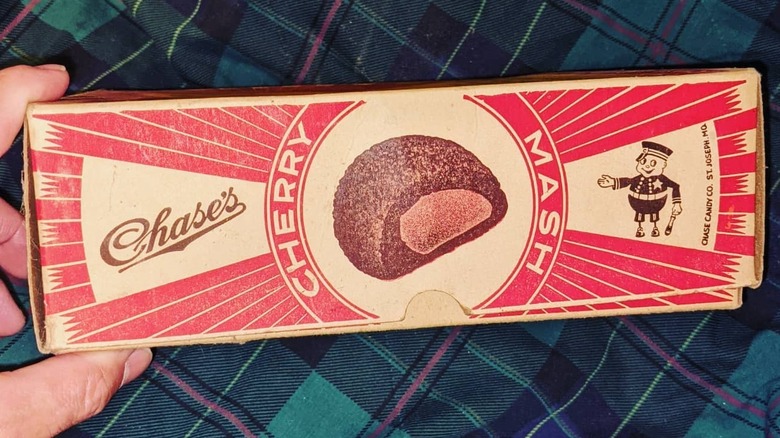
Cherry Mash was introduced by the Chase Candy Company, which dates back to Missouri in 1876. A reputable maker of chocolate and peanut confections, Chase's Cherry Mash was a new treat when it came out in 1918. With a coating made of chocolate and crushed peanuts, it was the interior that made Cherry Mash stand out. The chewy pink center encapsulating tiny chopped pieces of maraschino cherries provides a texture that resembles thick cake frosting but is similar to nougat and slightly easier to chew.
While a popular candy in its early years, Cherry Mash faced production decline in the 1930s and '40s, following lack of resources and rationing restrictions during the Depression and WWII. But this did not have an impact on the candy's popularity, as Cherry Mash was in high demand by the 1960s. The demand was so high, in fact, that the Chase Candy Company built a separate plant dedicated exclusively to the production of its most popular treat. Halloween would have been a happy excuse for young boomers in the Midwest to enjoy more Cherry Mash, and these individually-packaged goodies would have been convenient to distribute. Since the '60s, these candies also became available in big box stores, notably Walmart. The retailer's recent decision to remove Cherry Mash from its shelves in early 2026 put customers in an uproar, proving that Cherry Mash still has an avid consumer base, even if these timelessly tasty candies are not so easy to find anymore.
Mallo Cups
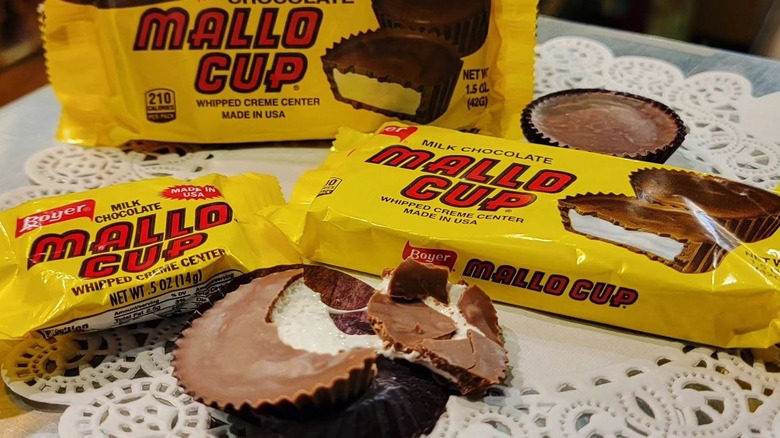
Originally introduced in the 1930s, Mallo Cups were among many different kinds of candies that the Boyer Brothers started producing out of their kitchen in Pennsylvania as a way to make some extra money during the Depression. Their confections were a hit, which inspired them to experiment with different variations and fillings. Their concept of covering a whipped marshmallow center with coconut-studded chocolate became the iconic Mallo Cup in 1936 thanks to an idea from their mother, who suggested they prepare the whole thing in a cupcake liner.
Though many consider this the first candy in a cup, Mallo Cups were a contemporary of Reese's peanut butter cups, first introduced only a few years prior, in 1928. The Mallo Cups instant popularity proved the success of this candy concept — milk chocolate with a gooey filling was a hit no matter who was making it, and Halloween was a good excuse to enjoy them with relish. Mallo Cups were still highly popular in the 1950s, another nostalgic treat kids growing up in this era often procured from the local drug store, accessible at a nickel a cup. Besides being popular candies, Mallo Cups were a success for their "play money," a strategic marketing tactic. Each treat came with a cardboard token that could be redeemed for free candy, and later, for Boyer merchandise. Today Mallo points are still in effect, but the candies themselves are much less prevalent than the mainstream peanut butter cups that have converted chocolate candy lovers.
Boston Baked Beans
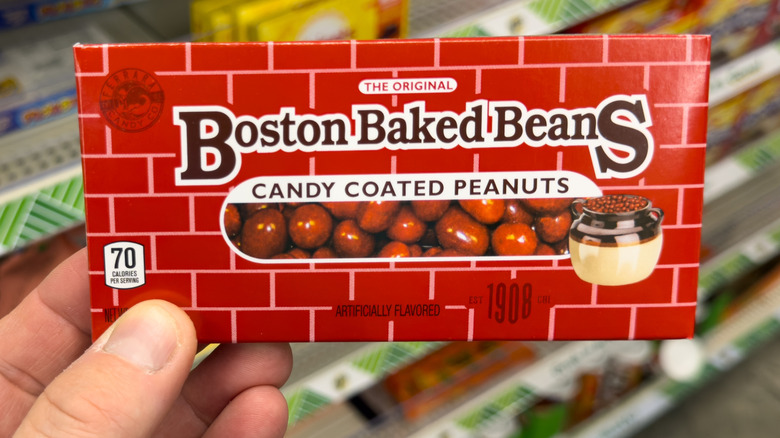
This treat takes the same name as the molasses-infused bean dish hailing from colonial Boston and typically eaten with brown bread. But Boston Baked Beans are also a retro candy that many boomers recognize with delight when they come across them. First introduced in the late 1800s by the New England Confectionary Company (Necco), these sweets came out at a paradoxical time: The original Boston baked beans' origins had come to an end yet a period of Colonial revival had just started. The candy version of these beans became especially popular in the 1920s, when the Ferrera Candy Company devised its own recipe.
There are absolutely no legumes in a box of Boston Baked Beans. Rather, the treats consist of shelled peanuts coated in a red candy layer. The result is a treat that's delightfully crunchy and deliciously old school. Essentially, these imitation baked beans resemble peanut M&Ms without the chocolate layer in between. Their popularity might have started to wane as of 1954, when peanut M&Ms were first introduced to consumers, capitalizing on a widespread taste for peanuts by merging it with the ever-pleasing chocolate. While peanut M&Ms are a treat that might be a more mainstream option to distribute to trick-or-treaters today, Boston Baked Beans in their retro red boxes still inspire delight, even if they are a little harder to come by.
Sugar Babies
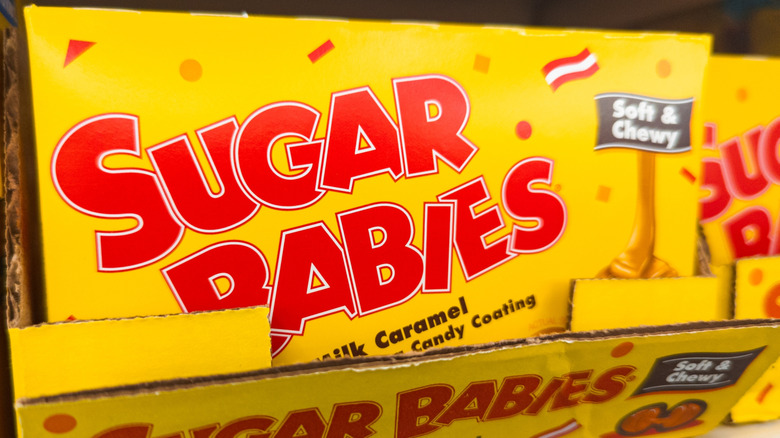
Before Sugar Babies, there was the Sugar Daddy, a caramel lollipop wrapped in yellow wax paper. Introduced in 1925, this treat's name is as old-fashioned as its appeal, coming from the notion of a rich man who would pay out for a young woman's company. The reference to this archetype was clear 10 years later when Sugar Babies were introduced as the candy offspring of the then well-known Sugar Daddy lollipop. Consisting of bits of milk caramel with a candy coating, these sweet, bite-sized treats had a widespread appeal. They were further popularized because of the pan coating technique that went into making them. By cooking Sugar Babies with a candy coating, these caramels were sealed off to be naturally heat-resistant, something noteworthy for the time period when refrigeration wasn't widespread and caramel confections might otherwise have been prone to melting.
Sugar Babies remained a mainstream delight well into the 1960s, and Halloween posed a good excuse to seek them out. The candy has since changed ownership several times, from Nabisco in the 1980s to Tootsie who owns the candy today. Their caramel sweetness keeps them a retro classic that might be spotted more often in movie theaters than store aisles. They may have been surpassed in popularity by Milk Duds, one of today's Halloween staples, which take the sweetness up a notch with a caramel interior coated in chocolate.
Flying saucers
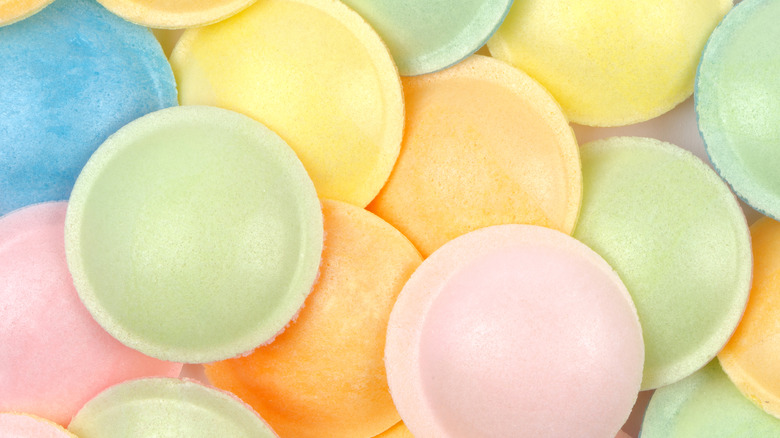
Invented in Belgium in the 1950s, flying saucers were a product of their time and the result of a curious set of circumstances. Also known as Satellite Wafers, these fruity flavored rice crackers with an even sweeter interior were an invention of necessity. Devised by a company that was known first and foremost for producing communion wafers, flying saucers were a creative attempt to boost sales. Shaped like UFOs, these little sweets were timely as the world was gearing up for a space craze in the following decades. These treats enjoyed continued popularity throughout the 1960s in tandem with the space race and a rising interest in science fiction.
Filled with an assortment of different textures, flying saucers were a colorful and unique addition to the candy market. Depending on the regional variation, they might be filled with sherbet powder that's sweet and fizzy with a slight tang. Other variations are typically filled with chewy multicolored candy beads that resemble sprinkles. These saucers certainly stood out, texturally and visually, from other midcentury sweets that boomers grew up with and completed any trick-or-treating collection with their fun colors and textural distinction. Flying saucers remain a whimsical retro delight for the taste buds, and each crunchy, fruity bite makes them dangerously snackable for those who can still get their hands on them today.
Candy cigarettes
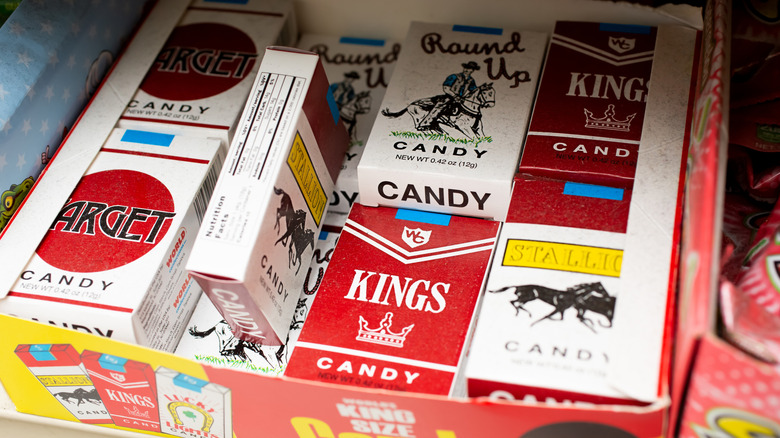
Candy cigarettes have taken on many forms over the years. The earliest iterations date back to the 1880s, including chocolate cigarettes from Hershey, then a budding company looking for novelty ways of selling its confections. These chocolate sticks fell to the wayside when other brands came up with treats that more closely resembled the real thing. Other common variations were made of bubblegum or came in the form of vaguely sweet, white, and chalky-textured straws. Both came wrapped to look like real cigarettes and some were filled with powdered sugar, which simulated a puff of smoke.
Though controversial, these confections gained popularity after cigarette companies collaborated on advertising schemes to entice younger consumers. These candy versions sold in boxes that resembled real packs of smokes led to the 1960s becoming the peak decade for children consuming the treats. Though these would have been mainstream for many boomers growing up, the 1960s also saw a shift in views after new research made the public aware of the dangers of smoking. Anti-smoking campaigns targeted candy cigarettes alongside real tobacco products. Candy cigarettes were almost banned completely due to campaigns warning of the dangers of encouraging kids to pretend to smoke. Consequently, candy cigarettes have declined in popularity since the decrease in tobacco consumption sparked during the '60s. While still in production, these sweet sticks are increasingly hard to find. Those who still seek them out today are more often nostalgic consumers who once "smoked" them as kids.
Zotz
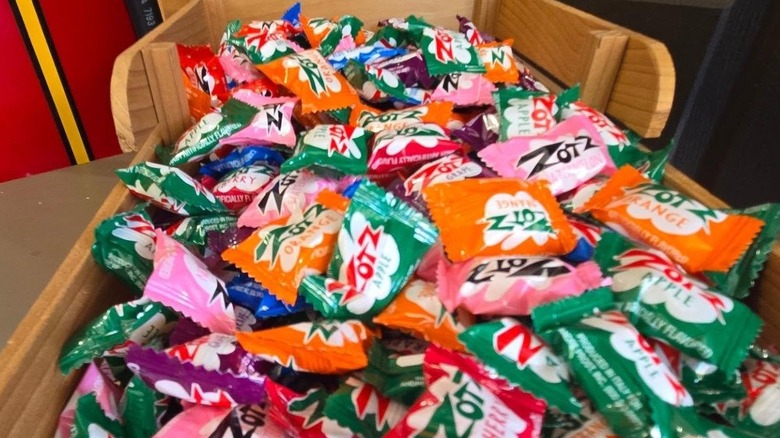
A product of the 1970s, Zotz were another treat that was new to the scene when most boomers were in their teen years. Imported from Italy, these hard candies were a novelty for their fizzy interiors which left tongues tingling through a reaction with saliva. This fizz effect was Zotz's main appeal, and they are still manufactured in the original selection of fruity flavors including blue raspberry, watermelon, apple, and orange.
With an effervescent sensation similar to Pop Rocks, which hit shelves in the 1970s, Zotz changed up the fizzy candy game with their suds sealed inside a hard candy shell. Whether or not these treats and their fizzy insides are best sucked slowly or more amusing to bite into, boomers certainly enjoyed experimenting with different eating methods. Being individually packaged, these would have been an especially convenient candy to distribute for Halloween. Zotz are still available today, and though not widely sold, their novelty hasn't worn off.
Necco wafers
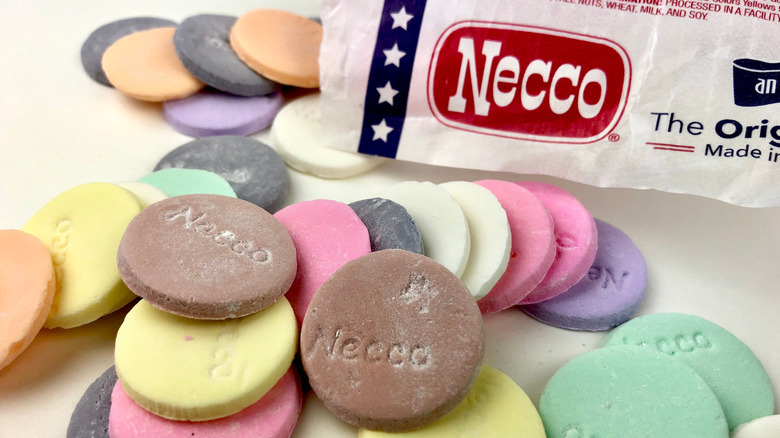
Bearing the same name as the company that produces them, Necco wafers, from the New England Confectionary Company, have been around since 1847. Their chalky texture made them the boon and bane of the 19th and 20th centuries, as their durable longevity turned these wafers into prime candidates for soldiers' rations. They were eaten on the front lines in the Civil War, the Spanish American War, WWI, and WWII. Being heat resistant, shelf-stable, and virtually indestructible, they made for a useful form of sustenance, even if their mildly sweet flavor wasn't anything exceptional.
The wafers still resemble their original form from the mid-19th century, and are still produced in the same eight flavors. The assembly makes for an unusual array, with chocolate and licorice alongside less conventional flavors such as cinnamon and clove. This selection is paired with citrusy options via lemon, lime, and orange, and rounded out with a refreshing wintergreen. A pack of Necco wafers might not have been the most sought after Halloween treat for boomers when they were growing up, especially when compared with newer fizzy, chewy candies that packed more of a flavor punch. But these wafers were, nevertheless, a fixture at the time, and would have already been nostalgic for boomers' parents. Nostalgia is inevitably part of the flavor for anyone who enjoys Necco wafers today. After a brief crisis in 2018, when Necco wafers almost disappeared for good, new ownership has ensured that this classic candy will live on.