

11 Breakfasts Middle Class Families Ate In The '50s
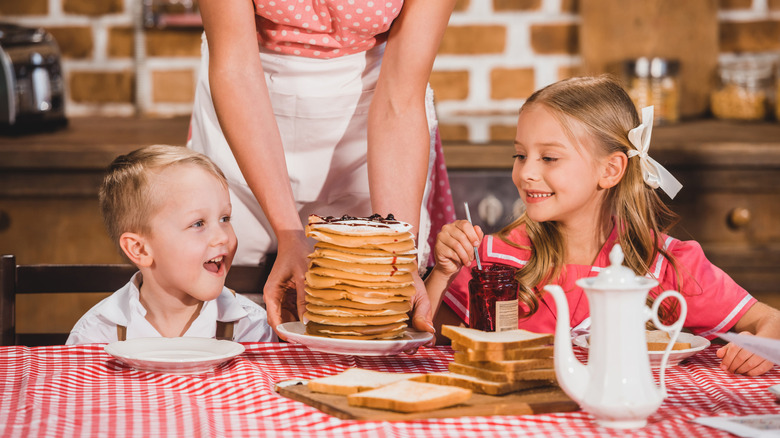
When World War II ended in 1945, the way Americans ate was influenced by changes that came along with the war, well into the '50s. Not only were families in the U.S. looking for easy-to-prepare foods, but this time period also gave birth to improvements in food production, better food supply, and a more convenience-driven food culture. The number of supermarkets also doubled between 1948 and 1958, making canned, packaged, and processed foods more readily available to middle class America.
Meanwhile, the 1950s middle class kitchen was also fully equipped with an electric range, refrigerator-freezer, and all types of skillets, blenders, and mixers. This extra equipment meant that preparing meals was easier than it had ever been. And food manufacturers capitalized on this trend toward convenience — assuring families that their processed, frozen, and canned foods were not only easy to make, but also high in quality and healthfulness. And mealtimes, including breakfast, featured more convenience foods like cold cereal, Spam, and canned corned beef hash.
That said, families in this decade still lingered over breakfast, and started some days, particularly the weekends, with a hearty meal like bacon and eggs, a cup of coffee, and the newspaper. And on busy school mornings they might enjoy cereal, orange juice, and toast. Here's a closer look at what middle class families were eating for breakfast in the 1950s.
Cold cereal
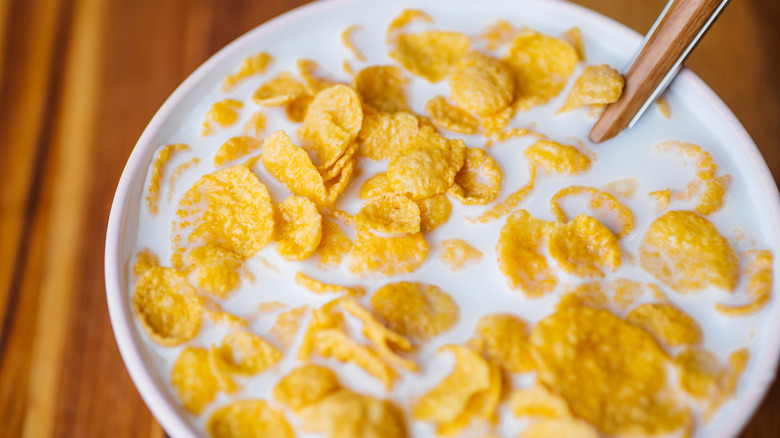
Even though cold cereals were available long before the 1950s, it wasn't until this era that this convenience food became synonymous with breakfast in many middle class homes. This new interest in breakfast cereal was largely influenced by the marketing and advertising efforts of cereal manufacturers that started targeting younger generations with catchy ads and cartoon characters. Manufacturers also began adding sugar to cereals to make them more palatable — and appealing — to their younger customers.
Sugar Crisp was the first cereal to make an animated commercial, and promoted the idea of eating the tasty, sweetened cereal straight from the box. Other manufacturers followed suit with Tony the Tiger hitting the breakfast cereal scene in 1952, and the Trix rabbit leaving his mark in 1959. By the middle of the 1950s, kids and teens would see the introduction of many new cereals including Frosted Flakes, Cocoa Puffs, and Sugar Pops. It was also during this time period that families started using dry cereals for more than just breakfast, and many snacks using cereal started to fill cookbooks. By 1953, families were making Chex Mix, Mix Trix, and other treats.
Canned Corn Beef Hash
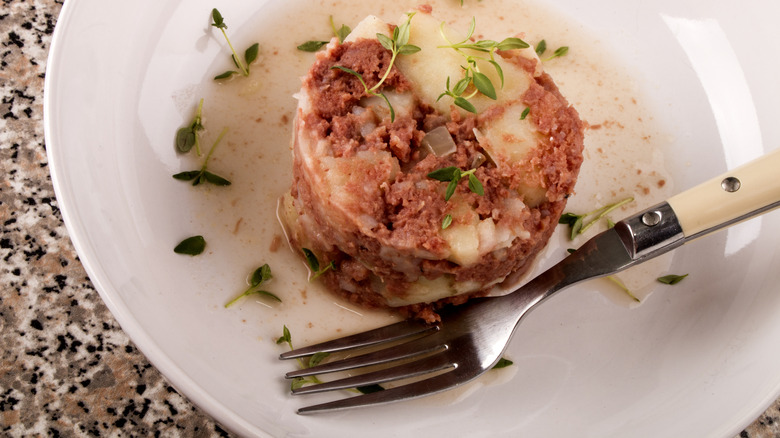
Keeping in line with the push toward more convenient breakfast food items, Hormel Foods introduced canned corned beef hash in 1950. And middle class families looking for quick, easy, and budget-friendly comfort food took to the canned variety like a duck to water. Some families served it heated through, while others may have added eggs and toast. At restaurants, corned beef hash was served with everything from hollandaise sauce and baked beans to corned beef hash patties that replaced the Canadian bacon in eggs Benedict.
Corned beef hash as a dish first became popular in the U.S. after World War II, but has been part of the American diet since the 19th century. It was this popularity that likely led companies to begin manufacturing canned versions, so more modern middle class families could enjoy the comfort of corned beef hash without the time and effort required to make it from scratch.
Making corned beef hash is often limited to St. Patrick's Day menus in March and National Corned Beef Hash Day in September. How it's served also varies, depending on which region of the country you're in. For instance, in New England the dish is served with beets and in the South they might add hot sauce and green peppers.
Biscuits and gravy
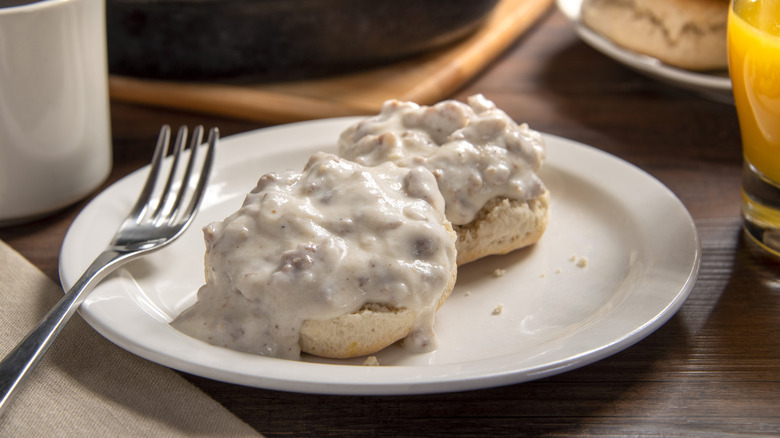
What started as a food of necessity in the South and Appalachian areas, grew in immense popularity across the United States with each region giving the humble biscuits and gravy dish their own personal touch. Some served it with eggs and fried apples, while others used dollops of hot sauce to give it a kick. But no matter how it was presented, biscuits and gravy was a popular dish eaten not only in middle class homes, but also in diners and restaurants.
In 1958, Pillsbury released the first breakable biscuit tube, though biscuits in a tube were first introduced in the 1930s. These convenient and easy-to-make biscuits made this classic breakfast food easier for families to serve, and home cooks could realistically get this hearty meal on the table in about 30 minutes. Biscuits and gravy also started showing up in family-owned restaurants and diners. Even some chain restaurants featured biscuits and gravy on the menu. For instance, Bob Evans, known for their biscuits and gravy, was founded in 1953.
Interestingly though, this dish has continued to transform and can even be found on many upscale brunch menus and retro diners. And though some breakfasts served in the 1950s aren't as popular as they once were, biscuits and gravy is one dish that seems to not only persevere, but transform itself every decade.
Fresh and frozen waffles
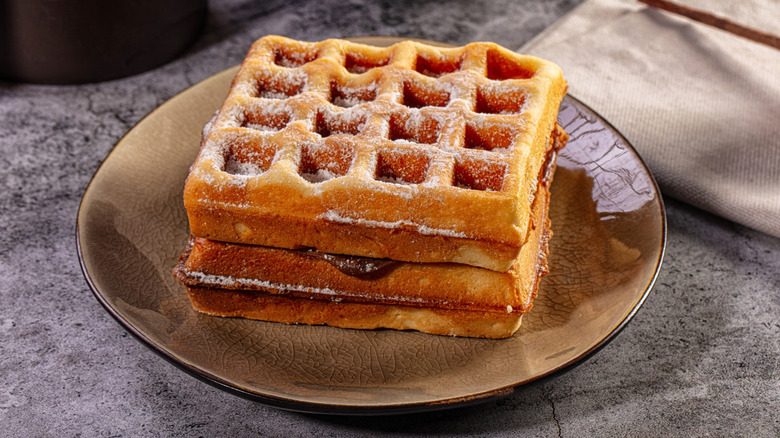
Waffles became a popular breakfast option in the 1950s largely due to convenience. No longer did home cooks have to beat egg whites into stiff peaks to ensure fluffiness when they could look to the growing variety of commercial dry mixes to help create their waffles. Using these mixes, families could get their batter together in no time by simply adding milk, oil, and eggs.
Meanwhile, Eggo frozen waffles — originally known as Froffles — hit the market in 1953. This product was ideal for those families who wanted an even more convenient way to feed their family on a weekday. Plus, they could either serve the frozen waffles alone or alongside bacon and eggs, without spending a lot of time mixing up the batter and then tending to the waffles in the waffle iron.
To further add to the growing popularity of waffles, the Waffle House chain was founded in 1955 in Georgia and offered waffles, among other things, 24-hours a day in a sit-down atmosphere. Today, this restaurant chain has 2,000 locations across 25 states.
Eggs and bacon
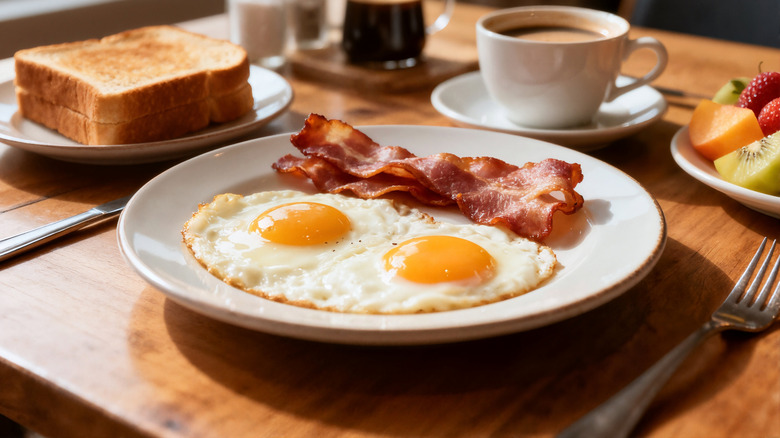
Perhaps nothing is more American than a plate of bacon and eggs for breakfast. And, in the 1950s it was no different. In fact, a meal of bacon, eggs, and toast was likely a common occurrence — even during the week. This was largely due to the fact that after World War II, eggs were plentiful, and middle class families had the money to buy them. In fact, a hearty breakfast in the 1950s often included eggs in some variety — such as scrambled, fried, poached, hard-boiled, and even soft-boiled. People were delighted to eat them in just about any form.
And bacon became the natural accompaniment. Not only was bacon cheaper than other cuts of pork, but it also tasted delicious when fried crispy. Plus, there were no longer rations in the 1950s, so families could stock up on all their favorites, including the king of breakfast meats. To this day, bacon continues to maintain that reputation with more than 2 billion pounds produced annually, with about 70% of this amount eaten at breakfast.
Coffee cake
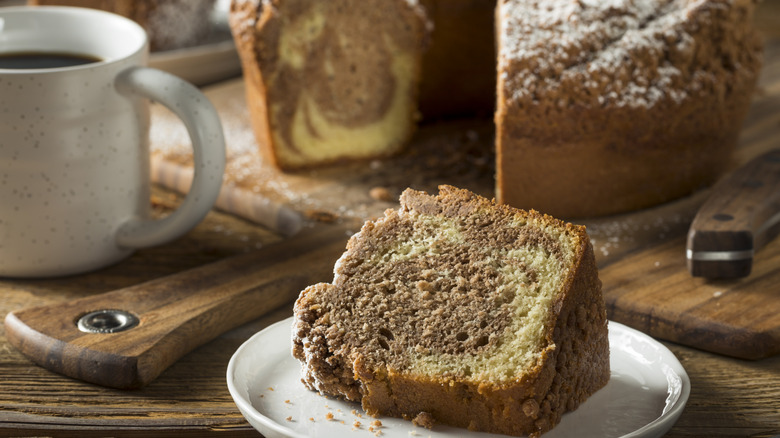
Having a cup of coffee, especially in the morning, was typical for most Americans in the 1950s. And, they often needed something that would pair nicely with this steaming cup of joe. That's when plain cakes like crumb cakes, pound cakes, and marble cakes, became better known as coffee cakes. Often these sweet spiced cakes were made with classic cinnamon and sugar flavors. But sometimes home cooks would get adventurous and add apple or candied pecans. Of course, this type of cake was best served warm, but it could be enjoyed the next day or so as well.
When the Bundt pan was introduced in the 1950s, coffee cake became even more popular. The new pan design also allowed home bakers to create heavier batters and fillings without worrying about them baking evenly. So, many middle class families experimented with a lot of different coffee cake flavors.
Some popular variations in one cookbook included coffee in the actual recipes. Meanwhile, the 1950 edition of "The Betty Crocker Picture Cookbook" featured a method for Prize Coffee Cake, which was the basic cake recipe — plus eight variations, including streusel-filled, apple cake, and blueberry buckle. But no matter the flavor that families chose, coffee cake was considered the perfect start to the day.
Pancakes
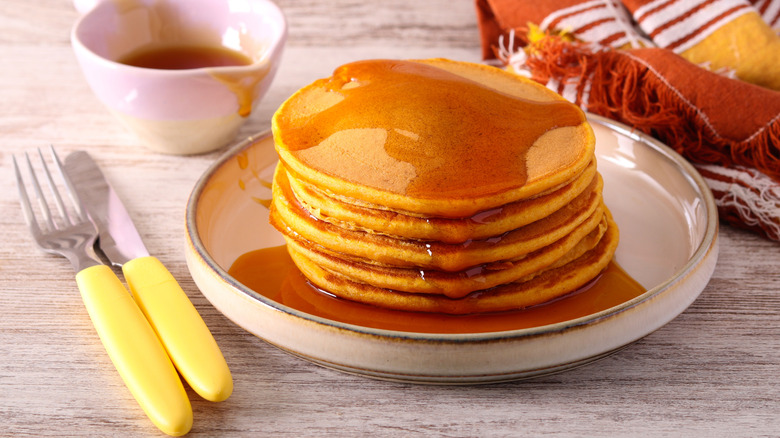
Nothing was better than a stack of pancakes with melting butter and rich maple syrup on a relaxed weekend morning in the 1950s. Some families would whip up a batch of pancakes from scratch, using staples like flour, butter, and eggs while other middle class families started using pre-mixed pancake flours during this time period. Not only could they feed their family faster this way, but it also meant that they spent less time in the kitchen.
It's thought that American-style pancakes came about in the 1700s when Dutch settlers brought their version of pancakes to the area. Because the ingredients were inexpensive, and the recipe was easy to follow, it quickly became a breakfast staple. People were still eating pancakes regularly even into the 1950s, likely because boxed pancake mixes were becoming more popular.
In fact, in 1957 the Aunt Jemima brand (now known as Pearl Milling Company) officially introduced its commercial buttermilk pancake mix. This mix allowed home cooks to create a more restaurant-style pancake by simply adding liquid. Today, there are countless store-bought pancake mixes on the market, and a lot of people still make their Saturday morning pancakes this way.
Orange juice
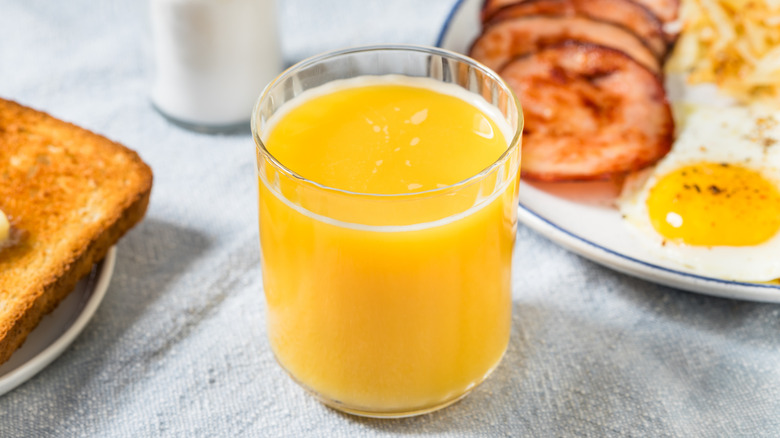
Prior to the 1950s, orange juice most often came from freshly squeezed oranges, so it wasn't something that regularly graced the breakfast tables of middle class families. But after the second world war, frozen orange juice concentrate grew in popularity, and more and more middle class families served orange juice with breakfast, especially because vitamin C was gaining traction as a necessity for good health. But mixing orange juice from concentrate wasn't something families enjoyed, so many would place the concentrate in the refrigerator overnight to allow it to thaw some. This also made them ripe for orange juice with an easier preparation.
Then in 1954, Anthony T. Rossi, an Italian immigrant who founded Tropicana, discovered a way to pasteurize orange juice, and began shipping gallons and gallons of the golden sweetness around the country. No longer did middle class families have to mix the concentrate with water — they could serve it straight out of the container. Then, in 1959, General Foods Corporation made and marketed a powdered form of "orange juice" known as Tang. This creation was in line with the generation's desire for convenience (but Tang didn't really take off until the 1960s, when astronaut John Glenn used it in space).
Hot cereals
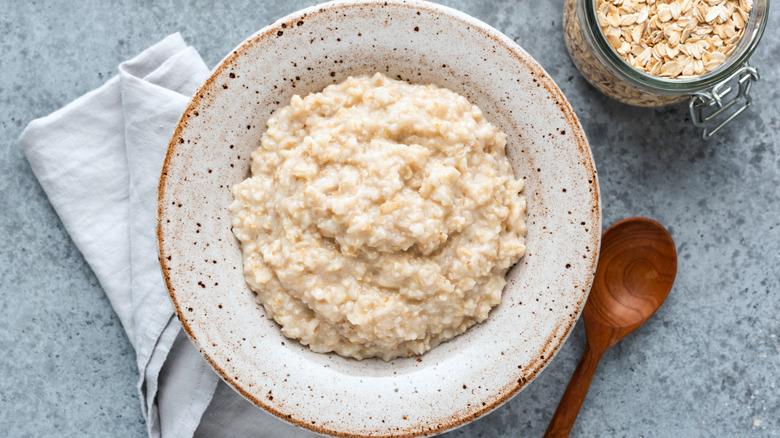
Perhaps nothing is more enduring than hot cereals like oatmeal and cream of wheat. And, even though these wholesome dishes frequented breakfast tables well before the 1950s, they were still making their way to breakfast bowls in middle class homes during that time period. Typically, to make their oatmeal taste better, families topped it with butter, brown sugar, cinnamon, and sometimes fresh fruit.
Part of the attraction to hot cereals during that era was, again, convenience and ease of preparation. In the 1950s, Quaker Oats improved its processing, and was able to take Quick Quaker Oats from a five-minute cooking time to one minute, allowing this porridge to become a popular breakfast choice all over again. Meanwhile, a similar change occurred with cream of wheat. The manufacturer released an Instant Cream of Wheat version in 1958, which cooked in just about 30 seconds. Again, it was the speed at which a hearty dish could be on the table that attracted people. They also appreciated the nutritional density, and likely felt that starting the day with something warm in your stomach was a good thing.
French toast
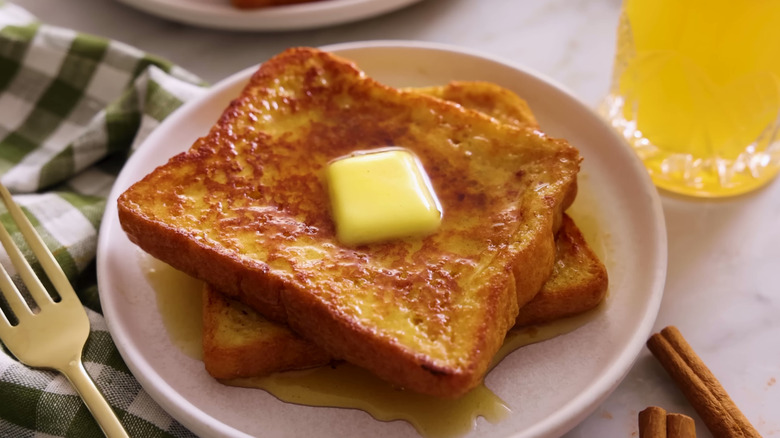
Contrary to popular belief, French toast didn't originate in France. Instead, this humble breakfast dish made with bread that's one to two days old was likely invented by the Romans, though historians don't really know for sure. In France, they do have a dish that's similar to French toast, but they call it pain perdu, which means "lost bread." French toast has gone by other names, too, throughout the years — including eggy bread, Bombay toast, and even Poor Knights of Windsor.
And, just like other classic recipes served in the 1950s, French toast has endured the test of time — especially because it's a budget-friendly breakfast dish that makes use of stale bread. Once it's soaked in a milk and egg mixture sometimes seasoned with vanilla and cinnamon, it's fried in a skillet and then slathered in butter and warm maple syrup. Some people also top it with powdered sugar, fruit, honey, or eat it plain. A newspaper article from 1954 indicated that some people even preferred serving French toast with warm, spicy applesauce. Today, French toast is as popular as ever, with chefs and home cooks alike experimenting with global flavors, sweet and savory combinations, or trying new variations or cooking styles to customize their creations.
Spam-inspired dishes
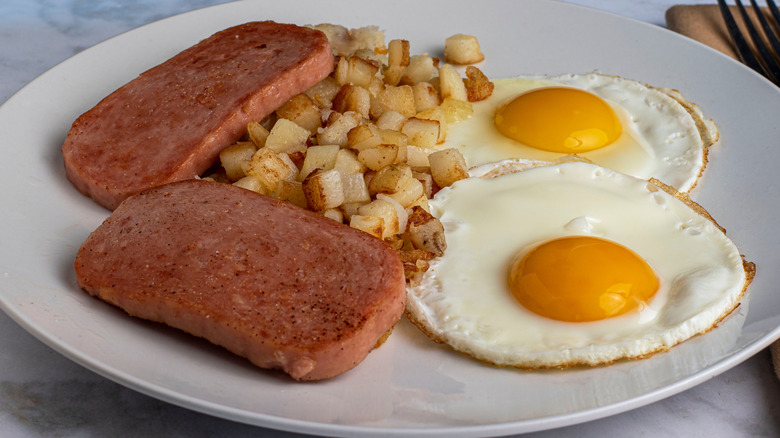
Although Spam was invented in 1937 by Hormel Foods, its sales started to really blossom after World War II and leading into the 1950s, when home cooks wanted convenience above anything else. In fact, the company's sales for the canned spiced ham increased tremendously, and Hormel sold its billionth can of Spam in 1959.
Part of this popularity had to do with its long shelf life, easy preparation, and unprecedented convenience when compared to other meats. Not only could Spam last for months in a pantry, it also required very little work or preparation once it was open. Simply sauté it in a pan, and it was ready to stand in for any breakfast meat — with half the effort or time required. Plus, home cooks didn't have to worry about the meat going bad because it came from a can, and not a butcher.
So, it wasn't uncommon during the '50s to see breakfast dishes featuring Spam. Whether it was Spam and eggs on the breakfast table or Spam breakfast hash, families in that era put it to good use and looked for creative ways to make Spam taste more gourmet. They would even use Spam to make Spam cakes, or slices of Spam placed inside of pancake batter and placed on the griddle until done. It might sound a little odd, but many families enjoyed the combination of salty and sweet that the dish provided.