

10 Defunct Restaurant Chains Every Boomer Remembers
Growing up in postwar America when cars, suburbs, and fast food were all on the rise, boomers had the pick of many restaurant chains that became popular during the midcentury. Catering to this new car-centric demographic and appealing to a youthful or family-friendly clientele, several of these restaurants became after-school, weekend, and special occasion hangouts, garnering timeless appeal with their tried and true menu staples. But despite a widespread cultural demand for eating out, there may have been too many eateries trying to keep up with consumer demands. With changing customer preferences over the years, as well as shifts in ownership, many of these chains disappeared as quickly as they became local fixtures. Many could not withstand the pressures of competition, innovate fast enough, or prioritize customer tastes, all of which led to inevitable bankruptcy.
Offering classics such as burgers, homemade ice cream, or affordable steak dinners, these now-defunct chains reached the height of their popularity in the 1950s, '60s, and '70s. Here is a list of 10 of the most well-known among these restaurants that every boomer remembers, but which have since disappeared.
Lums
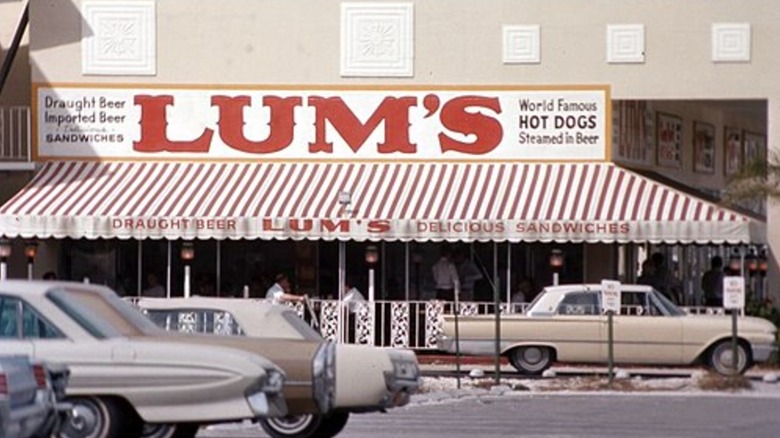
Lums, first called Lum's, was a locally-based chain in the Southeastern United States. The restaurant got its start when a salesman named Stuart Perlman bought a humble eatery in Miami Beach in the 1950s. Perlman continued to serve the specialty item already on the menu: hot dogs steamed in beer. What started as a humble fast food stand expanded over the next two decades to become a chain of over 400 restaurants.
Apart from hot sandwiches and classic diner sides, other iconic items on Lums' menu included a wide selection of international beers, which always came in frosted glasses, as well as the Ollieburger, notable for its patty coated in a special sauce full of spices. Many who grew up tasting these burgers found them to be a delight, while others deemed the spices an acquired taste. Other facets of the menu included a variety of seafood, making for an eclectic assortment that succeeded at pleasing many palates. An emblematic restaurant of the 1970s, Lums' decor has remained a point of nostalgia for many. It evolved into a family restaurant that many boomers grew up going to and a place they frequented with friends after school. But this '70s icon did not live long past the decade. After filing for bankruptcy in 1982, Lums officially dissolved in 1983 and has since disappeared.
Farrell's Ice Cream Parlour
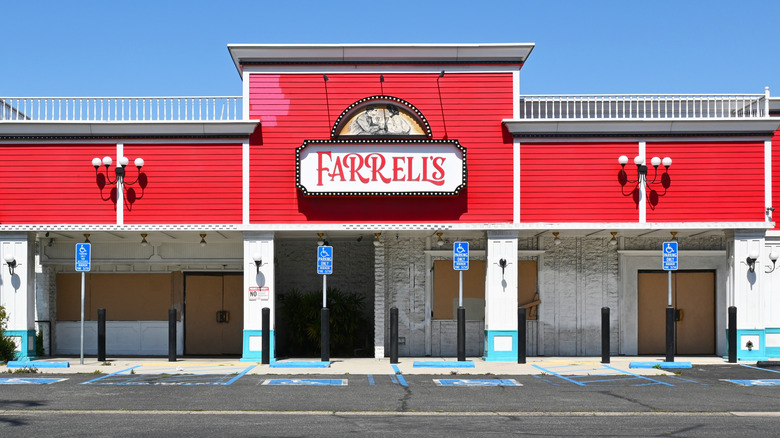
Established in Portland, Oregon, in 1963, Farrell's Ice Cream Parlor was the vision of founders Bob Farrell and Ken McCarthy. Designed to resemble a New York soda fountain with decor that evoked an ice cream parlor out of the Victorian Era, Farrell's boasted an iconic ambiance, and the menu was sure to please. Servers in straw boater hats proferred ice cream sundaes of extravagant proportions under the Tiffany lamps. Though the chain served burgers and sandwiches, it was the dessert section that really made this place stand out, and Farrell's took ice cream sundaes to an unprecedented level. The most elaborate item on the menu was known far and wide as The Zoo and consisted of 30 scoops of ice cream slathered with every topping in the parlor, delivered on a stretcher to the tune of a wailing siren.
This bombastic ice cream chain was the hub for many a boomer's birthday party and remained a fixture well into the 1970s. But by the following decade, a shift in consumer trends and a change to corporate ownership brought Farrell's ice cream parlor to its eventual decline. The restaurant had gone extinct by the 1990s, though the chain experienced a brief revival on the West Coast in 2009. Nevertheless, these too went dark after a decade, and Farrell's has once again become a mythical place of the past.
Burger Chef
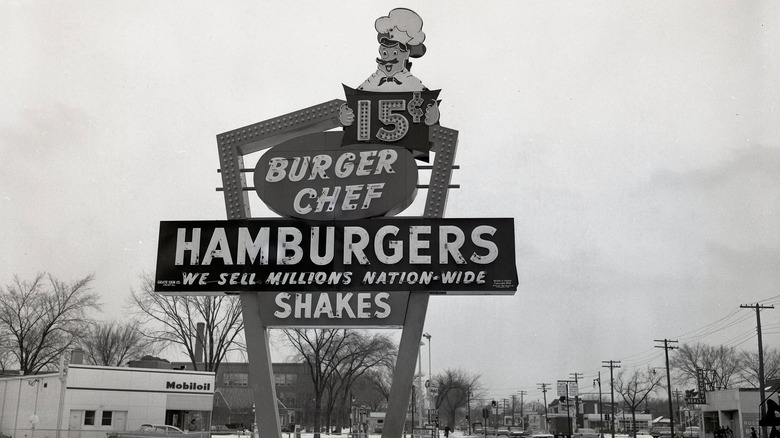
Burger Chef opened its first location in Indianapolis in 1958 and quickly became a fast food staple, spreading to 1,200 locations across the U.S. Distinctive for the smoky taste of its flame-broiled burgers, Burger Chef also enticed many customers with an unlimited toppings bar. This self-serve option allowed customers to enjoy customized burgers, something unique for a fast food chain. Rising quickly as a rival to McDonald's and Burger King, Burger Chef also pioneered the innovation of including a toy with kids' meals. Introduced in 1973, the toys won over young boomers before McDonald's had even launched the Happy Meal, which didn't get a nationwide rollout until 1979.
Despite its innovations and success with customers, Burger Chef did not last. The chain's steady decline began after being sold to General Foods in the late '60s, and then to Imasco in 1982. As the parent company of Hardee's, Imasco oversaw Burger Chef's conversion into Hardee's locations until one by one the restaurant disappeared, with the last spot closing its doors in 1996. Today, McDonald's and Burger King have taken center stage with elements that once defined Burger Chef, such as the former's Happy Meals and the latter's flame-broiled burgers. Though many fast food chains serve something similar to what the restaurant once offered, this chain's innovative ideas nevertheless live on in many boomer's memories.
Beefsteak Charlie's
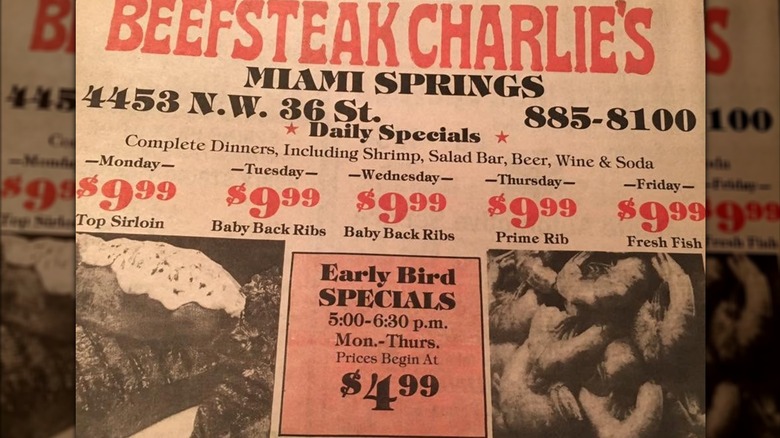
Originally a Manhattan restaurant that popped up around 1910, Beefsteak Charlie's was known for its steak sandwiches. The restaurant changed ownership many times in the following decades, attracting a clientele that ranged from sports enthusiasts to jazz musicians. It wasn't until 1976 that a restaurant chain opened under the same name, and though it shared a title, it didn't have any real connection to the original Manhattan restaurant. Rather, Beefsteak Charlie's replaced numerous locations of a different 1970s restaurant chain, Steak & Brew, and adopted the menu's quirks, such as unlimited salad and shrimp, and endless beer, wine, or sangria. Beefsteak Charlie's also offered beefsteak and sirloin, a parallel to its Manhattan namesake that was once famous for the beef items on its menu.
With locations spread mostly across the East Coast, Beefsteak Charlie's was an economical, family-friendly place to eat with a menu that prioritized quantity over quality. In the 1980s, the chain ran a Sunday afternoon special where children under 12 got a meal for 5 cents in accompaniment to an adult's dinner order. Although this wasn't the main reason the restaurant began to decline, the chain couldn't survive numerous changes in ownership that began during this same decade. Locations progressively closed down, the brand filed for bankruptcy, and by the early 2000s, Beefsteak Charlie's locations had disappeared altogether.
Henry's Hamburgers
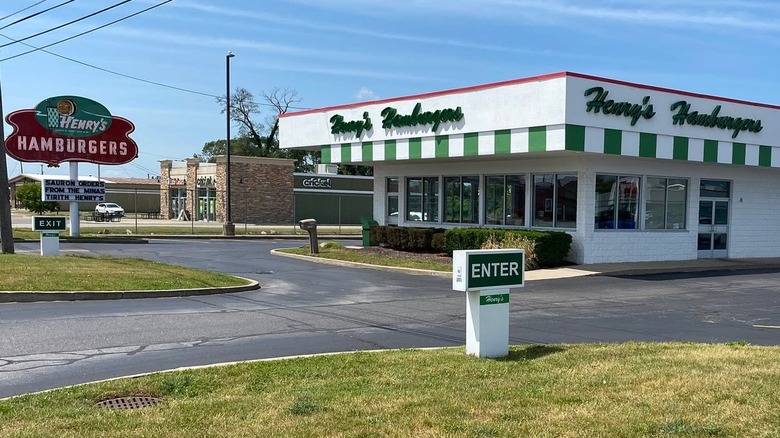
First opening in Chicago in the 1950s, Henry's Hamburgers rose to fame as American car culture was reaching its height and drive-ins and drive-thrus were popping up left and right. Created by the founders of Bresler's Ice Cream, a chain known for its 33 flavors, Henry's Hamburgers was an attempt to leverage the growing industry and serve full meals rather than just dessert. The restaurant did serve shakes as something on the sweet side, but its savory selection was what set it apart from its sister chain. Henry's offered fried catfish, shrimp, and fish sandwiches in addition to the eponymous burgers. Customers could also find chili dogs, onion rings, mushrooms, and fries on the menu.
Henry's started out as a drive-in concept and never made the shift to drive-thru that so many other fast food chains opted for, which may have had something to do with the restaurant's inevitable downfall. Despite great success in the 1960s, franchisees began shutting down in the 1970s and would be all but extinct except for one last surviving Henry's Hamburgers location in Benton Harbor, Michigan. This relic of another era persisted even after the chain went under by adapting to customer demands and evolving to include a drive-thru. The last remaining location continues to offer most of the items for which the chain first became known, serving up nostalgia with every order from its classic menu.
Gino's Hamburgers
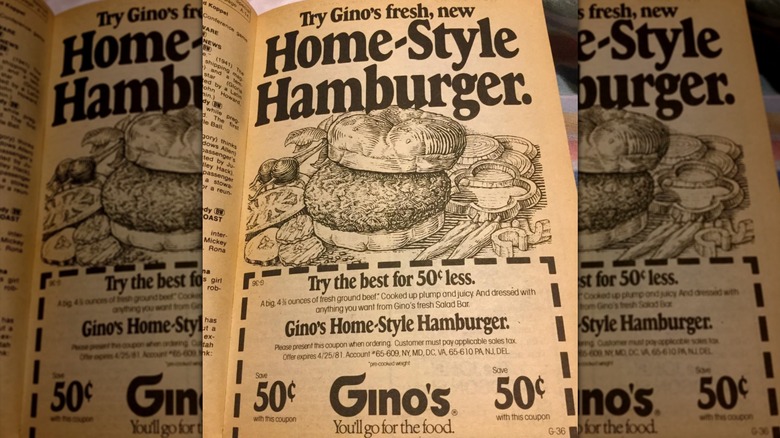
First opened in 1957 in Dundalk, Maryland, Gino's Hamburgers was founded by two former Baltimore Colts football players and Louis C. Fischer. The restaurant didn't get its official name until two years later, however, when its founders partnered with Gino Marchetti, the Colts' captain. The football connection helped boost this humble burger joint's popularity, enabling it to expand into numerous locations and gradually spread across the East Coast. Rather than becoming a franchise, Gino's locations operated independently, and the brand became known for its youth philanthropy programs, particularly relating to sports and recreation. Favorite menu items included the Gino Giant, a double burger, and Sirloiner burgers made from sirloin steak, which emphasized that Gino's offered higher quality items than a typical fast food chain.
Locally beloved community fixtures, Gino's joints met their downfall after discontinuing some of their signature burgers and an acquisition by the Marriot Corporation in 1982. Locations started losing business and the new ownership quickly converted many to Roy Rogers restaurants. By the end of the decade, Gino's Hamburgers disappeared. Gino's may be long gone, but some of its former executives revived a version of the restaurant in 2010 through the creation of Gino's Burgers & Chicken, which operated a handful of spots in Maryland and picked up some of its original following. Though a wider expansion was originally planned, only two Gino's Burger & Chicken restaurants remain as of 2026.
Minnie Pearl's Chicken
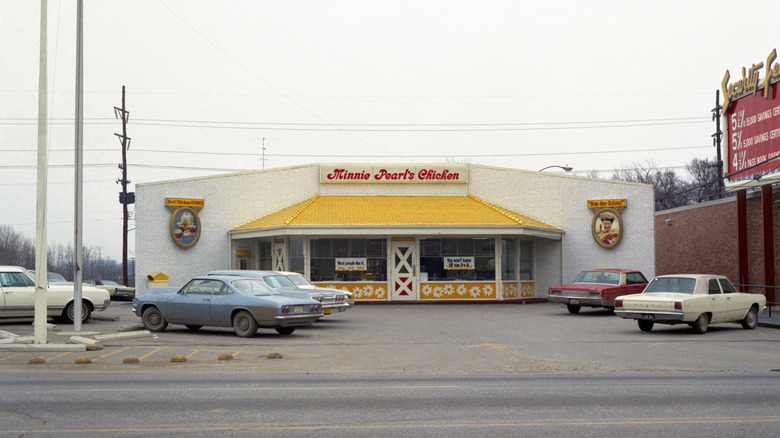
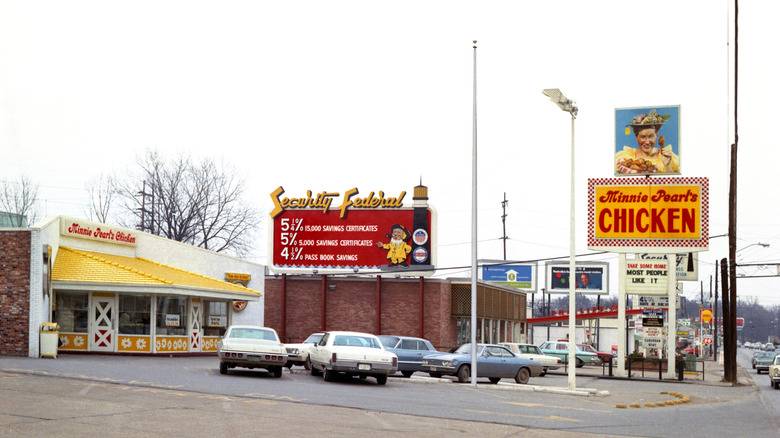
Another restaurant that used star status to gain traction, Minnie Pearl's Fried Chicken borrowed the persona of Minnie Pearl, a Tennessee comedian and singer. The fast food franchise was created to be a competitor to Kentucky Fried Chicken, whose popularity was known far and wide. Founded by John Jay and Henry Hooker, two brothers who imagined there was ample room for a competitor in a world that seemed to be craving fried chicken, Minnie Pearl's Fried Chicken first opened in the late '60s.
The Hooker brothers, however, were seeking to make money rather than provide customer satisfaction. To their credit, they succeeded in selling hundreds of franchises before the restaurant had properly opened for business. But once Minnie Pearl locations did finally open, there was no proper recipe for fried chicken and no universal flavor like the secret recipe Colonel Sanders had successfully propagated. Instead, cooks at individual restaurants made fried chicken the way they wanted to, and customers were not always impressed with the taste. As a result, Minnie Pearl didn't make much for profits, and the franchise found itself with cash problems before its restaurants even had the chance to reach much of their intended public. The chain went bankrupt in 1970, just two years after opening, joining the ranks of chicken chains that have entirely disappeared.
Howard Johnson's
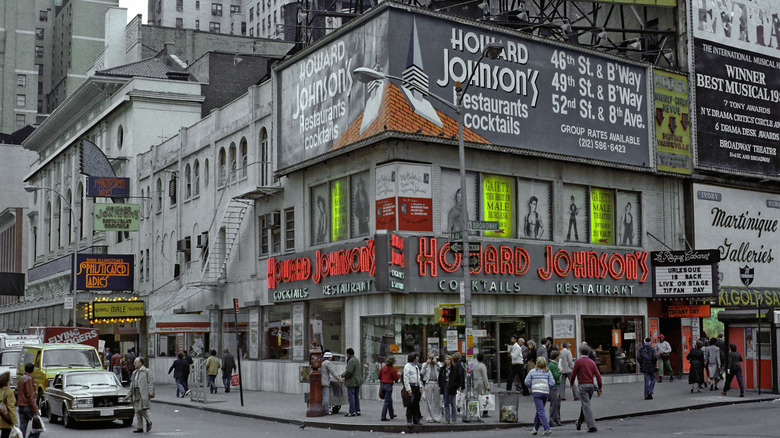
Dating back to the 1920s, Howard Johnson's got its start selling ice cream. Named after its founder, the entrepreneurial Howard Johnson from Massachusetts, this ice cream shop caught on when he upgraded his recipe, adding more butterfat for a signature creaminess that would be an instant hit with customers. To expand business, Howard Johnson began selling food as well, and in the following decades increased to over 100 locations along the East Coast. Besides the ice cream for which the chain was renowned, Howard Johnson's signature savory dish was fried clams.
By the time the car culture of the 1950s and '60s had taken over as boomers were growing up, Howard Johnson's locations were known to be family-friendly establishments. These orange-roofed restaurants had become ubiquitous roadside eateries, and many locations expanded to include accommodations that made HoJo's an all-in-one rest stop for highway travelers. Rising to be the largest restaurant chain in the U.S., Howard Johnson's began a steady decline after it faced problems with discrimination at certain locations. Once the business was handed over to Johnson's son, cost-cutting further diminished the restaurant's reputation. In the following decades, changes in ownership continued to expedite the chain's extinction. Locations closed across the country, with the very last one finally shutting down in 2022.
Horn & Hardart Automat
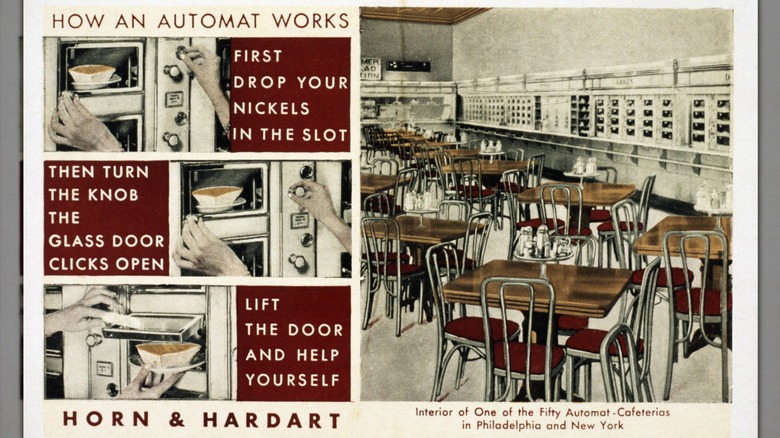
Created by Joseph Horn and Frank Hardart, their eponymous automat was a revelation when the first location opened in Philadelphia in 1902. The concept was a cafeteria-style restaurant that emphasized fast service and no servers long before traditional fast food had become a social phenomenon. Rather than ordering at a counter, customers inserted coins into a slot and received a fresh meal from a compartment displaying its contents through a window. At the start, a nickel could buy a hot dish, and a three-course meal might cost no more than 15 cents.
Horn & Hardart Automat was a revolutionary convenience for busy city life, offering cheap, quick, fresh meals at all hours. Concentrated on the East Coast, Horn & Hardarts would have been no stranger to boomers growing up in Philadelphia and New York City, each of which had dozens of locations. The menu spanned endless entrees, appetizers, hot sandwiches, and desserts, proffering comforting dishes like macaroni and cheese and coconut pie. It was the rise of fast food restaurants in the 1950s and '60s that led to the eventual decline of this chain. Modern for its time at the turn of the century, the automat had become old hat by the time midcentury car culture emphasized drive-thrus and drive-ins as the peak of modernity. As a result, Horn & Hardart gradually lost popularity until 1991, when the last location closed.
Red Barn
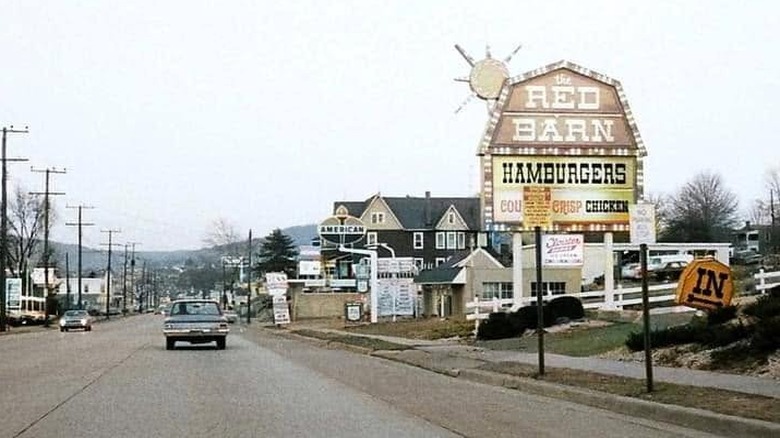
Red Barn first opened in Ohio in 1961, and after it began expanding to numerous locations, became easily recognizable for its red barn-shaped restaurants. Selling a variety of fast food fare like burgers and fried chicken, the chain was ahead of the curve in introducing a self-serve salad bar. A popular destination in the 1960s, Red Barns were regular hangouts for many boomers growing up. But Red Barn restaurants disappeared shortly after their rise to popularity as they ultimately couldn't compete with more widespread chains like McDonald's or Burger King. Changes in ownership paralleled a continuous decline, and by 1986 the brand had to file for bankruptcy.
Though the name gradually disappeared, the buildings themselves were not destroyed. Today the U.S. is still dotted with many of these barn-shaped buildings that have been repainted and repurposed into other restaurants or completely different businesses. Despite the eatery joining the ranks of burger chains that have gone extinct, Red Barn still lives on in the reminiscences of boomers who once ate there and has a devotedly nostalgic following that remembers these restaurants fondly.