

4 Tips For Buying The Perfect Pork Chops At The Grocery Store

Pork chops sometimes get a bad rap for being dry, bland, tough, or generally boring, but this unsavory reputation is totally undeserved. Whether you prefer them swimming in an umami-rich mushroom gravy or topped with a surprising coconut crust, good pork chops, cooked right, are a quick, tasty, protein-packed, and endlessly versatile dinnertime power player. Of course, it's important to avoid the common mistakes people make when grilling pork chops but making a great meal with this cut of meat starts in the grocery store, not the kitchen.
Whether you're a seasoned chef or a culinary novice, the quality of the pork chops can easily make or break a meal. As such, it's critical to choose the best possible pork chops. Luckily, we chatted with Michelle Wallace, renowned pitmaster, TV personality, and owner and founder of B'tween Sandwich Co., to get her expert tips for selecting the perfect pork chops at any grocery store. Wallace recommends looking for maximum marbling, opting for thicker chops, finding the freshest meat, and choosing the right cut for your recipe.
Look for maximum marbling
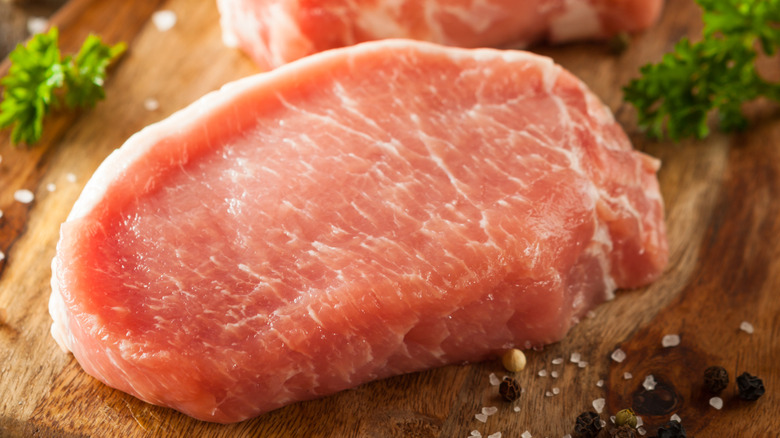
In the context of meat, marbling, also known as intramuscular fat, is the thin veins of fat mixed with lean muscle. While it's sometimes maligned and misunderstood, marbling is a critical element of high-quality meat, and pork chops are no exception. "Where there's fat, there is flavor," Michelle Wallace explained. "A little bit of marbling goes a long way here. Marbling will help keep the meat moist and flavorful!"
It's important to note not all fat on a pork chop is created equal. There's a critical distinction between marbling, seam fat — the thicker white strips of fat within the chop — and external fat, the layer of fat on the outside of the chop. Both seam and external fat can be removed (although seam fat is trickier to trim), and neither is necessarily negative, but they don't act the same or bring juiciness to the meat the way marbling does. When the pork chop is cooked, the marbled fat renders and melts into the meat, producing a juicy, tender, and flavor-packed chop. Since many consumers avoid cuts of meat with visible fat, you may not have much competition for the most marvelously marbled pork chops at your supermarket.
Thickness makes a difference
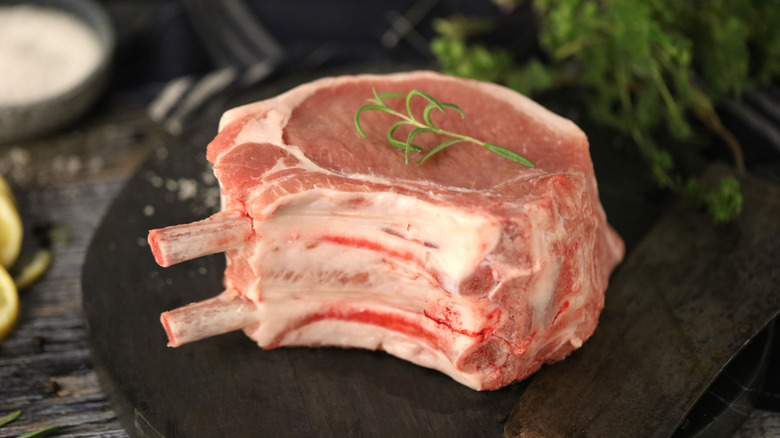
It might seem like an afterthought, but thickness matters when picking pork chops. They can easily range from one-half to two inches thick, and Michelle Wallace recommends leaning toward the higher end of that spectrum. "I like them thick!" she said. "I like to buy at least an inch to 1.5-inch-thick chop." This isn't just a personal taste preference – thick pork chops are much more forgiving compared to their thinner counterparts. "Pork chops can go from perfect to dry in no time, and having a thicker chop gives you room to not overcook them, especially when grilling," Wallace explained.
Thick pork chops are perfect for pan-searing and making juicy grilled pork chops, allowing you to achieve a succulent center and satisfyingly browned exterior. "You can get that perfect sear while still being moist," Wallace said. If you do end up with thinner chops, no sweat — they can be great for fried dishes where crispiness is more important than juiciness, such as Southern fried pork chops.
Fresh is best
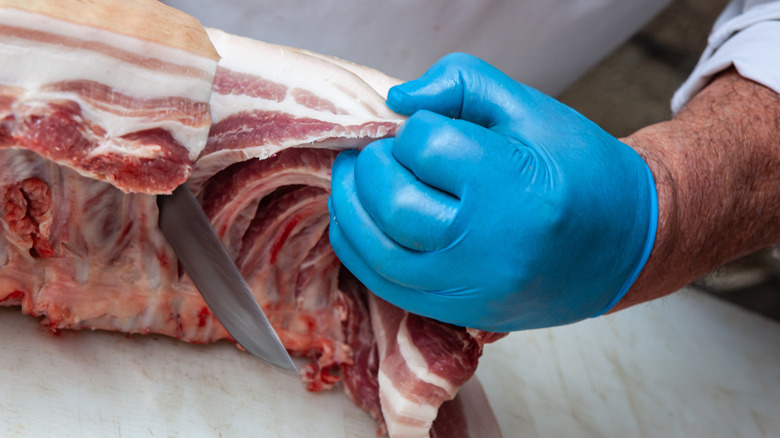
It's no secret that fresher is better when it comes to meat (and most foods), but knowing how, exactly, to sniff out the freshest pork chops can be tricky. Michelle Wallace recommends seeking help from the professionals. "I will say it time and time again ... make friends with your grocery store butcher," she advised. This can be understandably intimidating for the more introverted among us, but Wallace emphasizes most butchers will be delighted to point you toward the freshest pork chops — it's literally their job. She explains, "They are there to help you and guide you to the best and freshest products!" (It's just one of the many things you didn't know your grocery store butcher can do.)
Whether or not you ask a butcher for help, there are some key details to look out for that can help you find fresh pork chops on your own. First, check your chops for color. "You want a vibrant pinkish color," Wallace advised. Pale, greyish, or overly dark chops are best avoided. Additionally, Wallace suggests paying attention to the liquid. "You want something that looks moist ... not sitting in a pool of liquid," she noted (excess liquid is one of the meat department red flags to look out for).
Choose the right pork chop cut for your recipe
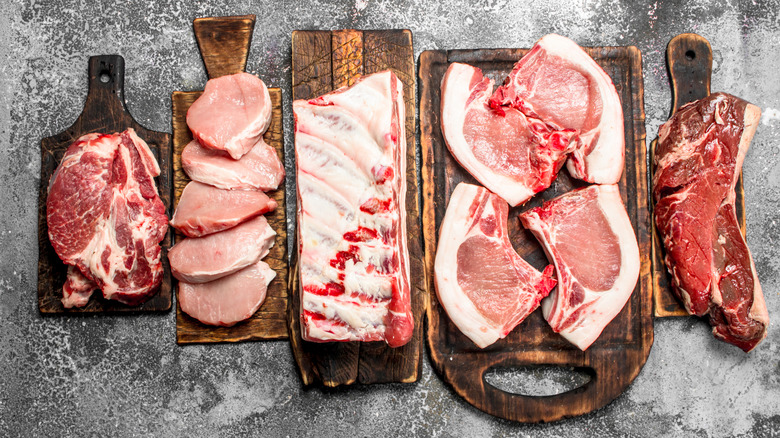
We tend to think of pork chops as a monolith, but the term can refer to any cut from the loin of a pig, which stretches along the spine from shoulder to hip. That's a big chunk of meat, and it encompasses several unique cuts, Michelle Wallace explains. "Not all pork chops are created equal. A center-cut loin chop, a rib chop, and a shoulder or blade chop all have different characteristics," she noted.
Center-cut loin chops, also known simply as loin chops, come from the part closer to the hip and tend to be milder and leaner. Rib chops, as the name suggests, come from the part around the ribs, and are mild, relatively lean, and very tender. Shoulder chops, also known as blade chops, are cut from the part closest to the shoulder, and tend to be fattier and more flavorful, but also may be a bit tougher.
"If I'm looking for something tender that I can quickly sear or grill, I'm leaning toward a rib chop," Wallace noted. "If I want something with a little more fat and deeper pork flavor, I might reach for a blade chop. Understanding the cut helps you choose the right chop for how you plan to cook it." Now that you know how to pick grocery store pork chops like a pro, here are 13 ways to upgrade your pork chop dinner.