

How Do Riesling And Sauvignon Blanc Differ?
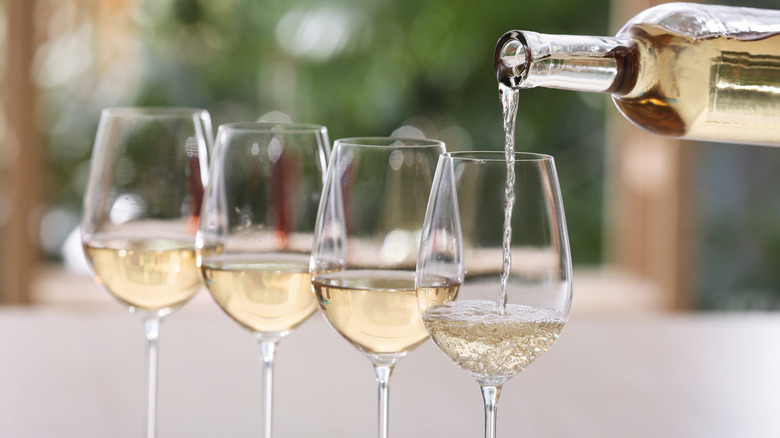
Whether you're a sommelier or casual imbiber, there's a lot you should know about the different types of white wine. They come in many flavor profiles, and your favorite wine actually says a lot about you and your palate. You may like sweet and fruity, dry and crisp, or something in between — and several white wine varietals fit the bill. A good place to start is with two of the most popular kinds: Riesling and sauvignon blanc.
Although they're both made from fermented grapes, these wines are fairly different. Riesling originated in Germany; it's now commonly produced in France, Austria, Australia, and the U.S. Sauvignon blanc, on the other hand, comes from areas like northern California and Marlborough in New Zealand. In a certain part of France, sauvignon blanc is known as Sancerre, named after the region where it's grown. The growing conditions of these various places — and the unique grapes they're made from — give Riesling and sauvignon blanc many similarities and differences.
Riesling has a wide range of possible flavors
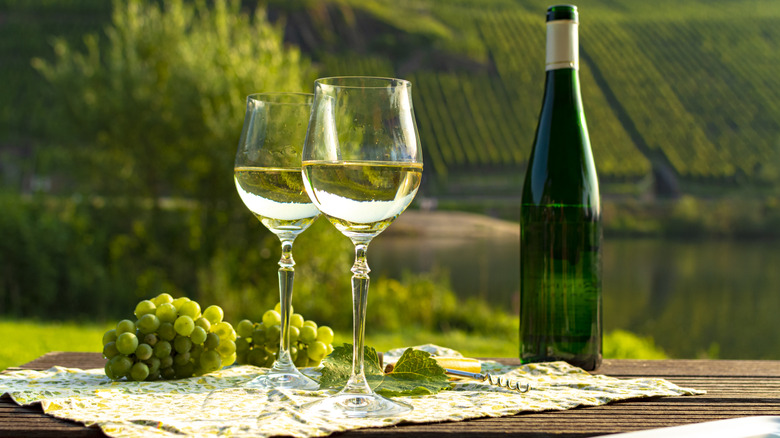
Although it's commonly known to be overly sweet and cloying, that's a misconception. Riesling can actually be dry and crisp, depending on where it's produced. Grown in a cooler climate like Germany, Riesling becomes heavy in mineral tones with sharper notes of green apple, citrus, and florals. In warm weather like California, Riesling can turn sweet thanks to flavors like tropical fruit and stone fruit. Regardless, Riesling is always highly acidic and usually light- or medium-bodied. Occasionally, Riesling from warmer climates has a petrol or diesel aroma that's polarizing among drinkers.
If you're buying a German Riesling and don't know how to read the label, there's a cheat-sheet. Dry wines are listed as "trocken," while sweet wines will say "lieblich." Off-dry — which lies somewhere in between — is called "halbtrocken." A label without a specification is likely between sweet and dry.
Both sweet and off-dry Riesling pair well with many foods — especially dishes with bold, deep flavors or spice. Try it with a spicy pad Thai recipe or shrimp with spicy honey garlic sauce. Additionally, Rieslings and Reubens are also a match made in flavor heaven. Soft cheeses, like Brie and Camembert, as well as roast chicken, pork, and shellfish are excellent with dry Riesling. Sweet Riesling will also pair beautifully with fruity desserts at the end of a meal.
Sauvignon blanc is usually crisp and acidic
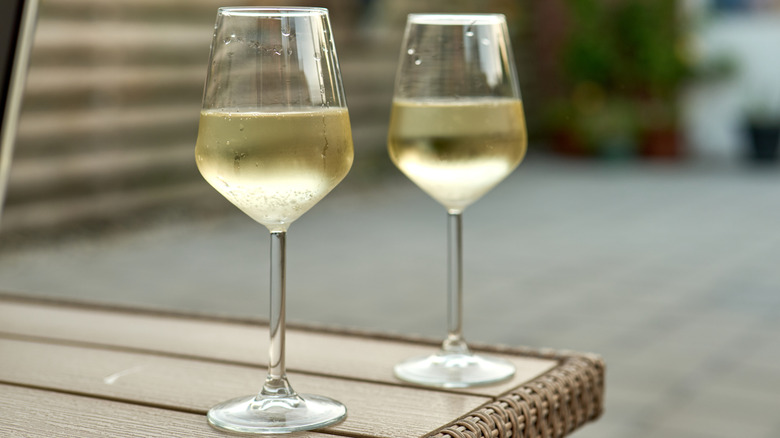
There is some level of overlap between sauvignon blanc and certain types of Riesling. Sauvignon blanc is similarly acidic and light- or medium-bodied. It's usually dry with notes of citrus fruit, including grapefruit, lemon, and lime. Conversely, this wine can have flavors of grass or bell pepper because of a compound in the grapes called methoxypyrazines. That herby, zesty touch is a unique characteristic of sauvignon blanc.
Like Riesling, sauvignon blanc makes an excellent pairing for many different foods due to its balanced profile. If your bottle leans stronger on the herbaceous side, try it with a flavorful dish like lemon-herb chicken or this 15-minute chickpea vegetable curry. With lighter, mineral-forward sauvignon blancs, foods like white fish, oysters, and salty cheeses are perfect. Since it's a light wine, it's best to avoid heavier foods like red meat or stew.
Sauvignon blanc is best served chilled, but you don't have to spend an arm and a leg for a good bottle. There are plenty of sommelier-approved, under-$20 bottles from Sam's Club and Costco. Try Whitehaven Sauvignon Blanc Marlborough, Kendall-Jackson Vintner's Reserve Sauvignon Blanc, or the Kirkland Marlborough Sauvignon Blanc. Josh Cellars 2022 Sauvignon Blanc also came in fourth in our ranking of Josh Cellars wine.