

What Your Favorite Whiskey Says About You

Some say whiskey is an acquired taste: You love it, or you don't. We say that there are a number of different types of whiskey and they're all unique, so it might just be a matter of finding the one that clicks with you and your tastes. That said, you've possibly heard it said that your choice in whiskey says a lot about you, and it turns out it's kind of true.
We reached out to some of our favorite whiskey experts to ask them what preferences to different whiskeys said about people. We got some awesome and sometimes tongue-in-cheek insight from Clinton Fowler, director of food and beverage at Black Rock Mountain Resort in Heber City, Utah; Chris Walster, whiskey expert at The Cask Connoisseur; Zak Lindahl, beverage director at The National, Autograph Collection in downtown Oklahoma City; and Learan Kahanov, co-owner of New York City's Peck Slip Social.
It's not all fun and games, though. Fowler told us there's a very practical reason for associating whiskey picks with personality traits and characteristics: "In the end, whiskey choices tell a story, but they are not about judging the guest. They are about understanding preference, experience levels, and what kind of moment someone wants to have at the bar. That insight is what allows great hospitality to happen." Who'd have thought, right? With that in mind, let's look at what different whiskeys say about those who choose them as their favorite, and maybe you'll gain a little insight, too.
Glenfiddich
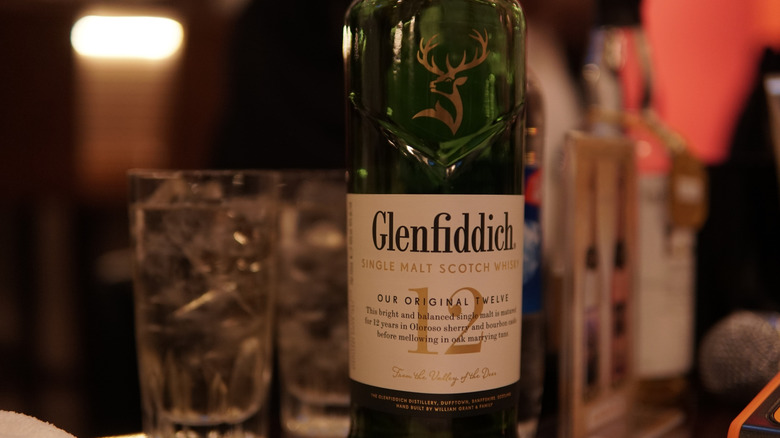
Fun fact: In order to have 'Glen' in its name, European whiskey has to come from Scotland. That said, you know where Glenfiddich comes from, and those who pick this Scotch whiskey as their drink of choice?
Chris Walster told us that when someone names Glenfiddich as a favorite, it suggests that they're interested in the nuances of the whiskey world, but in an uncomplicated and unfussy kind of way. "It's a classic entry point," he said, "so they're likely open-minded, enjoy a good story behind what they're drinking, and yes, probably have a Scotland trip somewhere on their list."
Zak Lindahl agrees. "Glenfiddich is kind of that 'this feels like the right choice' order," he said. It signals that someone knows what they like, knows Scotch, but is content to stay in the shallows rather than wading into the deep end.
Uncle Nearest 1856
Uncle Nearest is a relatively new brand that came onto the scene in 2017, but it's got an incredible legacy. A tribute to master distiller Nearest Green — the man revered for starting the tradition of distilling truly outstanding whiskey in Lynchburg, Tennessee — the distillery's Uncle Nearest 1856 is its core product. It's a whiskey brand where the history is just as important as the liquid itself, so it's not surprising, then, that Clinton Fowler says those who choose this are all about tradition.
"People who order it tend to be genuinely interested in the story behind what they are drinking," he said. "Uncle Nearest is deeply rooted in American whiskey history, from the Lincoln County Process to its connection with early Tennessee distilling. Guests who choose it are often thoughtful drinkers who value craftsmanship, legacy, and meaning along with quality in the glass."
Buffalo Trace
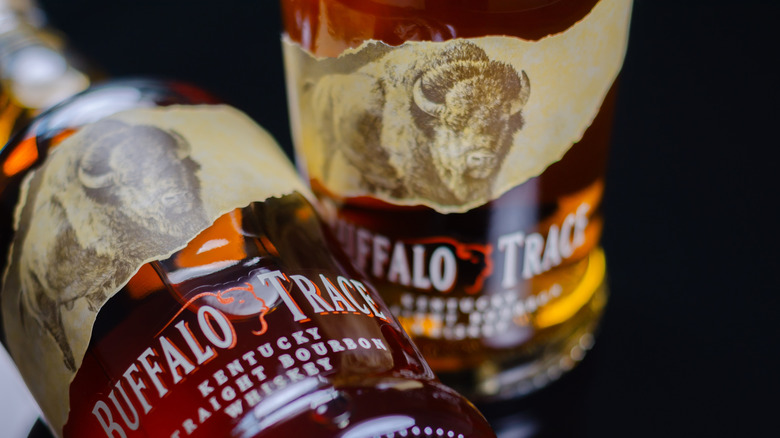
As one of the most approachable types of bourbon whiskey, Buffalo Trace has a ton of fans. That's no exaggeration: In 2021, the distillery's fan-created, crowd-sourced bourbon was named the best in the world. That's kind of the opposite of pretentious, and it makes sense that those who default to Buffalo Trace as a time-honored favorite are the same. Chris Walster called Buffalo Trace fans "all about approachability [...] often easygoing, and more focused on enjoying the moment than analyzing every note in the glass."
Zak Lindahl agrees that Buffalo Trace fans know what they're doing, and know what they like, but they're not the type to make that knowledge the center of everyone's night. "They're trying to sit right in that sweet spot of knowledgeable but low-key. It's a safe, solid pick. Says, 'I know what I'm doing,' but they're not trying to turn it into a whole thing."
Bulleit
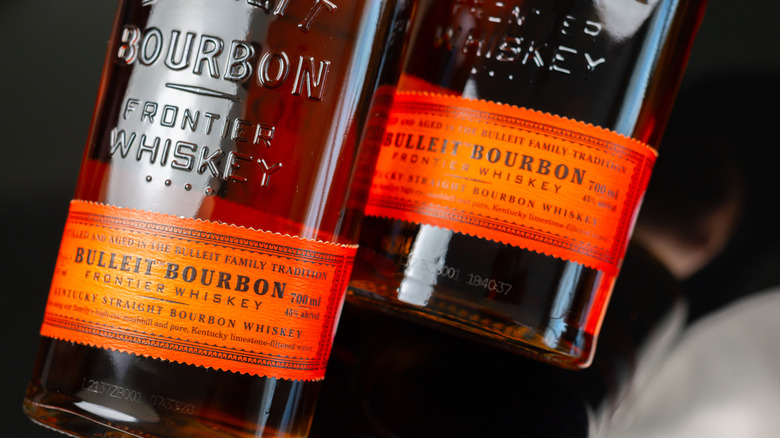
Another popular staple, Bulleit is one of the smoothest bourbons you can buy at Costco. It has roots that go back a century and a half to an old family recipe, and it's defined by a spicy kick and strong smoothness that makes it ideal for a cocktail — there's no losing Bulleit among other flavors. Rye can be something of a love-or-hate kind of thing, and according to Clinton Fowler, having this popular choice as a favorite suggests you're a fan of a versatile yet familiar drink.
"It is a brand many people discover early on and stick with because it feels approachable and versatile," he said. "It tends to attract drinkers who are comfortable ordering whiskey neat or in cocktails, and are building confidence in their tastes."
Johnnie Walker Black Label
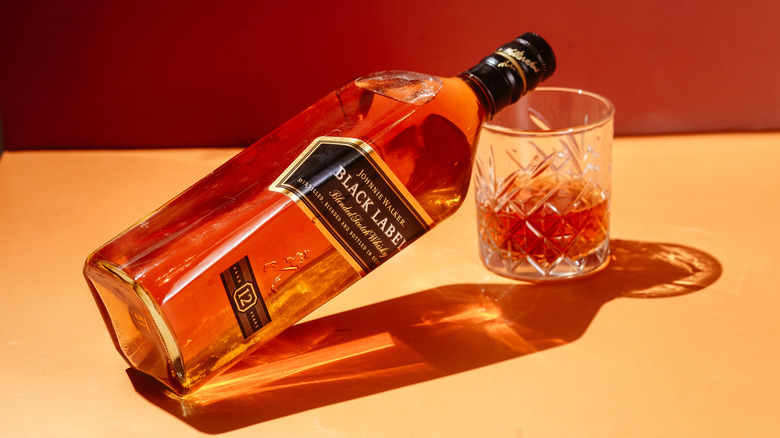
If you chat with older generations about some of their favorite whiskeys, there's a good chance that Johnnie Walker Black Label is going to come up in the conversation. It's been around since 1909, and nothing lasts that long without bringing something to the table. Slightly peaty, a little sweet-and-salty, you'll hear plenty of new Scotch drinkers saying that it was the bottle that introduced them to the world and set them down on the gentle side of the road ... perhaps with a reassuring little pat on the head and a cheer.
That said, it's also the kind of choice that speaks to a person who values dependability, and wants to know exactly what they're going to get. Chris Walster told us, "They know what they like, they don't feel the need to experiment every time, and they're usually the one making sure everyone else has a glass in hand, too."
Jack Daniel's, Maker's Mark, and Jim Beam
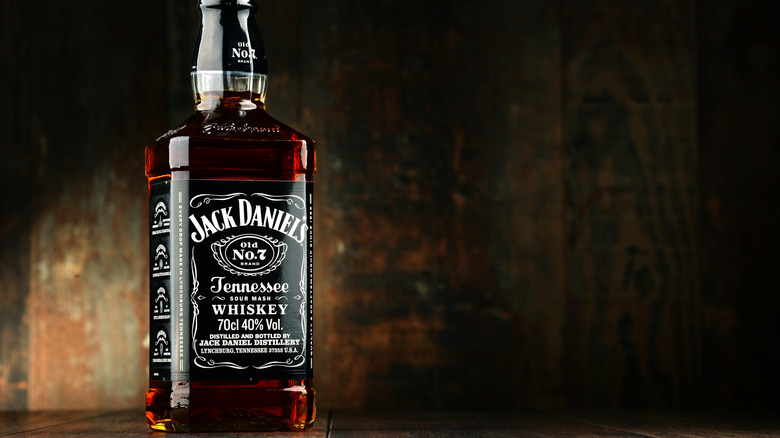
It's impossible to talk about whiskey without talking about some of the most iconic, most popular, and most easily recognizable bottles out there. Jack Daniel's, Maker's Mark, and Jim Beam need no introduction, and if any of these big three bring back memories of your first foray in the world of whiskey and bourbon, it's safe to say that you're not alone. It's also safe to say that if you still count them as a go-to favorite you're among the many, but what does sticking with the classics say to those behind the bar?
Clinton Fowler at Black Rock Mountain Resort told us that those who head here do so for good reason. "Classic brands [...] usually appeal to guests who gravitate toward familiarity and tradition," he said. "These are dependable, heritage-driven whiskeys that people return to because they know exactly what they are getting, and that consistency matters to them."
Laphroaig
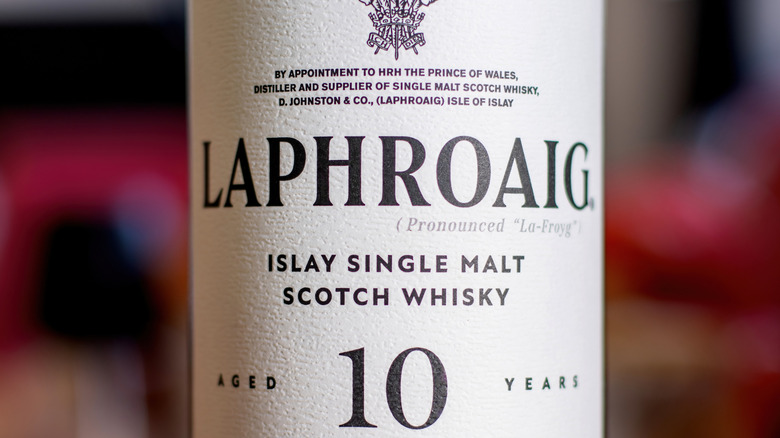
Laphroaig comes out of a seaside distillery on Islay in Scotland, and it's known for being very, very peat-heavy. Like ... very peat-heavy. When we say that it's something of an acquired taste, that's not an exaggeration. Professional reviews often laud Laphroaig for its complexity and peat-forward profile, while casual Scotch drinkers might do a double take, look at the bottle to make sure it's not gone off, and wonder if it's actually supposed to taste like burning car tires and briny, burning seaweed.
The short answer is that yes, it's supposed to taste like that — and it says something when someone voluntarily chooses it. The Cask Connoisseur's Chris Walster told us, "The Laphroaig drinker is often chasing intensity. This is a person who says they like 'challenging' flavors and actually means it. They probably enjoy the ritual of whiskey just as much as the taste, and they're quietly pleased when it's a bit divisive."
Pappy Van Winkle
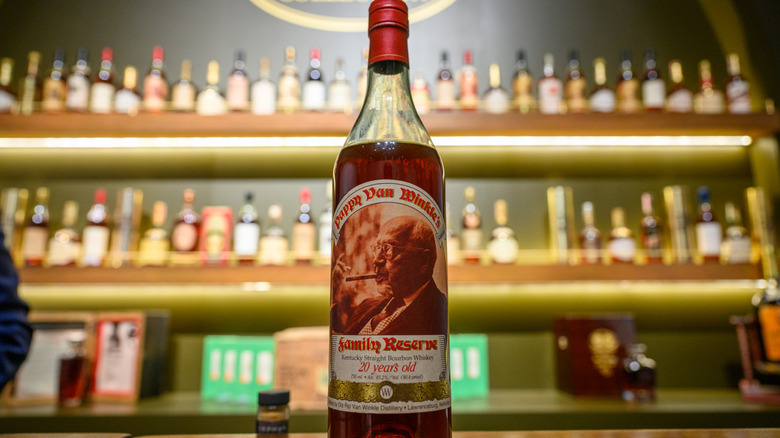
It's impossible to talk about Pappy Van Winkle without seeing dollar signs and cash getting thrown out the window, and the real reason Pappy is so expensive is a matter of rarity versus demand. Some bartenders will even call it one of the most overrated bourbons simply because of the hype and the price point, and you might think that ordering it at a bar is both a great way to sample it, and a way to get some attention. But what does it really say to the experts when someone makes it a point to order one at the bar — and calls it a favorite?
"If someone asks for Pappy Van Winkle, it's almost never about what's in the glass," beverage director Zak Lindahl told us. "It's about the story. They want to be a part of that moment."
Regional whiskey
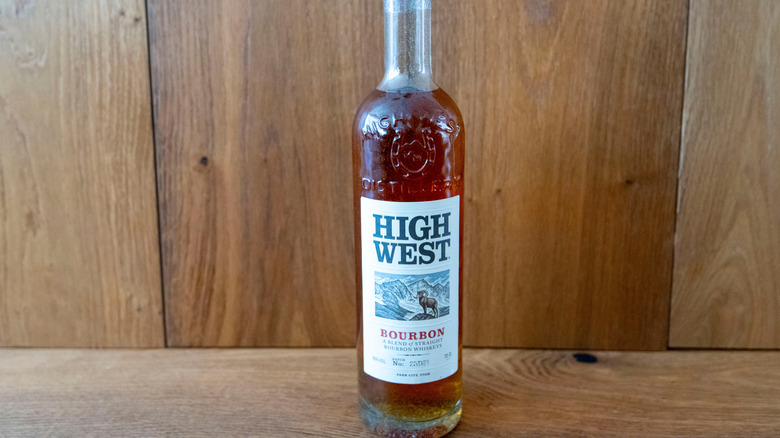
Regional whiskey has taken off in a big way across the U.S., with distilleries popping up from coast to coast. There's the beer-inspired malt whiskey of the Pacific Northwest, California whiskey that's inspired by the state's food scene, and smoky Texas whiskey. There's arguably nothing better than finding your own favorite regional distillery, and you could argue that even more so than the biggest producers, these are tying the product to a place and a vibe.
If you're traveling and opt for trying whatever's local? "Regional whiskey like Stranahan's, Wyoming Whiskey, or High West often tell an immediate geographic story," said Clinton Fowler. "These brands resonate with guests who have traveled [...] or who feel a personal connection to these places. Ordering them is often a quiet nod to experience or pride in regional distilling."
That said, it's worth noting that it never hurts to ask what the person behind the bar recommends — and regional whiskeys are great thing to explore, especially when you're traveling. Take it from Zak Lindahl, who added: "Honestly, though, the best guest is the one who just asks what we recommend. Open to it, not locked into a label, actually there for the experience."
The Macallan
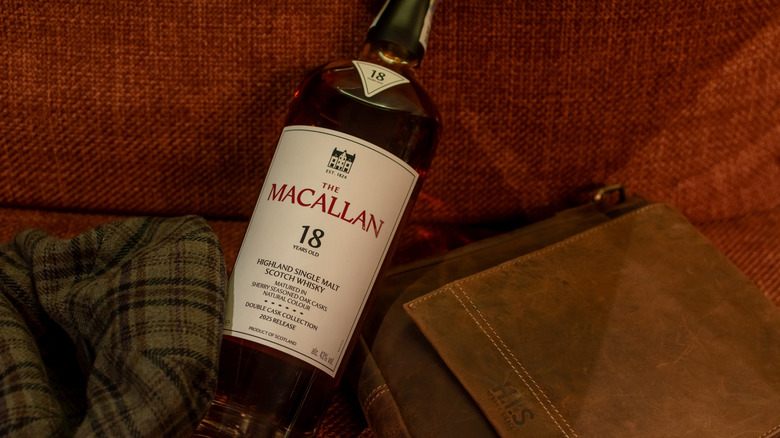
For those with a casual relationship to the whiskey world, the name Macallan is probably most quickly associated with price. A long-lost cask of Macallan made headlines when it sold for $1.3 million in 2022, the year after a Macallan NFT sold for a bit over $2 million. We could even keep going with eye-watering facts about the price tag that goes along with The Macallan, because those definitely aren't oddities.
You'd better believe that ordering a Macallan sends a message, and according to beverage director Zak Lindahl, it suggests that this is a person who's all about name recognition. "It reads polished, a little upscale. They like the idea of drinking something premium."
The 'how' is also important when it comes to The Macallan. Learan Kahanov of New York City's Peck Slip Social had some fascinating insights, especially when it comes to those who order a Macallan in a way that ensures everyone around them hears it. "Sometimes that feels less preference-driven and more performative," Kahanov explained. And when someone orders it in a cocktail where it's going to get lost and overpowered? "At that point, the order can say less about their palate and more about wanting the label to be noticed."
Yamazaki
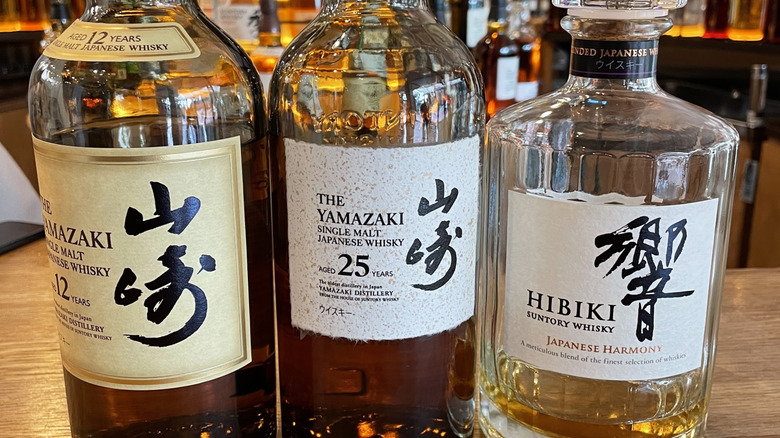
Whiskey is a tribute to the place where it's distilled, and that's definitely true of the century-old Yamazaki. Attention to detail, the unique climate of Mt. Tennozan, and a multi-stage aging process are just parts of what goes into some seriously award-winning and world-renowned whiskey. It's the sort of thing that's meant to be sipped and savored, and says a lot about those who choose it.
The Cask Connoisseur's Chris Walster told us that those who gravitate toward this one tend to be the type who revels in the details, and appreciates craft — and that's the case for other Japanese whisky, too. "Japanese whisky fans tend to be quite thoughtful drinkers, interested in craftsmanship, balance, and trying something a bit different from the traditional Scotch or bourbon route," he explained. Sometimes, it can be about both the journey and the destination.
Crown Royal (and other Canadian whisky)
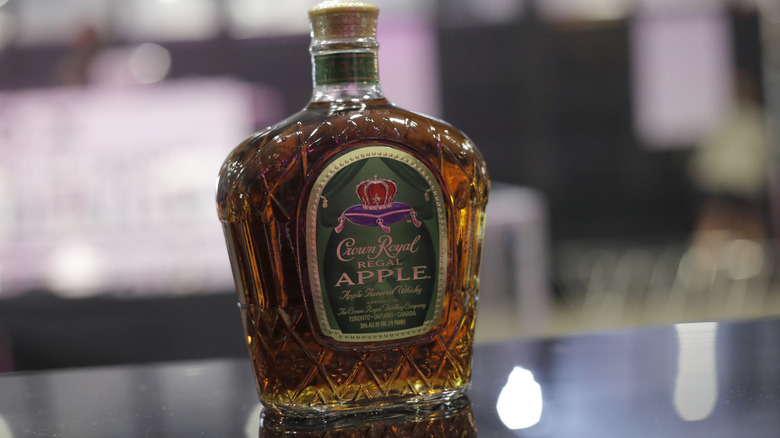
Crown Royal was famously made for King George VI and Queen Elizabeth, and you'll find that whiskey drinkers and connoisseurs have a lot of thoughts on Canadian whisky. As it tends to lean heavily into the blended side of things, you'll often hear it condemned as being, well, not-so-good, to put it politely. The most gentle of critics might call it overlooked, while the more outspoken critics call it awful. But at the same time, you'll hear some experts come to the defense of Canadian whisky and point out that Canada has not only taken home some major awards, but deserves a chance.
What about those who order it? Clinton Fowler from Black Rock Mountain Resort told us that Canadian whisky in general — and Crown in particular — "tend[s] to appeal to social, easygoing drinkers. These are often chosen by guests who want something smooth, approachable, and fun, especially in lively settings." There you have it, folks: Decry Canadian whisky if you must, but remember that those who favor it tend to be a super-fun bunch.
Jameson
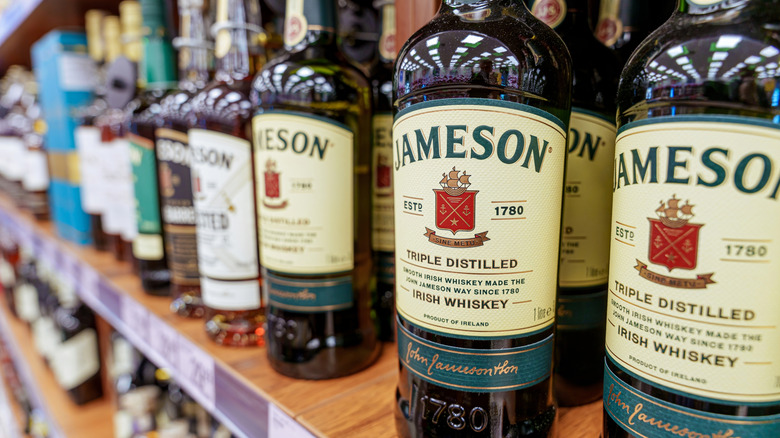
Did you know that one of the most-ordered whiskeys in America is Irish? Of course that's Jameson, popular for being ultra-smooth, easy to drink on its own, and affordable enough that you're not going to be upset using it in a cocktail. It makes sense, then, that Jameson tends to send a message that someone who orders it is all about the night's activities and the social aspect of things. According to Clinton Fowler, it's got a similar vibe to Canadian whisky in many respects — with a caveat: "When someone reaches for the aged or lesser-known expressions, it usually signals curiosity and a desire to explore beyond the familiar."
For the standard? The Cask Connoisseur's Chris Walster told us that Jameson tends to be a whiskey someone reaches for when they've also got their mind on other things. "It's smooth, accessible, and widely loved, so it tends to attract people who see whiskey as part of a good night rather than the main event."
Balvenie
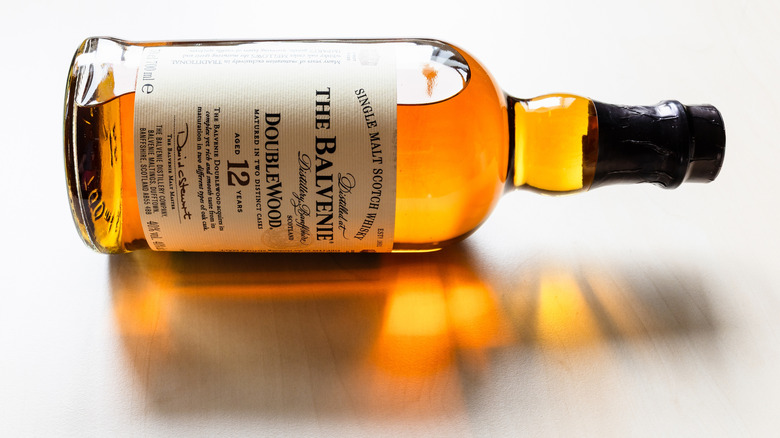
Back in 2021, Costco shoppers were gobsmacked to find a $30,000 bottle of Scotch on the shelves. Sure, it was a 50-year-old bottle from Balvenie, but still ... what?! The distillery has been around since 1892 and has had a long time to perfect the processes, and that bottle from Costco isn't even an oddity — the distillery has 60-year-old whiskey, too. It's not all expensive: There's cask finished whiskey of all different varieties and plenty of experimentation going on. Those who choose it, choose it for a reason — and that variety plays a huge role in attracting fans.
"Fans of Balvenie tend to have a softer, more flavor-led approach," says Chris Walster of The Cask Connoisseur. "They're often drawn to cask finishes and subtle complexity, so these are the people who enjoy picking out notes and taking their time with a dram."
Ardbeg and Lagavulin
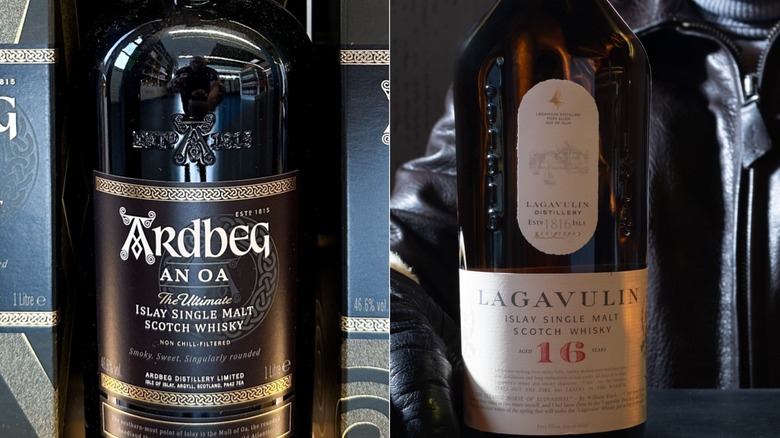
We're putting Lagavulin and Ardbeg together because our expert did, too, and it's very clear why. Both distilleries are seriously award-winning spots on Scotland's Islay island, a region that's known for putting out peat-heavy Scotch whiskey. It's safe to say that they're pretty polarizing: Descriptions might range from delightfully smoky to giving off the kind of vibes that taste like you might imagine an industrial chemical spill to taste. They tend to be on the overpowering side of things, and first-timers? If you need to take a break, we totally understand. But what about those who love them?
Chris Walster from The Cask Connoisseur explained that these fans "tend to lean into bold flavors. Peated whiskey isn't subtle, so these drinkers usually enjoy making a statement with their choices. They're the ones who'll happily introduce friends to smoky drams and say, 'Just give it a minute!' while everyone adjusts. Haha!"
Talisker
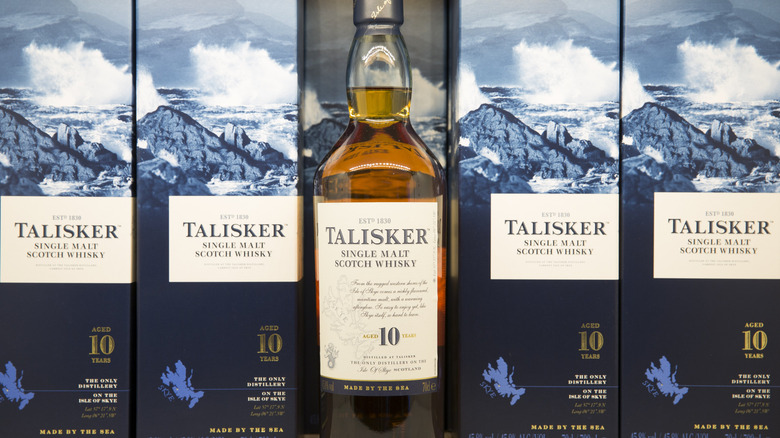
Talisker also hails from the Scottish coast, and a distillery on the Isle of Skye. It boasts a close connection to the seas that surround it, and — depending on the release — you're likely to hear it described as being peat-heavy, smoky, salty, and complex. You'll also hear it described as the kind of thing that you'll learn to love eventually, although perhaps to a lesser degree than Lagavulin and Ardbeg. It's a little (ie., a lot) less accessible than other types of whiskey, and according to the Cask Connoisseur's Chris Walster, that's indicative of those who love it as well.
"A Talisker drinker usually sits somewhere in the middle ground," he explained. "They like a bit of smoke, a bit of spice, but nothing overwhelming. It's a good sign they've explored a little and figured out what they like without feeling the need to prove anything."
Woodford Reserve
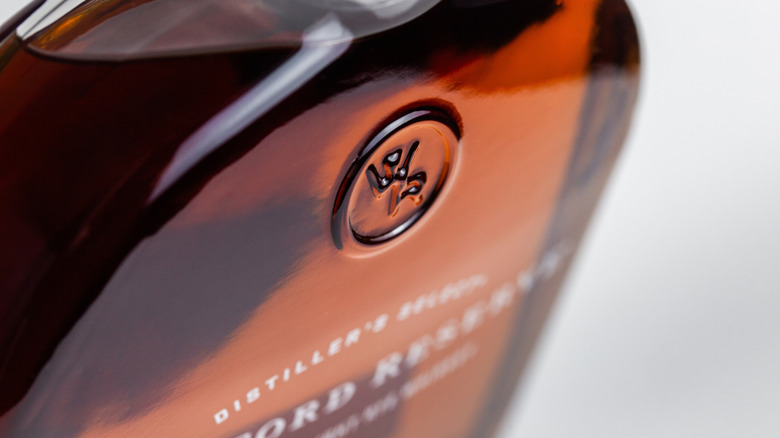
You'll often hear Woodford Reserve mentioned in conversations about the best bourbons for your buck, and it's also one of the best whiskeys to put in your whiskey sour. That speaks to its versatility: It's perfectly respectable alone, can stand up in a cocktail, and is affordable enough that you're not going to feel bad mixing it. It's that versatility that says a lot about those who gravitate toward it, and that's according to Chris Walster.
"A Woodford Reserve fan often leans a little more into the 'cocktail culture' side of things," he told us. "They appreciate balance and versatility, and they're just as happy mixing an Old Fashioned as they are sipping it neat." That's one way to keep a classic favorite from getting boring, and honestly? We're on board with that.