

11 Restaurant Sides You Rarely See On Menus Anymore
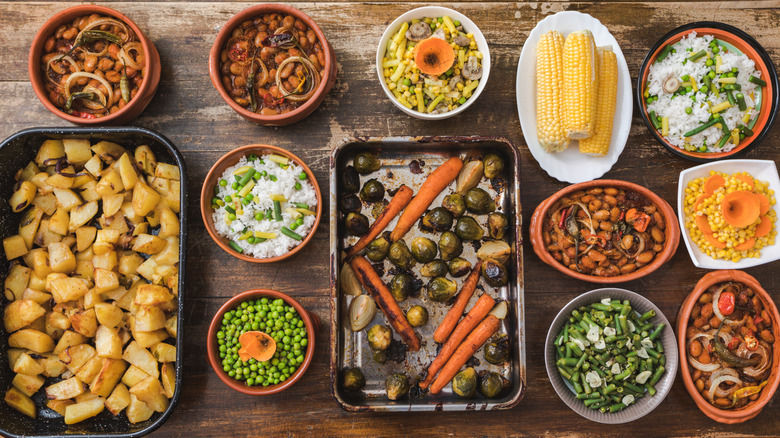
Side dishes may have to share the limelight with the main star of the show, but their presence is vital for a well-rounded dinner. What some folks also refer to as "fixings" can add flavors and textures that might otherwise be absent from the main dish, offering diners some variety with their meal. Sides also give chefs and hosts the chance to introduce more nutrition to a meal, which is a welcome benefit when the main dishes are mostly proteins or carbohydrates (think vegetables and salads).
Some side dishes have become so intrinsically attached to the mains that people expect them to be together all the time. For example, when people order a burger, they expect a side of fries; and when mom makes Thanksgiving dinner, we expect mashed potatoes to be sitting right beside of the roast turkey.
But some sides have slowly been forgotten in the last century, or have at least fallen out of the mainstream. This is understandable for some, due to being undeniably retro in appearance and flavor profiles (hint: Jell-O salads), but others still have the potential to be appreciated by the younger generations. Some have even been brought back into the limelight, thanks to celebrity chefs on television and social media. You might still see these dishes on grandma's table, but finding them on a restaurant menu is a rarity.
Cottage fries
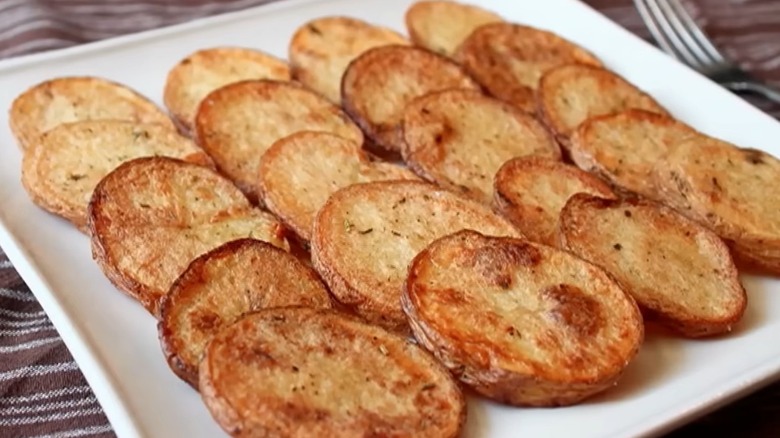
Before potato wedges or crinkle-cut, shoestring, and curly fries became popular, restaurants used to serve cottage fries. These are round, thinly-sliced (horizontally instead of vertically) potatoes that are seasoned, then oven roasted or deep fried to crispy perfection. One story on how they supposedly got their name was because restaurants used to stack the chips like shingles on a cottage roof. Another theory said the dish got the name because they were widespread and found in every home, or "cottage." Regardless of origin, any variety of potato works, but the bigger ones with larger diameters are the best.
Cottage fries can be traced back to as the early 1800s, when potatoes in France went from mere hog feed to earning a place on the tables of French royalty, who served them at extravagant affairs, setting a trend for the rest of the world. After attending said soirées, Thomas Jefferson liked the fried potatoes so much, he served his version at dinner parties at the White House.
As a side, they go nicely with burgers, sandwiches, steak, and even mussels. Unfortunately, you don't see cottage fries on many restaurant menus today. One beloved fast food join in Brookly, New York, Roll N Roaster, stopped serving its cottage fries in 2022 , after they had been on the menu since the restaurant opened in 1970. After much protesting from fans, the iconic roast beef spot brought the potatoes back in 2023, with a new name: OG Fries.
Watergate salad
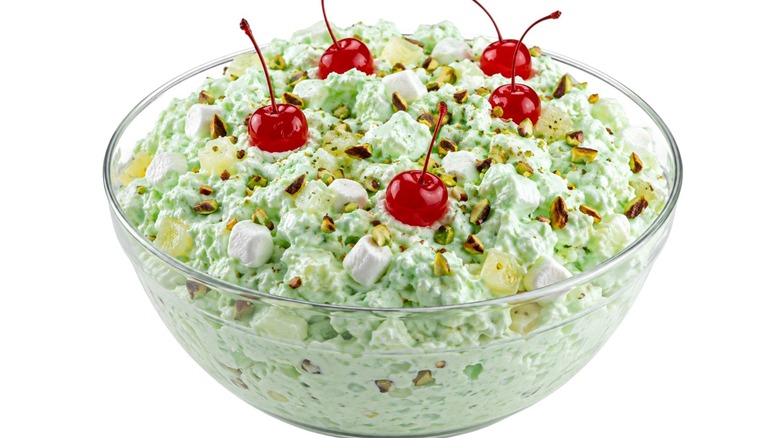
Watergate salad is one of the vintage salads that probably would not be called a salad had it been developed in this century. It is made with canned pineapples and juice, pistachio pudding mix, Cool Whip, chopped nuts (traditionally pecans, but those can be switched for other varieties), and marshmallows. It has a light green color, thanks to the pistachio pudding mix, and is typically served with dollops of whipped cream, and sometimes topped with maraschino cherries.
Many would argue that Watergate salad is a dessert, but it's always been called a salad. Also referred to as pistachio fluff salad or pistachio pudding salad, this creamy concoction has been a potluck and house-party staple since the beginning of the 20th century — when gelatin came into being. But the side dish became even more widely known as "Watergate salad," for no other reason than it gained traction at the time of the famous wire-tapping debacle that led to President Nixon's resignation.
Watergate salad was often served as a dessert or side dish in old restaurants and hotels, as well as at delis and supermarkets, especially in and around Washington D.C., until around the late 1990s. Its nationwide popularity started waning around 1975, however, thanks to a shortage of the pudding mix, as well as changing customer preferences. Nowadays, Watergate salad seems very retro, with its groovy green color, whip base, and canned fruit component.
Waldorf salad
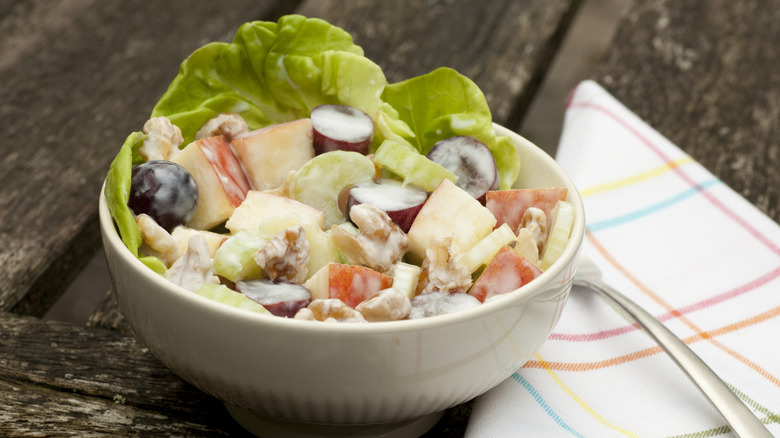
Waldorf salad is the second vintage side dish on this list named after a well-known hotel. It was created by the maître d' at the Waldorf-Astoria Hotel, Oscar Tschirky, for a charity dinner in 1893. His original recipe only had three ingredients: apples, celery, and mayonnaise. By the early 1990s, people started adding grapes and walnuts, and both became part of the widely-accepted recipe for this classic side dish. Some people go as far as adding marshmallows, probably taking inspiration from Watergate salad. But Waldorf salad has held its own. It's not conventionally leafy like Caesar, but there's no mistaking it for dessert, unlike Watergate salad.
The classic recipe is simple: toss peeled and diced apples, lemon juice, halved grapes, thinly sliced celery, walnuts, and mayonnaise in a bowl, and mix. Sprinkle a pinch of salt to sharpen the flavors, then add the walnuts — sliced, not crushed — last, to maintain their crunch. Transfer the salad to a serving plate or an elegant bowl, and it's ready for the table.
Sweet, tangy, and nicely balanced, Waldorf salad was often served as an appetizer, or as a side to savory main dishes. But it eventually disappeared from restaurant menus, another casualty of changing food trends and seasonal ingredients. The growing health consciousness of the public in the 1980s and '90s would've also meant that people realized that mayonnaise packs a ton of calories. All things considered, it's unsurprising that Waldorf salad is rarely on menus now.
Jell-O salads
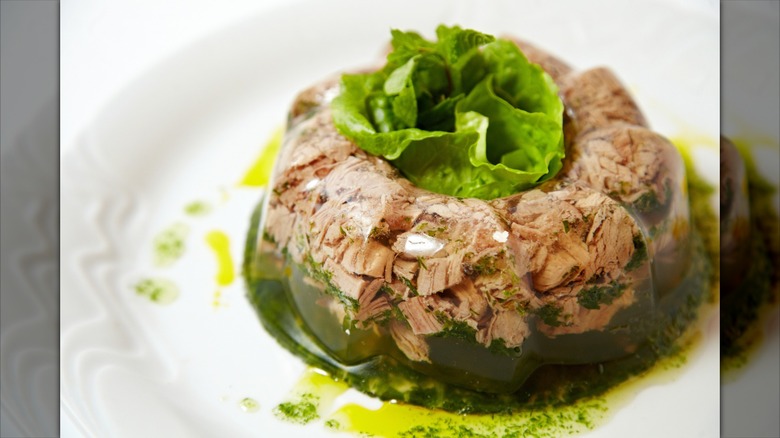
Jell-O salad is a retro dish that makes a lot of people think of visits to their grandparents' house. If you haven't seen a Jell-O salad before, imagine a gelatin cake on a bed of lettuce. And through the jiggly, translucent gelatin, you'll see items like sliced fruits, nuts, vegetables, and sometimes even fish, chicken, or meat.
Now, fruits like strawberries set in sweetened gelatin sound delicious, but with shredded cabbage ... maybe not so much. But perhaps people really liked veggies in their Jell-O in the 1900s. The Boston Cooking-School Magazine, for one, published a menu in 1913 that included lettuce and cherries in jelly, served with French dressing. Then there was Perfection Salad, a once-popular recipe that was made with shredded cabbage, celery, peppers, and olives set in gelatin, then topped with mayonnaise. It's a confusing combination, to say the least. But in 1905, this recipe won third place at a cooking competition judged by Fanny Farmer, who was considered the Martha Stewart of her time.
Jell-O salads peaked in the 1950s to 1970s. Recipes were printed on instant gelatin boxes, cookbooks, magazines, and even health guide pamphlets. Upscale restaurants and prestigious hotels like The Bancroft in Worcester, Massachusetts, offered both Perfection Salad and fruit Jell-O. You can hardly find them on restaurant menus today, but who knows? Aspic, an older, more complex version of Jell-O salad, recently made a comeback — Jell-O salad could be next.
Ambrosia salad
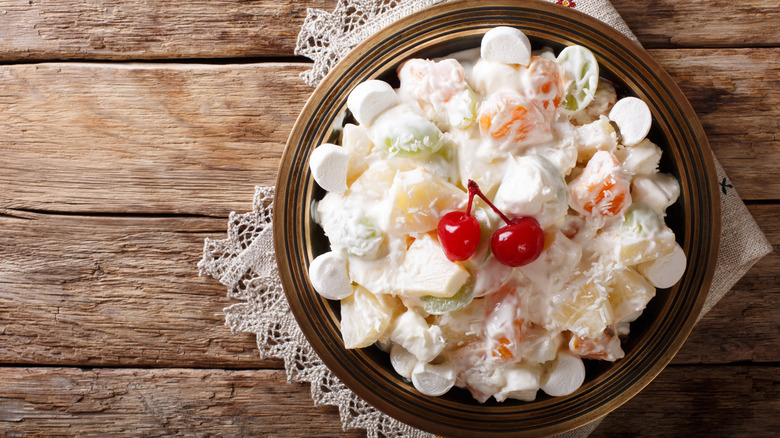
Here's yet another nostalgic dish that teeters on the line between salad and dessert: ambrosia salad. Looking at the recipe, the key ingredients are fresh oranges and shredded coconut, which were apparently expensive in the 1950s, and considered delicacies fit for the Gods (hence the name, "ambrosia"). Canned pineapples and maraschino cherries later made it to the classic recipe, although any fresh fruit could be added. The fruits are folded into sour cream and heavy whipped cream, along with mini marshmallows. Pecans are optional.
Other versions of ambrosia salad also have Jell-O, cream cheese, or ingredients like Cool Whip. Some recipes call for lime-flavored Jell-O, which turns the ambrosia light green. The lovely contrast with the bright red maraschino cherries makes the recipe ideal for Christmas gatherings. Regarding the taste, things like preparation (fruits must be drained, otherwise the bottom of the bowl will be a gooey mess), whipping cream consistency, and the quality of the fruits can affect the surprisingly harmonious blend of flavors and textures.
Ambrosia salad still makes an occasional appearance, especially in the Southern states, but restaurants hardly serve the dish anymore. We can deduce what happened to ambrosia salad, but let's not forget it completely, just yet. Like with the aspic, the younger generation might re-discover it and make it trendy again.
Pea salad
Let's be real: when you go to a fancy restaurant, or even a humble diner for a meal, you probably wouldn't go because you are craving peas. It's not that peas don't taste good; unless someone has a strong aversion to green peas, most people don't mind having a scoop or two on the side, or included in savory soups, casseroles, or in salad. But as a standalone salad? That's not so usual.
In the late 1800s, peas were expensive and considered a delicacy, especially ones imported from France. They had to be shelled by hand, and one giant bowl could easily be hours of work by several people. As such, peas were once served only at fine-dining restaurants. It would be decades later before they finally made their way to the average households across the country. French peas remained a luxury side dish reserved for fancy restaurants until around the 1970s, but by then, many households, especially in the South, were already whipping up their versions of pea salad using other varieties, like green peas and June peas.
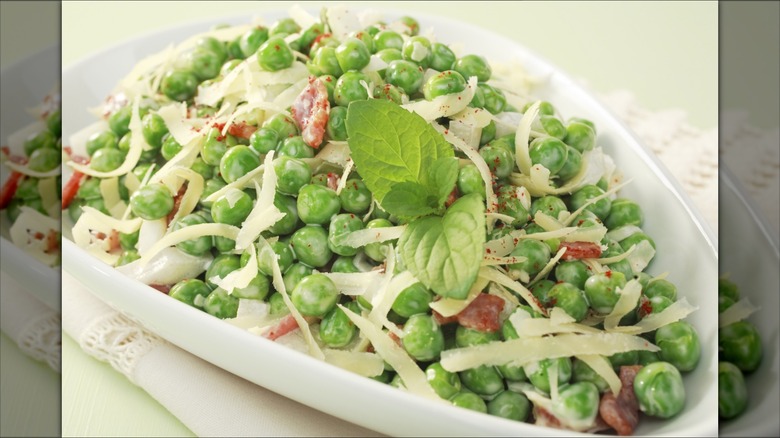
The recipe for pea salad is quite simple. Simply mix green peas, cheese, diced ham or bacon bits, (optional), and mayonnaise in a bowl. Many also add minced onions and parsley to balance the creaminess, and diced hard-boiled egg for more protein. Modern iterations reduce the mayonnaise, then add yogurt or sour cream for a sharper and tangier salad dressing.
Fresh tomato slices
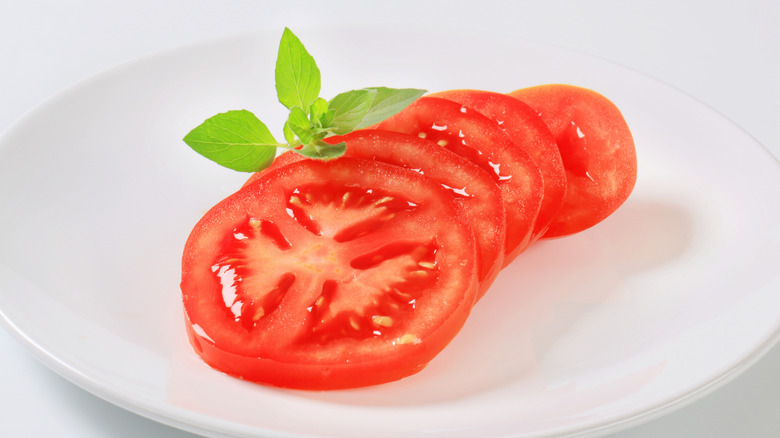
Tomato slices are a refreshing side dish that goes with just about anything, including sandwiches, barbecue, soups, fried or griddled meats, and typical breakfast fare like eggs, ham, and bacon. They're especially refreshing when paired with savory or heavy meals. Although tomato slices aren't as unfamiliar as the rest of the side dishes on this list, they've been mostly relegated to garnish instead of a standalone side dish in recent years.
Vintage menus and luncheon specials from the early 20th century often showed sliced tomatoes as a side dish option, usually alongside meat sandwiches and other mains. Tomatoes are still offered at restaurants, although you could be charged extra if you ask for more in your deli sandwich or burrito bowl. To be fair, dollar prices next to three slices of tomatoes might ruffle people's feathers — unless you're at Waffle House, which famously still has vine-ripened tomato slices on its menu. Local diners and restaurants in the South often offer tomato slices, as well. Southerners like to sprinkle a bit of salt and pepper before enjoying the tomatoes solo, or with a forkful of the main dish. Elsewhere, you're more likely to find tomato slices at salad bars, or layered in sandwiches and burgers.
Creamed pearl onions
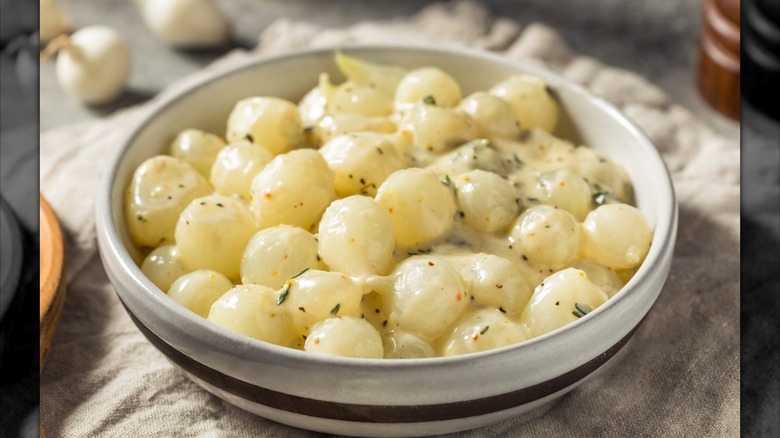
On paper, pearl onions in buttery, creamy soup doesn't sound very appealing. But when cooked right, creamed pearl onions can make an excellent side dish for roasted turkey, grilled meats, steaks, and seafood dishes. The recipe originated in Europe, created as a complementary side dish for meat and potatoes. It also had a presence in French and Italian cuisine, which Julia Child noted in her cookbook, "Mastering the Art of French Cooking." Appearance-wise, creamed pearl onions fit right in with the fancy dishes in an upscale restaurant, and the flavor satisfies palates, too — with the texture and bite of the tiny onions blending perfectly with the creamy sauce.
Creamed pearl onions are versatile, and are also easily seasoned according to one's preference. The traditional recipe is simple enough: boil pearl onions until tender, then make the sauce by whisking flour and heavy cream in a pan of melted butter. Lightly season with pepper and parsley, and at this point, you're free to add other spices like thyme and grated nutmeg. In the Midwest, where pearl onions aren't available all year, cooks simply dice regular white onions, and cook accordingly.
Creamed pearl onions are rarely on restaurant menus, but they sometimes appear around Thanksgiving and Christmas. Nostalgic and hearty, this side dish is best enjoyed during the holidays and winter months, when roasts and steaks dominate the menus.
Scalloped potatoes
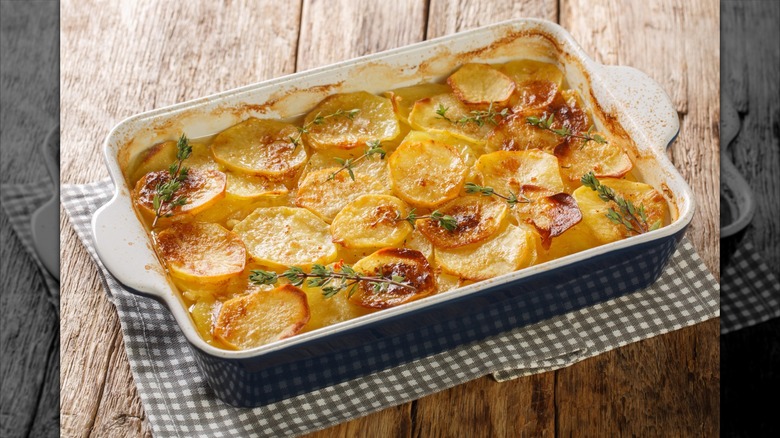
Potatoes are a classic side dish, but there's one recipe in particular that's often sidelined for either the cheesier version (potatoes au gratin) or the more commercially available version (mashed potatoes). We're talking about scalloped potatoes, a classic side that many of us fondly remember seeing served in grandma's heavy, ceramic baking dish.
Scalloped potatoes are a rich side made with thinly-sliced potatoes layered at the bottom of a dish, smothered with a milk-based sauce, then topped with bread crumbs. It is often mistaken for potatoes au gratin, which has a similar recipe — except the latter has a layer of cheese on top of the potatoes. The dish is baked until golden brown, then served alongside mains like pot roasts, smoked ham, pork chops, and steak.
Like many of the side dishes on this list, scalloped potatoes are popular in the South, at family dinners and potluck gatherings. Although scalloped potatoes can be found on restaurant menus, you're still more likely to see potatoes au gratin or mashed potatoes in most establishments.
Succotash
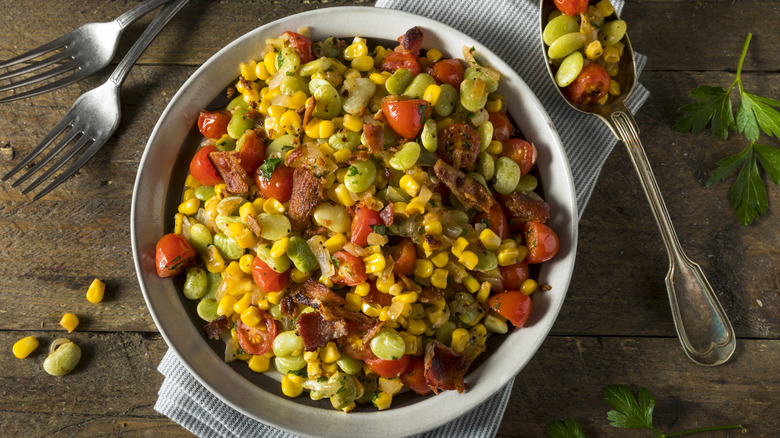
Sweet corn and lima beans, or butter beans, are the main ingredients of succotash, a traditional American side dish that originated from indigenous cultures in modern-day New England. The name came from the word, "m'sickquatash," which refers to corn kernels. The dish was made with corn, and a variety of beans, depending on what was in season.
Although succotash was originally from the East Coast, it was the Southern states that fully embraced it during the Great Depression. The recipe is simple, and consists of inexpensive and abundant ingredients cooked in fat (usually butter or lard) and lightly seasoned with salt and pepper. Succotash doesn't need sharp flavors or seasonings because it allows the veggies, along with the main dish it's served with, to take center stage. To elevate the flavor, some people add bacon or salted pork; others lean into its vegetarian profile and add okra, tomatoes, onions, bell peppers, squash, and sometimes, even potatoes.
Succotash was a known favorite of Mark Twain and was also highly praised by esteemed food writer John Thorne, author of the James Beard Foundation Book Award-winning "Pot on the Fire." The side dish is no longer as mainstream as it used to be, but at the restaurants that still make it, you'll most likely find it on summer menus, at the peak of vegetable freshness.
Braised red cabbage
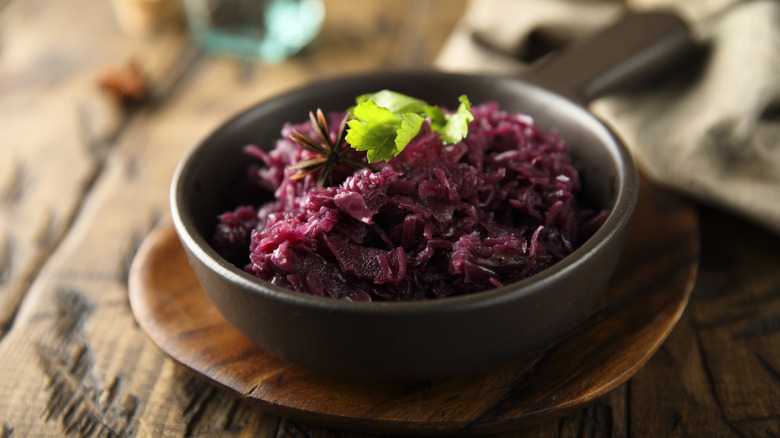
Coleslaw is one of today's most mainstream side dishes. But did you ever wonder why it's mostly made with green cabbage? It's because red cabbage is crunchier, more bitter, and peppery, compared to green cabbage. Eating red cabbage raw adds texture and flavor, but too much of it can make a slaw distract from the main dish, instead of complementing it. But once braised, red cabbage enters a league of its own.
Braised red cabbage is a popular side dish for fatty meats like duck, goose, venison, and pork belly. The vinegar in the recipe gives it a tangy flavor, which pairs nicely with hearty meats. Traditionally, red cabbage is braised in melted butter, water, sugar, and apple cider vinegar.
Braised red cabbage originated in Europe, specifically from Germany and the Scandinavian region. It allegedly became popular in Denmark in the 1800s because, when plated alongside potatoes, it represented one of the two colors of the country's flag (red and white). When the recipe crossed the Atlantic, establishments continued to pair it with Germanic cuisine. You'll still find it at Eastern European restaurants, and with cabbage making more appearances on modern menus, we wouldn't be surprised to see the side dish at other restaurants as well.