

14 Desserts You'd Find On Dinner Tables In The '60s
In America, the 1960s blended new conveniences with old-fashioned baking traditions. Folks were dazzled by an array of fancy products lining grocery store shelves that made life easier, while still following family recipes passed down for generations. Brands like Betty Crocker, Pillsbury, and Better Homes & Gardens also influenced baking trends through must-have cookbooks and innovative goods. For example, kids might start the day with Pop-Tarts, then come home to traditional meatloaf served with instant mashed potatoes. Dinner parties were also a regular occurrence that allowed folks to whip out their most impressive spreads.
Plenty of popular desserts have stood the test of time, while others live on in infamy. We all love to ogle the cursed foods that defined that decade, like mystery ingredients suspended in gelatin molds, but the '60s had plenty to offer. Keep reading to dig into unique desserts you'd find on dinner tables during the decade. Some may even be your current favorites, and who knows, others may be revived again.
Hello Dolly Bars (Magic Cookie Bars)
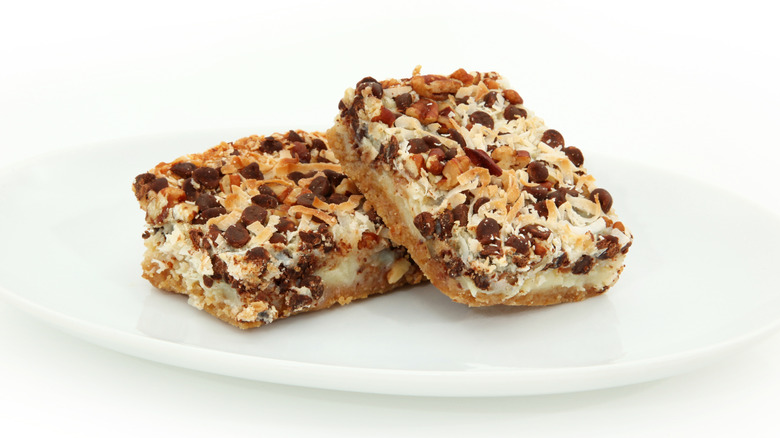
The untold truth of magic cookie bars is quite fascinating, because this recipe's origin story is murky. What we know for sure is that this dessert became popular nationwide during the '60s. The jury is still out on when they were invented, since one source claimed it was a family recipe passed down for quite some time. Regardless, the most pervasive story is that magic cookie bars were called Hello Dolly Bars during the '60s to commemorate the Broadway show that shared the name. Even though we'll likely never get to the bottom of this mystery, we can all agree that whoever popularized this recipe back then was a genius.
For those who haven't tried this iconic dessert yet, Hello Dolly Bars have a base of graham crackers, melted butter, and sugar. After baking the crust, you top it with chocolate chips, chopped pecans, shredded coconut, and sweetened condensed milk, which ties everything together. The bars are gooey, sweet, and delectable, and were perfect for a casual family meal because they were quick to make and kid-approved. Best of all, these ingredients were shelf-stable and staples, so homemakers could always turn to this recipe in a pinch.
Peanut Butter Blossoms
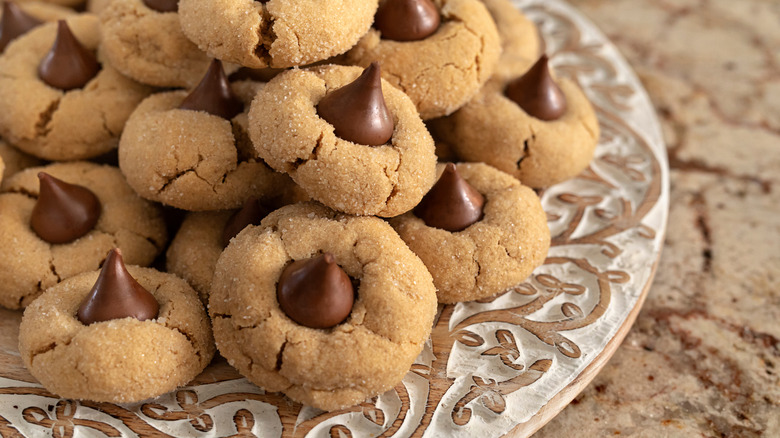
Peanut butter blossoms are as delightful as the name suggests. They're simply peanut butter cookies with a Hershey's Kiss smack dab in the center. The key is to press the chocolate in when the cookies come out of the oven, so they stick to the cookies when you pick them up to eat. The presentation is whimsical because the Kisses maintain their iconic shape. These cookies have been beloved since the '60s due to the recipe's versatility — and anything that combines chocolate and peanut butter is guaranteed to be a crowd pleaser.
As for their creation, we can thank a home baker named Freda Smith, who entered her cookies into a 1957 baking contest. Believe it or not, she only scored second place. Still, the invention rippled across America and shortly became a staple, especially during the holidays. Several cookbooks snatched the concept and published their own versions of peanut butter blossoms. Folks could quickly whip up their own peanut butter cookie dough using one of those recipes or take a shortcut with store-bought cookie dough, which first became available in 1951. Hershey's obviously loved the sales boost, so the brand added Smith's original cookie recipe to the back of its Kisses bags for even more promotion.
Chocolate Pudding Cake
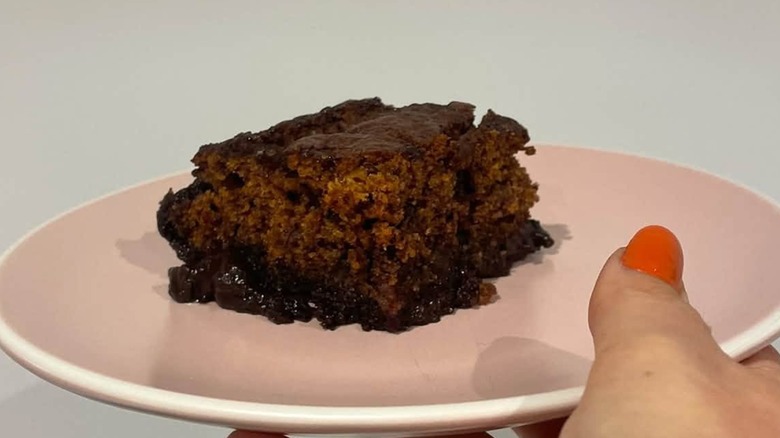
It's impossible to look away from a dessert that oozes chocolate. In recent years, treats like chocolate lava cakes and Ina Garten's famous brownie pudding have captured our attention. Yet back in the '60s, the gooey dessert that stole everyone's hearts was chocolate pudding cake. This beauty hid a delicious secret under its normal cake exterior: chocolate pudding. Serving it was a delightful spectacle, and undoubtedly, everyone asked for extra scoops of chocolate. This type of dessert was the star of many community and national cookbooks. Lots of folks have fond memories of their grandmothers serving it when they were kids in the '60s.
So, why was it such a hit during this decade? It was easy enough to make for a casual weeknight treat, but theatrical enough to impress guests. Although boxed pudding mixes were popular during this era, the cake made its own pudding by pouring sugar, cocoa powder, and water over the batter right before baking. However, some folks remember loved ones using Hershey's chocolate syrup to simplify this step. Boxed cake mixes were also fairly new at the time, so novice bakers could enjoy pudding cake, too.
Cheesecake and No-bake Cheesecake
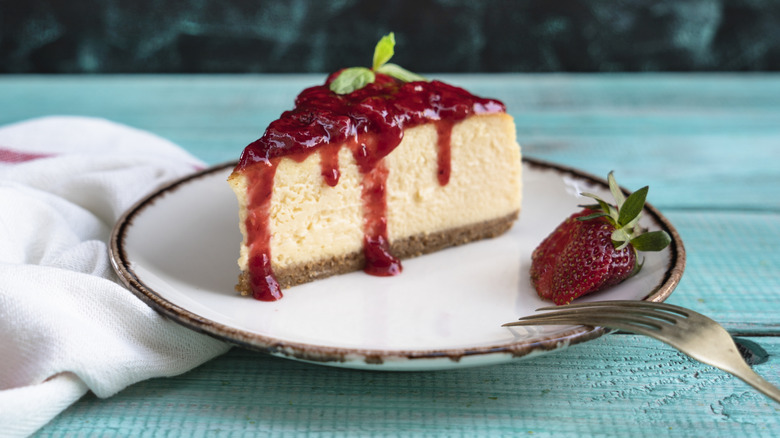
If you adore cheesecake, there's nothing more exciting than seeing a thick slice come your way after dinner. Americans' love of this dessert may have peaked during the '60s when countless recipes were published in cookbooks. The most alluring fact is that these pioneers developed techniques that don't require the tedious water bath.
One redditor begged fellow fans to try a recipe from a Better Homes & Gardens cookbook that takes over six hours to make. Granted, most of that time is spent waiting for the cream cheese to come to room temperature and then cooling the cheesecake after it bakes, but the redditor promised it would be the best cheesecake you'd ever eaten. The ingredients are standard, but the trick is to shock the cheesecake with a 12-minute bake at 450 Fahrenheit, then drop the temperature to 300 degrees F for 55 minutes. The cooling process is also slow, with multiple steps to ensure it sets properly. First, it remains in the pan, then the sides are removed, and then the bottom is removed over an extended period of time.
The humble no-bake cheesecake was a hit during this time, too, because homemakers wanted quick, easy recipes that tasted great. One person who grew up during the '60s even recalls her mother using blended cottage cheese instead of cream cheese because she didn't enjoy the tanginess. With cottage cheese currently having a viral moment in food videos, this is something a lot of folks could get behind.
Impossible Coconut Pie
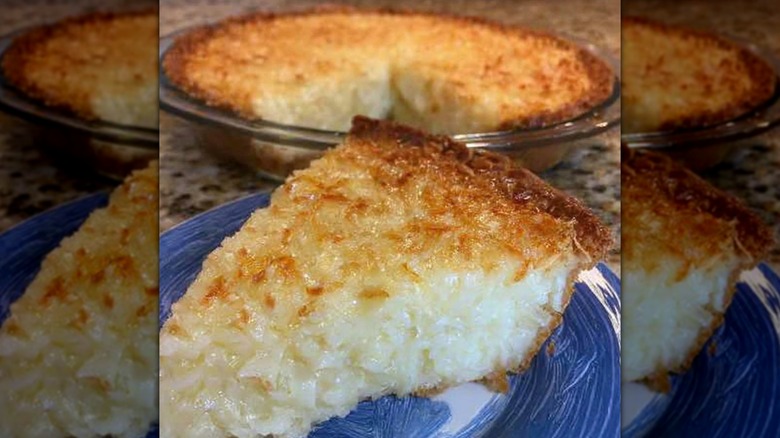
A classic coconut cream pie is creamy, tropical, and satisfying when you chew on the toasted bits of shredded coconut. It's not difficult to picture it selling out quickly at a dinner in the mid-1900s. While folks were certainly chowing down on the traditional recipe, others were tinkering with it to see whether tweaks could speed up the baking process without sacrificing flavor or texture.
Cue the impossible coconut pie, which doesn't require fussing with a pie crust that needs to bake before filling up with cream. Instead, the bottom layer uses Bisquick, a convenience product many Americans kept stocked in their pantries. The impossible coconut pie gets its name because the concept seems like it would never work, but you have to trust the process. It gets wilder: You don't even need to pour two separate layers of Bisquick and the coconut filling. Mix everything in one bowl, pour it into the pan, bake it, and a dessert that resembles a true pie reveals itself.
While this pie doesn't contain coconut milk, it still forms a custard. The shredded coconut does all of the heavy lifting to impart that gorgeous flavor. After the pie bakes and cools, a firmer crust forms that complements the silky center perfectly. It was an awesome dessert option for bakers who didn't want to wash a lot of dishes — or babysit the oven.
Red Velvet Cake
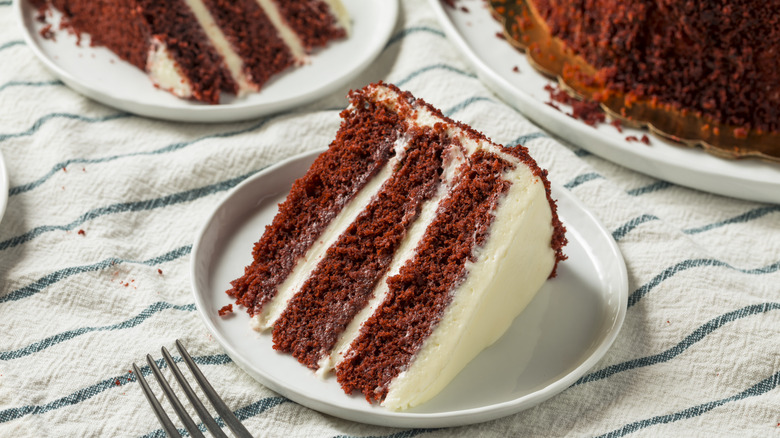
Red velvet cake is special because, from the outside, it looks like a normal cake — but once you cut a slice, you're dazzled by the brilliant red hue that defies the odds. Some may think half the batter needs to be food coloring, but actually, you can pull it off with just two tablespoons. If a couple was hosting a dinner party in the '60s, choosing this whimsical cake seemed like a no-brainer. It would also be great for a regular sit-down dinner with the family, because kids loved the appearance and taste.
As it turns out, people have been baking red cakes for a couple of centuries, yet the red velvet cake we know and love today was first recorded during the '40s. The Waldorf Astoria hotel in New York City claims to have served Waldorf Astoria cake, a close relative of red velvet cake, since the '20s. Despite the murky roots, red velvet cake exploded in popularity during the '60s. In 1960, a red velvet cake won a baking competition at the Maryland State Fair, while a Texan newspaper featured it as a recipe of the week. It's clear the whole country was excited about the dessert at the start of the decade, and that excitement only grew.
While many modern bakers agree that cream cheese frosting is non-negotiable for red velvet cake, earlier recipes from that time featured a range of frostings. Traditional buttercream and roux-based frostings were sometimes paired with the cake.
Tang Pie (Astronaut Pie)
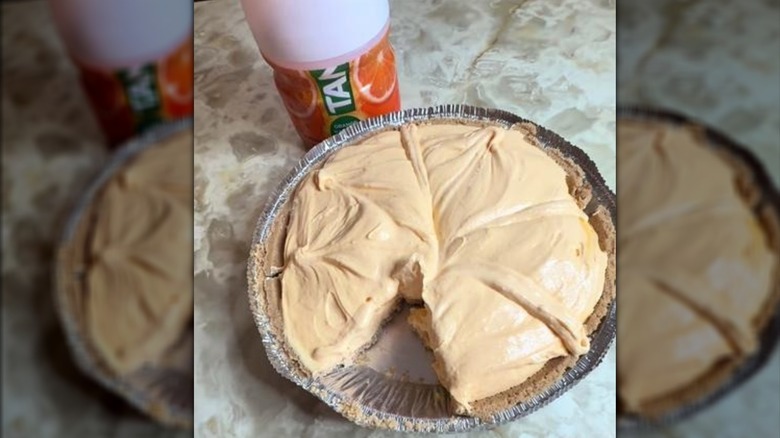
One of the most noteworthy historical achievements of the '60s was the moon landing. It blew adults away and inspired a whole generation of kids to be astronauts when they grew up. Of course, it makes sense that many trends capitalized on the space hype. Kool-Aid has managed to become a household name, but a similar powdered drink brand called Tang was all the rage during this decade. NASA astronauts brought Tang to space because it was a compact, shelf-stable source of vitamin C and energy. Plus, it tasted good. It's no wonder that folks back on Earth wanted in on the action, too. Thus, Tang pie, also called astronaut pie, was born.
Like many basic yet unforgettable desserts, Cool Whip and cream cheese are the base. You whip those ingredients with Tang and a can of sweetened condensed milk, pour it into a graham cracker crust, and let it set in the fridge. Orange is the classic flavor, but any Tang mix works. A store-bought pie crust kept the recipe simple, but bakers could also crush graham crackers and fold them into melted butter with little effort. This recipe was fun, innovative, and yummy for all ages.
Seafoam Salad
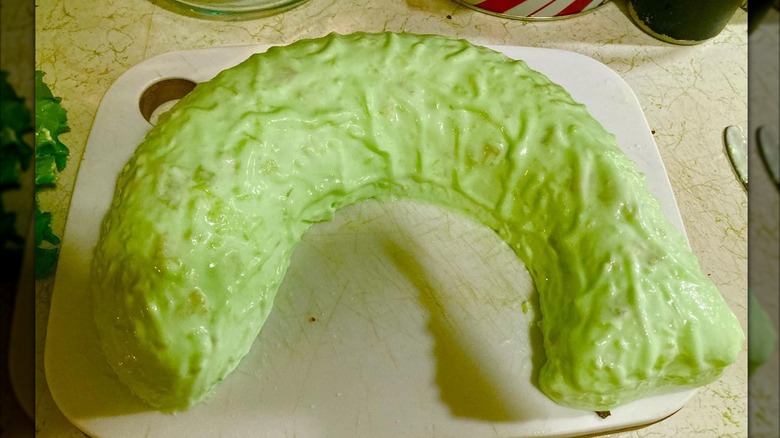
Finding ways to sneak gelatin into every recipe is one of the strangest old-school food traditions that most people don't bother with today. Many creations are genuinely tasty if you can get down with the texture, while others seem alarming. One '60s dessert that's suspicious is seafoam salad. It's the kind of dish most people would never go out of their way to make, but they'd probably enjoy it if someone served it. Luckily, neither seafoam nor salad is actually included. Instead, this dish contains canned pears, lime Jell-O, cream cheese, and whipped topping. Everything gets whipped together until it resembles delicate seafoam. The final result is fruity and refreshing.
Gelatin molds made the perfect dinner table centerpiece, and leftovers held up in the fridge as a weeknight palate cleanser. The pale green color was also pleasing, and made even a simple meal feel more elegant. Since Jell-O and canned pears were pantry staples, dessert could be on the table in no time without running to the grocery store.
Lemon Chiffon Cake
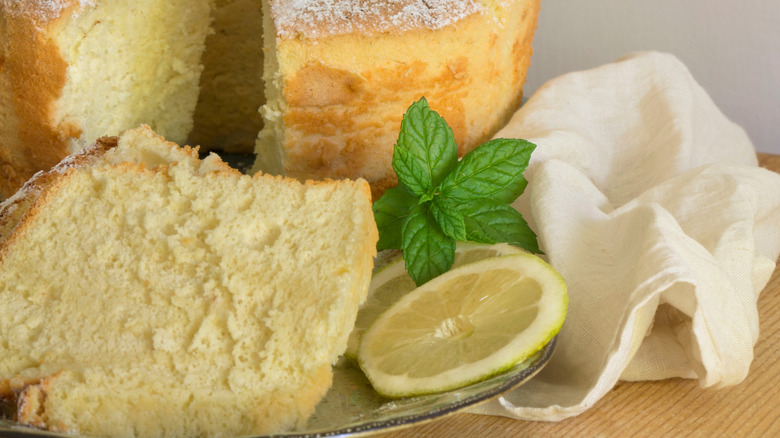
It's tragic to think about how many secret recipes are taken to the grave. Chiffon cake — a sort of hybrid of sponge and butter cakes — revolutionized the baking world, but it easily could've gone under the radar. The inventor of the cake, Harry Baker, kept his lips sealed for 20 years before Betty Crocker finally managed to buy the recipe in 1948. Unsurprisingly, Betty Crocker went wild and published 14 different ways to bake chiffon cake. Americans were enamored with this new cake in the '50s, and their excitement never wavered through the '60s.
Betty Crocker continued to include chiffon cakes in later cookbook releases. Lemon chiffon cake was a staple for family meals and dinner parties because the bright citrus paired beautifully with the airy texture. One 1961 printing included Lovelight Lemon Chiffon Cake, which included a strange yet charming drawing of a mermaid tempting an eager sailor with the cake. With marketing like that, who could resist trying the recipe? The secrecy surrounding the cake's origins, plus the astounding texture, got Americans hooked from the get-go.
Grasshopper pie
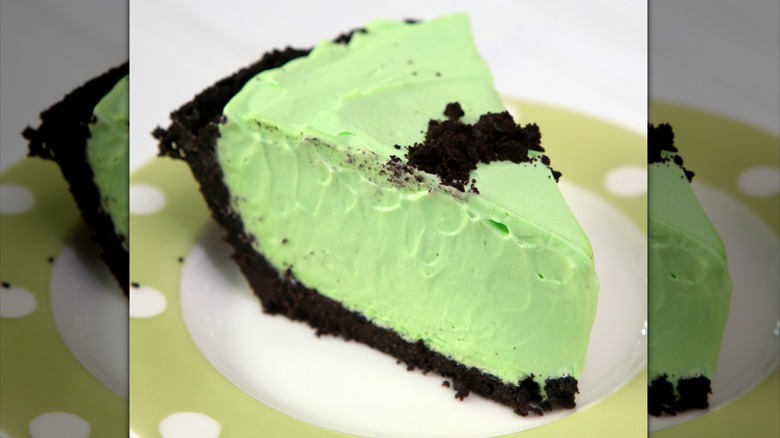
If it isn't already clear, Americans in the '60s were obsessed with no-bake desserts. One of the most well-known treats that represents this decade is grasshopper pie. In addition to being no-bake, the ingredients are also convenient, such as cookies and gelatin. People could choose their favorite store-bought cookies or wafers, crush them, and mix them with melted butter and sugar to form a basic crust. For the filling, people only needed to whip gelatin, sugar, heavy cream, crème de menthe, and crème de cacao. Depending on the recipe, you may add milk, marshmallows, food coloring, cognac, or other ingredients, but it's a fairly straightforward — yet memorable — dessert.
Not only does the minty flavor taste incredible after dinner, but the crème de menthe and cacao are boozy, which is a nice way to end the evening. Obviously, this wasn't an appropriate dessert for kids, but it was a fun, striking centerpiece for a dinner party.
Banana Pudding
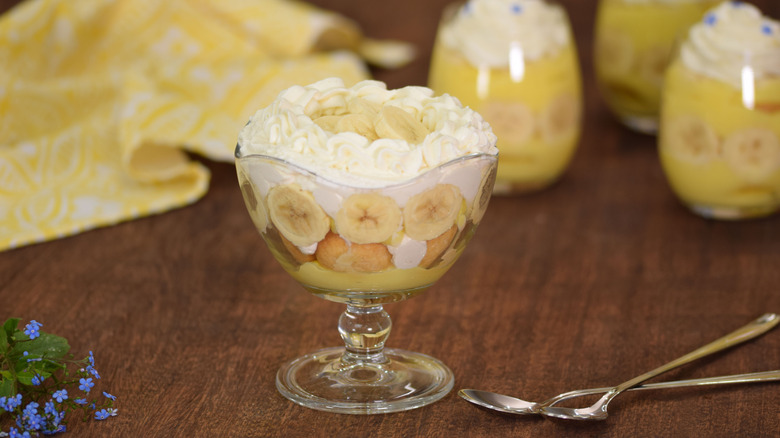
It's easy to take bananas for granted because they're so cheap and convenient when you need a snack on the go. However, Americans went bananas for bananas by the 1900s because they were the coolest new import. Americans' established love for this tropical fruit, combined with the explosion of manufacturing advancements in the food industry, meant folks in the '60s could have fun playing with banana recipes. The first recipe for banana pudding was recorded back in 1878, but it's evolved over the decades with new product releases.
Banana pudding used to be more time-consuming because it required baking a sponge cake and making pudding from scratch. However, products like vanilla wafers, Cool Whip, and instant pudding convinced mid-century Americans to try this dish. Nabisco also deserves credit for turning banana pudding into the icon it is today, because it heavily marketed the recipe, and even included it on the back of its vanilla wafer cookie boxes.
Once people fell in love with the dessert, they could branch out and try preparing it with lady fingers and other tasty treats. Not only was this convenient dessert easy to make ahead, but it was also better the longer it sat. Busy homemakers could whip up a batch in the morning and come home to a wholesome dessert ready for the dinner table. Even Truman Capote had a special banana pudding recipe, and he added a toasted meringue topping, which brings to mind another iconic '60s dessert: baked Alaska.
Parfaits
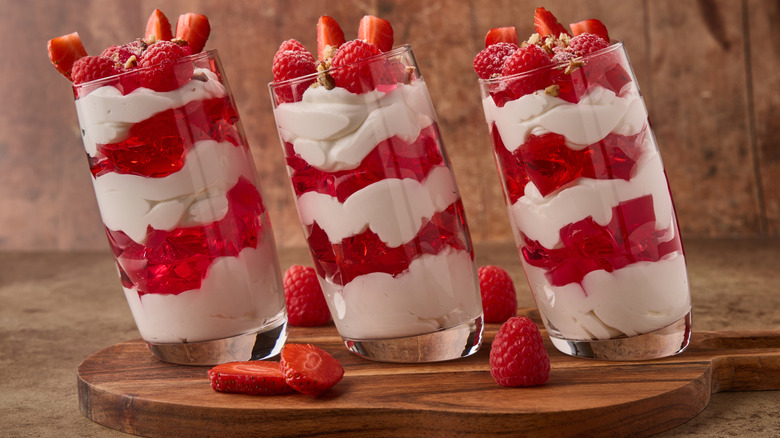
One popular dessert that doesn't get as much attention as other '60s desserts is parfaits. In this context, we're not talking about the yummy breakfast parfait loaded with yogurt, fruit, granola, and other fixings. With the gelatin craze at its peak during this era, Jell-O parfait was an expected creation. Pillsbury also fueled the parfait frenzy by publishing a cookbook with 48 different parfait pie recipes. Combining parfait with pie was a brilliant move that capitalized on a family's desire for a lovely, simple dessert after dinner.
Of course, some parfait recipes look unhinged to modern eyes. Even prestigious household names like Better Homes & Gardens couldn't resist publishing some questionable desserts. One parfait recipe called for combining canned fruit, gelatin, ice cream, and cookies, which turned into a visual and textural nightmare. It gets worse, though. Another '60s parfait recipe combining lemon gelatin, coffee, rum, and whipped cream has gone somewhat viral on social media. One person on TikTok who was enthusiastic about trying the so-called Topaz Parfait shared a video of her tasting it, and her face immediately flooded with regret.
Banana Split Cake
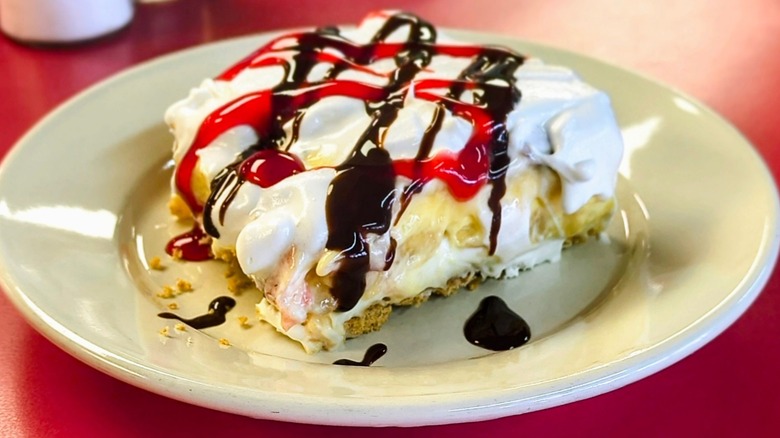
If you're trying to feed a crowd, carefully assembling banana splits can be tedious. Not to mention, the ice cream could melt by the time every dish was ready to be set on the dinner table. To simplify this classic treat, folks in the '60s prepared banana split cake, which they could make ahead of time. The only controversial part is that it has no real ice cream. However, the final result is so refreshing that it's hard to complain.
One vintage recipe calls for whipping margarine, eggs, and powdered sugar for 15 minutes to create a sweet, airy filling that goes into a graham cracker crust. Then, you top the filling with sliced banana, crushed pineapple, maraschino cherries, Cool Whip, and chopped nuts. For a heartier filling, cream cheese is a popular substitution. Banana split cake let busy homemakers treat loved ones to the flavors of a banana split, with the added convenience of storing the dessert in the fridge for quicker serving.
Tunnel of Fudge Cake
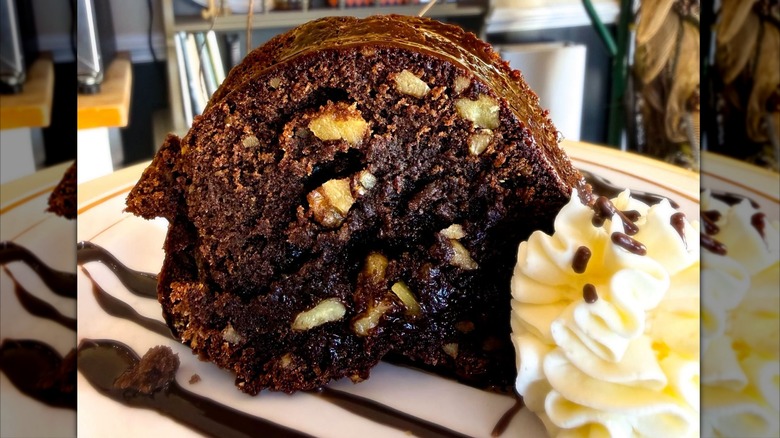
How lucky are we to have endless bundt cake recipes to savor? As it turns out, this unique cake pan was only invented in 1950, so it was still relatively new to bakers in the '60s. People had a blast experimenting with this tool, so we can thank them for the bundt cakes we still enjoy today. One recipe that stands above the others is the Tunnel of Fudge Cake, created by Ella Rita Helfrich, which won second place in Pillsbury's 1966 baking contest. With Pillsbury's stamp of approval, every baker wanted to impress their families and friends by making the Tunnel of Fudge cake.
Her original recipe used Pillsbury's fudge icing mix, which sadly no longer exists. This store-bought product, combined with a homemade cake batter, created magic. Once baked, slicing into it revealed a glorious tunnel of fudge in the center that oozed out. This dessert perfectly captures the '60s attitude of embracing convenience while still cherishing tradition.