

Copycat Cheesecake Factory Shrimp Scampi Recipe
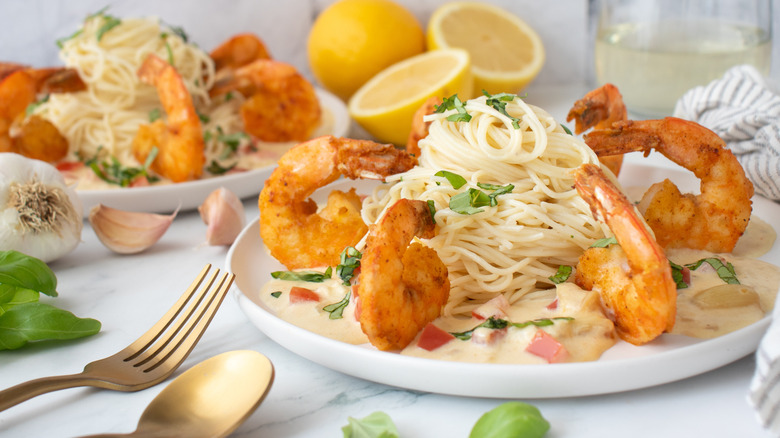
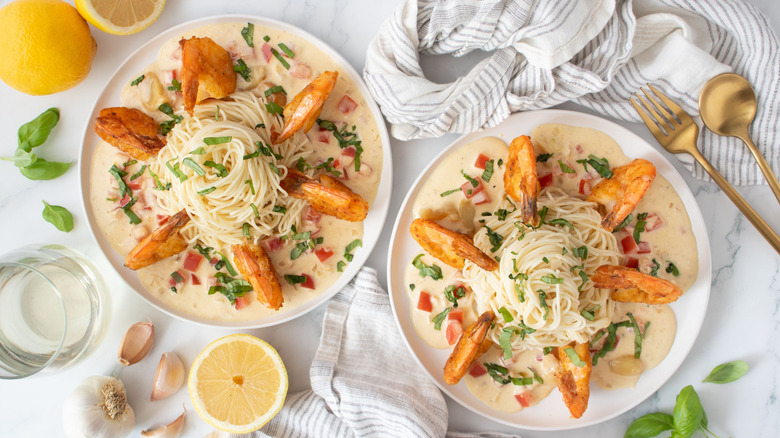
It's hard to pin one single stand-out, super popular dish to The Cheesecake Factory (aside from the cheesecake itself, of course), largely because the chain is known for having such a massive, all-encompassing menu. One popular dish that stands out from the rest on The Cheesecake Factory's menu is the shrimp scampi, a positively decked-out pasta dish featuring angel hair pasta, a decadent garlicky cream sauce, and some giant shrimp.
Recipe developer Patterson Watkins took the chain's "bigger is better" approach with her copycat Cheesecake Factory shrimp scampi recipe, and she's the first to admit that the restaurant "was on the ball with this creamy, shrimpy, greatly garlicky creation." Watkins goes on to describe the dish as "a souped-up scampi with enhanced flavor and presentation. The bistro-style skillet-crisped shrimp adds some much-needed texture and depth of flavor. The Parmesan, paprika, and smidge of black pepper coating is robustly savory and counterbalances the sweeter notes from the roasted garlic and cream," she describes, also noting a slight hint of umami that balances against the dish's more wine-forward and acidic flavor notes. All told, this is one impressive version of shrimp scampi, and it just might be even better than The Cheesecake Factory's version.
Gather the ingredients for copycat Cheesecake Factory shrimp scampi
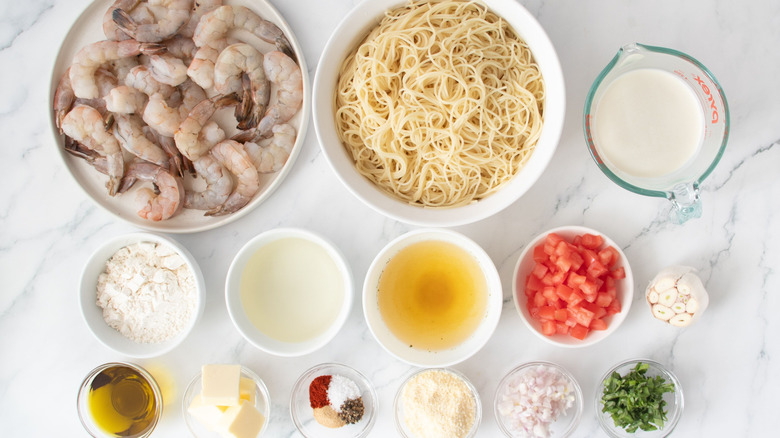
Garlic is an important ingredient in most shrimp scampi recipes, and especially in this copycat Cheesecake Factory version. This recipe specifically calls for roasted garlic, for which you'll need an entire bulb of garlic and olive oil. Next, you'll need large, peeled shrimp, along with flour, Parmesan, garlic powder, paprika, salt, and pepper to coat them in. You'll also need plenty more olive oil to cook the shrimp in, along with butter to saute a shallot in.
To continue building the scampi sauce, you'll need white wine for deglazing, chicken broth, heavy cream, and chopped fresh tomatoes. It wouldn't be shrimp scampi without angel hair pasta, and to garnish, you may want some fresh basil on hand.
Step 1: Preheat the oven
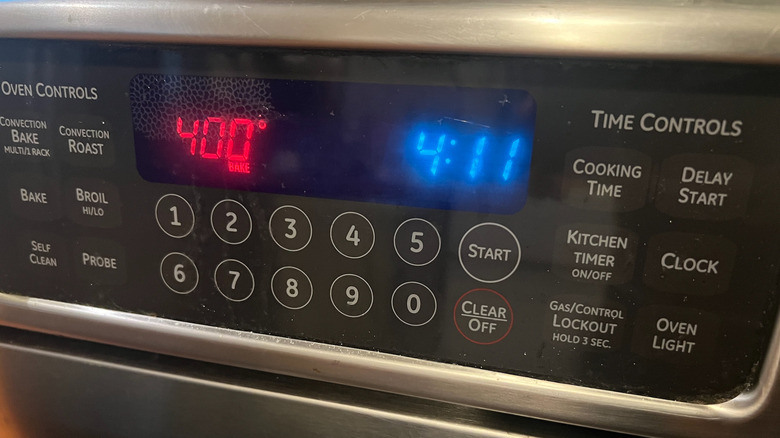
Preheat the oven to 400 F.
Step 2: Prep the garlic for roasting
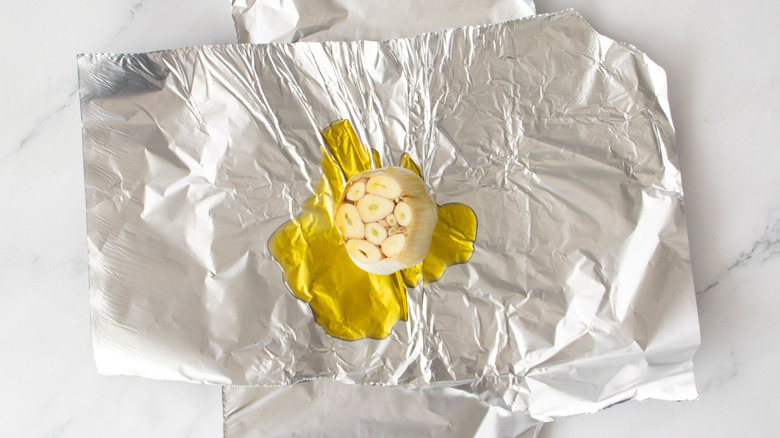
Place the garlic bulb in the center of a couple sheets of aluminum foil and drizzle it with olive oil.
Step 3: Wrap the garlic with foil
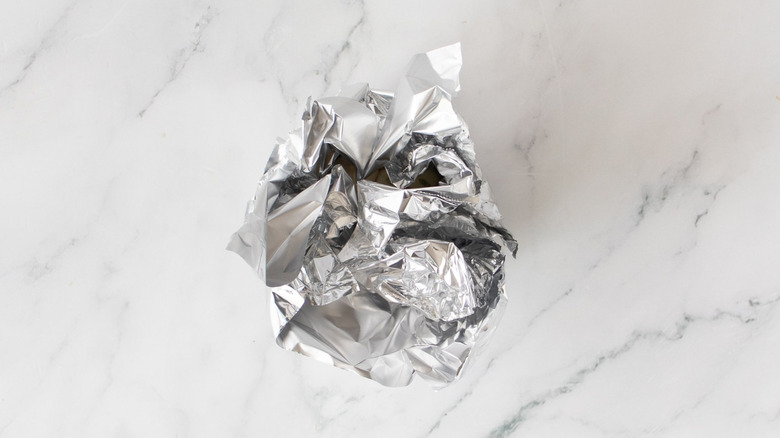
Loosely wrap the bulb in foil.
Step 4: Roast the garlic
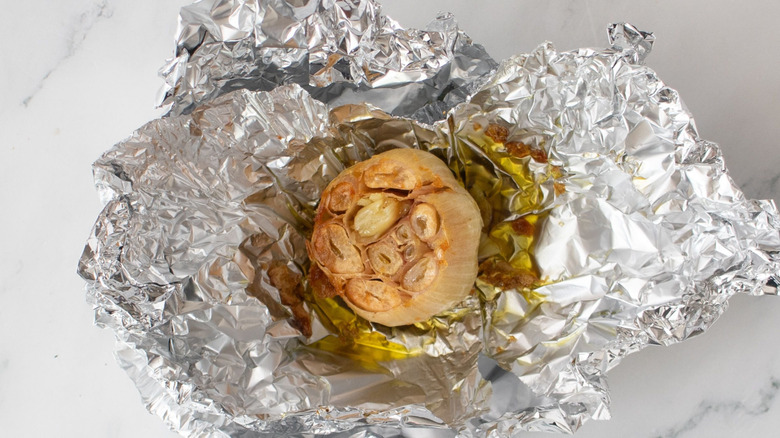
Place the garlic in the oven and roast it for 15 to 20 minutes or until the garlic is tender and golden. Remove it and set it aside to cool at room temperature.
Step 5: Begin making the shrimp coating
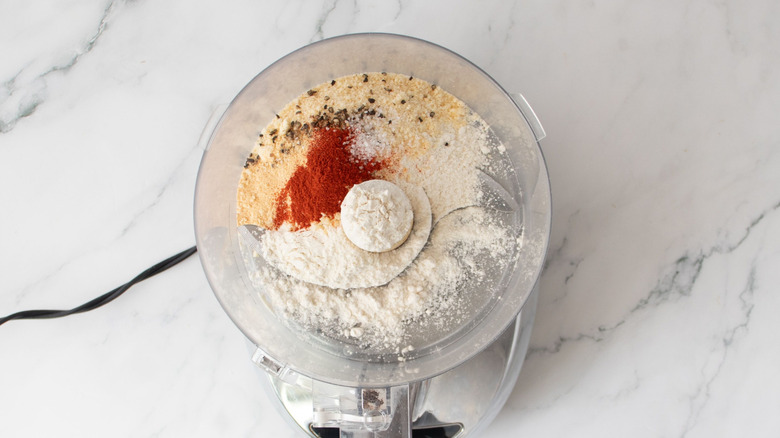
To make the shrimp, place the flour, Parmesan, garlic powder, paprika, salt, and pepper in the bowl of a food processor.
Step 6: Pulse to combine the coating
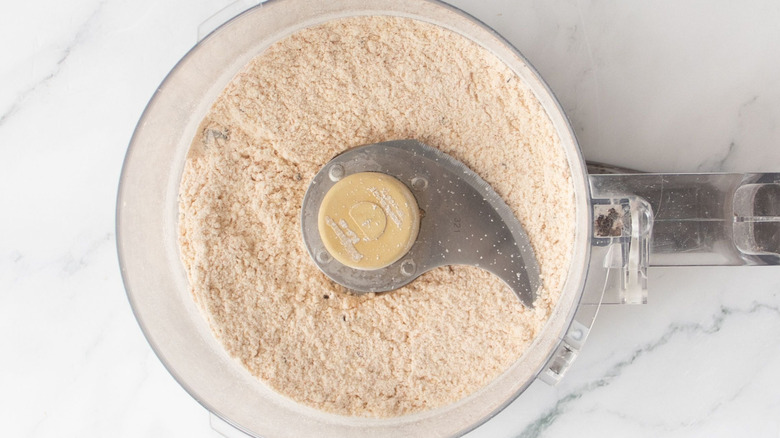
Pulse the mixture until fine and crumbly and transfer it to a large bowl.
Step 7: Press the coating onto the shrimp
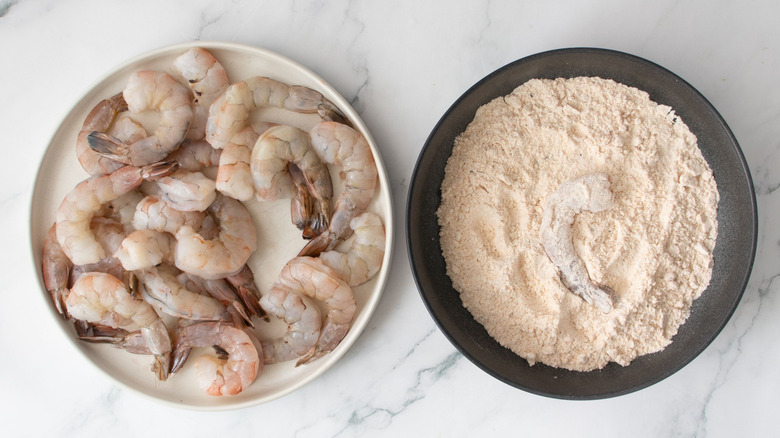
Dip the shrimp into the breading and, using your hands, press to adhere. Reserve 2 teaspoons of the breading mixture to use later.
Step 8: Heat the olive oil
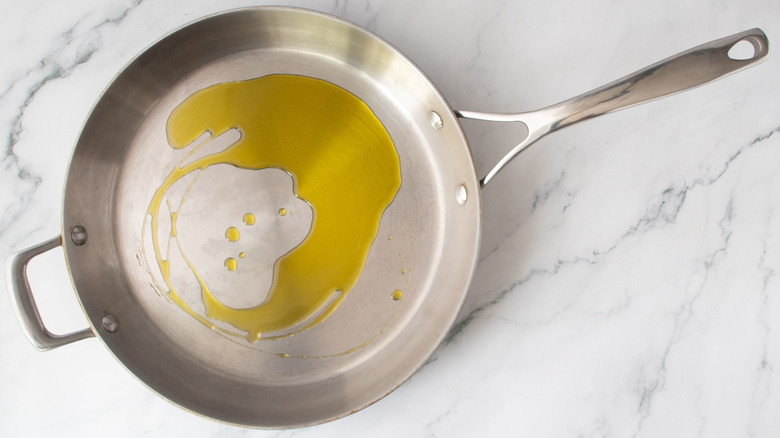
Heat the olive oil in a large skillet over medium-high heat.
Step 9: Cook the shrimp
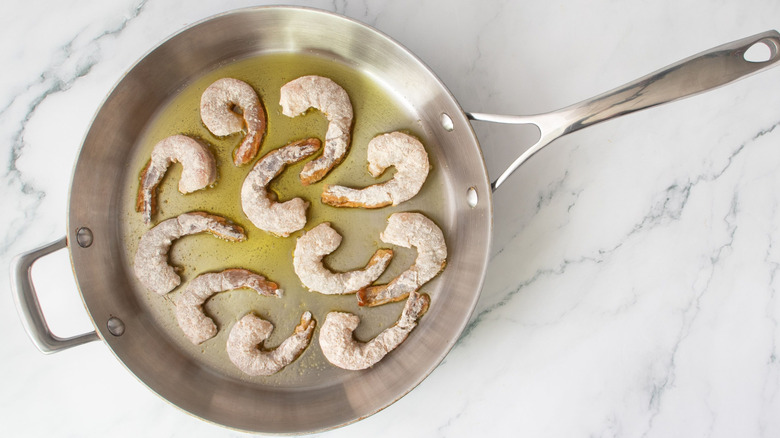
Once hot, add the shrimp, working in batches, and cook for 2 minutes per side or until the shrimp are cooked through and crisp.
Step 10: Drain the cooked shrimp
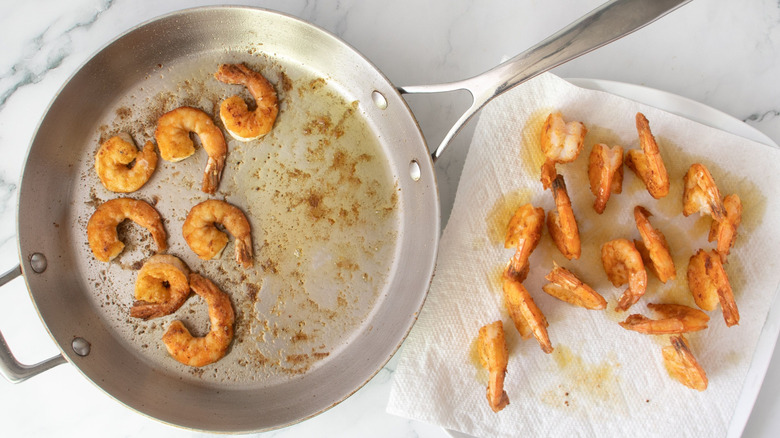
Set the shrimp aside on a paper towel-lined plate or wire rack to drain.
Step 11: Melt butter in a skillet
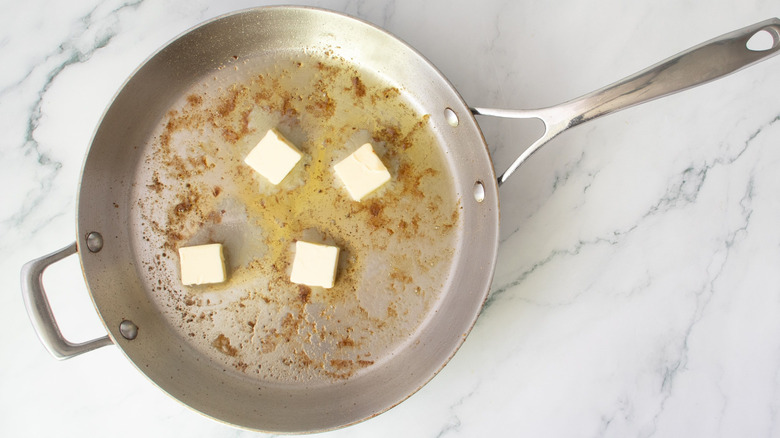
Reduce the heat to medium and add the butter to the skillet.
Step 12: Saute the shallot
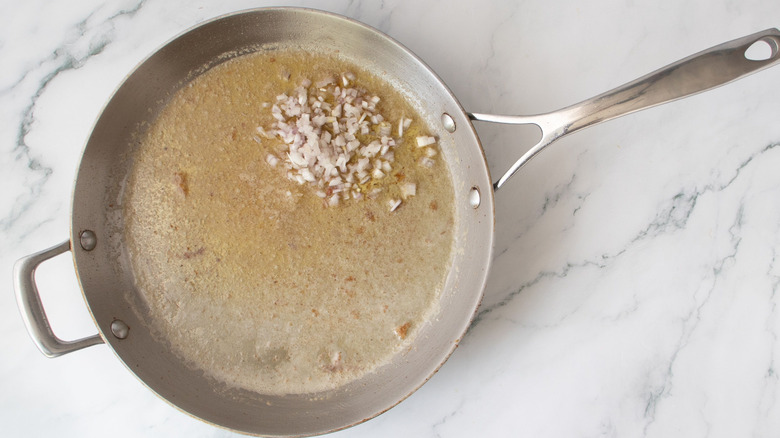
Once melted, add the shallot and saute until tender, about 2 minutes.
Step 13: Deglaze with wine
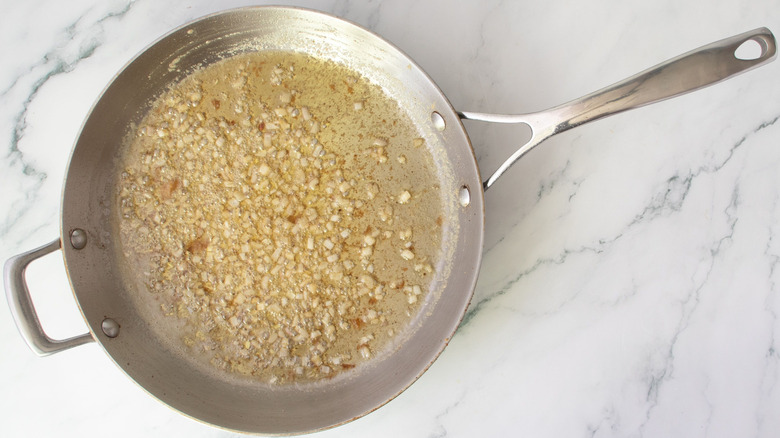
Deglaze the skillet with wine and bring it to a simmer. Simmer for 3 to 4 minutes or until the wine has reduced by half.
Step 14: Sprinkle in the reserved breading
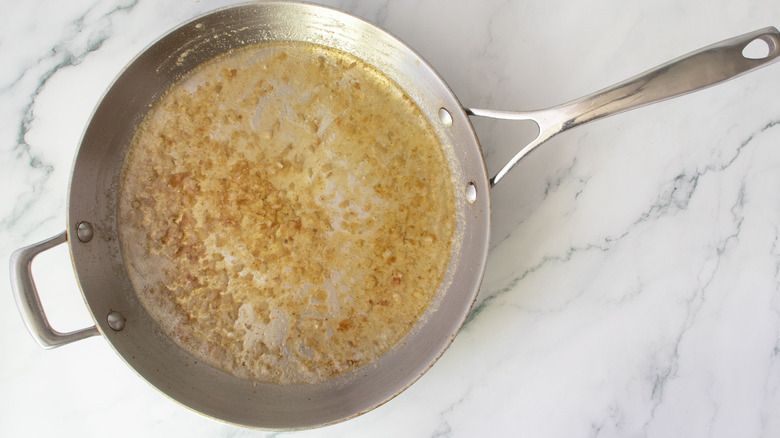
Sprinkle the skillet with the reserved breading mixture and whisk to combine.
Step 15: Whisk in broth and cream
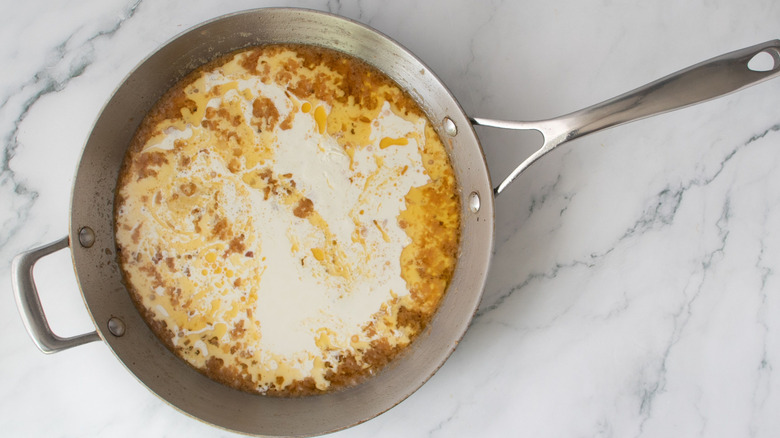
Add the broth and cream, whisk to combine, and return to a simmer. Cook for 5 minutes, whisking frequently.
Step 16: Remove the garlic cloves
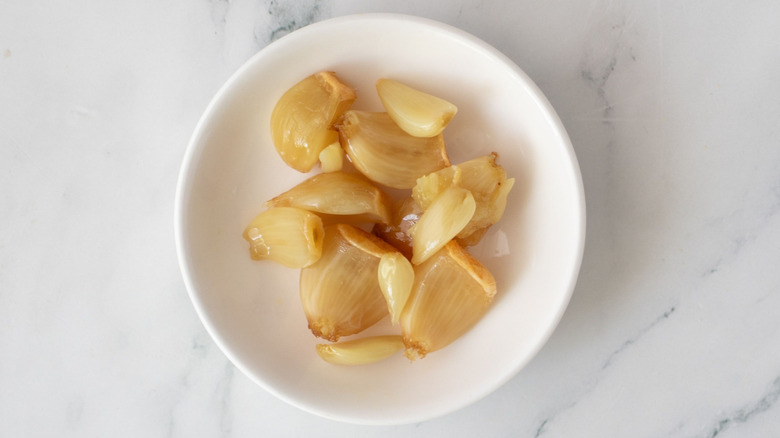
While the sauce is cooking, remove the roasted garlic cloves from the bulb.
Step 17: Add the tomatoes and garlic to the sauce
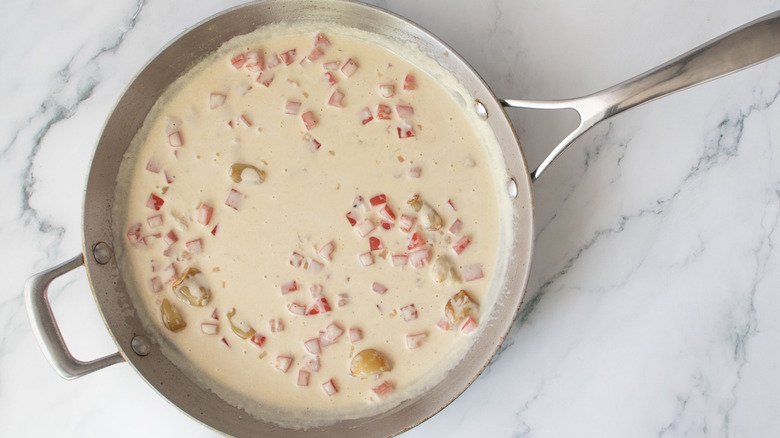
Add the diced tomatoes and roasted garlic cloves to the skillet, stir to combine, and cook for 1 minute more.
Step 18: Toss the pasta in some sauce
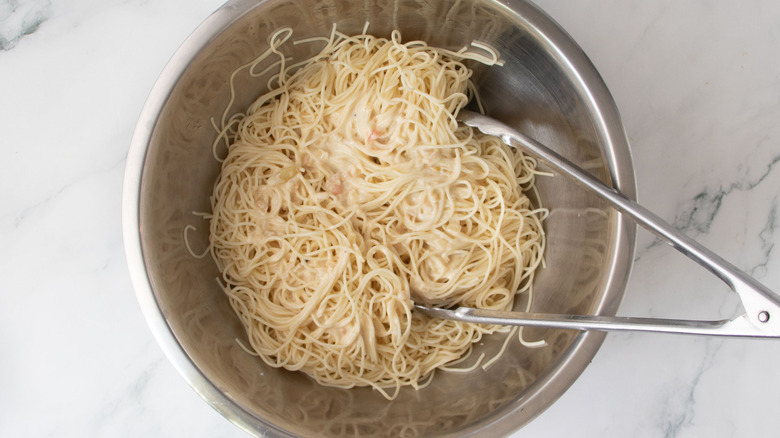
Place the cooked pasta in a large bowl and add ¼ cup of the sauce. Toss to coat.
Step 19: Portion the pasta onto plates
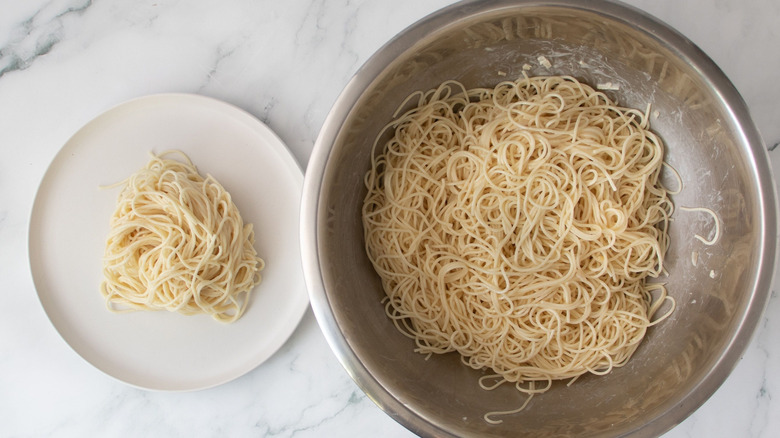
Divide the dressed pasta between plates or bowls, placing the pasta in the center of the plate.
Step 20: Arrange the shrimp
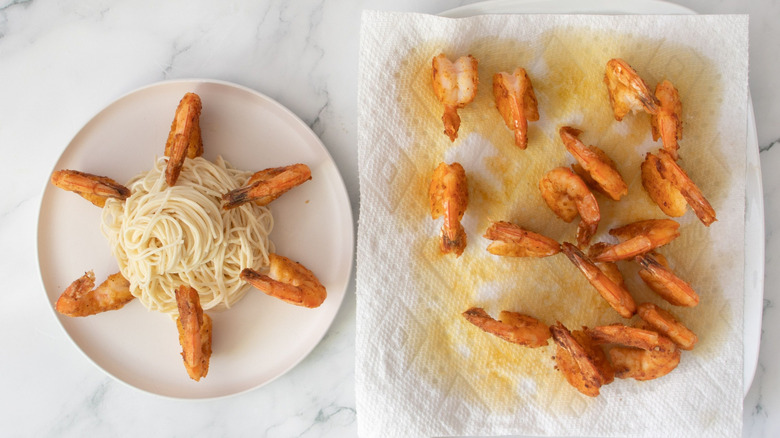
Arrange the shrimp around the pasta.
Step 21: Spoon the sauce over the shrimp
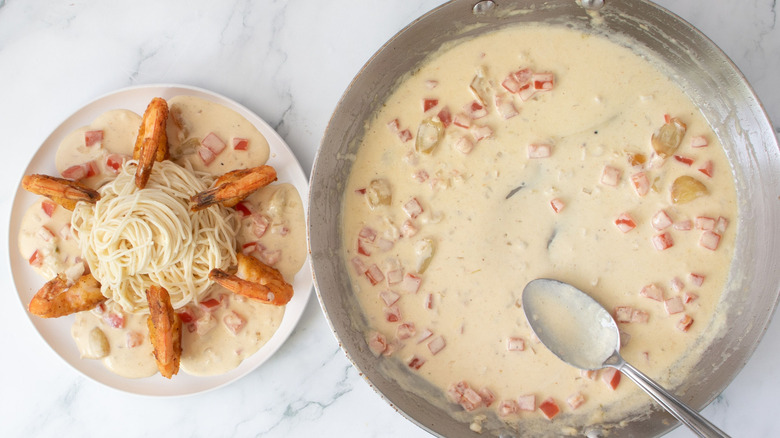
Generously spoon the sauce over and around the shrimp.
Step 22: Garnish the shrimp scampi with basil and serve
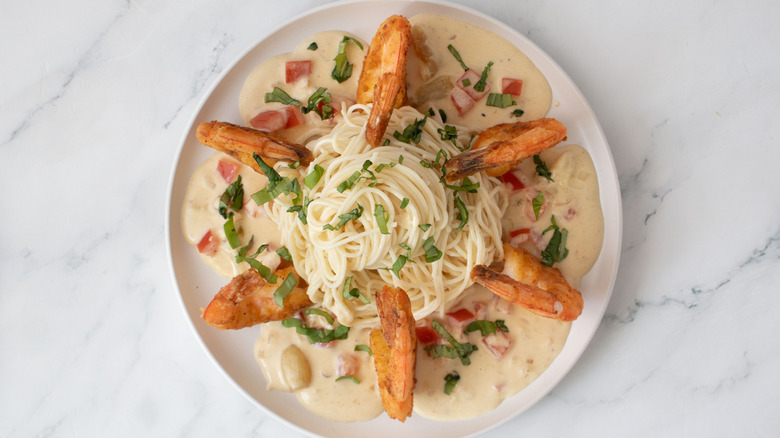
Garnish with basil before serving.
What pairs well with shrimp scampi?
Copycat Cheesecake Factory Shrimp Scampi Recipe
With Parmesan-coated shrimp in a creamy roasted-garlicky sauce over angel hair, our copycat Cheesecake Factory shrimp scampi might be better than the original.
Ingredients
- For the roasted garlic
- 1 bulb garlic, top removed
- 3 tablespoons olive oil
- For the shrimp
- ½ cup all-purpose flour
- ¼ cup shaker-style Parmesan cheese
- ½ teaspoon garlic powder
- ½ teaspoon sweet paprika
- ½ teaspoon salt
- ¼ teaspoon black pepper
- 1 ½ pounds large raw shrimp, peeled
- 4 tablespoons olive oil
- 4 tablespoons salted butter
- 1 shallot, peeled and minced
- ½ cup white wine
- ½ cup chicken broth
- 1 cup heavy cream
- ½ cup diced fresh tomatoes
- 2 tablespoons chopped fresh basil
- 1 pound cooked angel hair pasta
Directions
- Preheat the oven to 400 F.
- Place the garlic bulb in the center of a couple sheets of aluminum foil and drizzle it with olive oil.
- Loosely wrap the bulb in foil.
- Place the garlic in the oven and roast it for 15 to 20 minutes or until the garlic is tender and golden. Remove it and set it aside to cool at room temperature.
- To make the shrimp, place the flour, Parmesan, garlic powder, paprika, salt, and pepper in the bowl of a food processor.
- Pulse the mixture until fine and crumbly and transfer it to a large bowl.
- Dip the shrimp into the breading and, using your hands, press to adhere. Reserve 2 teaspoons of the breading mixture to use later.
- Heat the olive oil in a large skillet over medium-high heat.
- Once hot, add the shrimp, working in batches, and cook for 2 minutes per side or until the shrimp are cooked through and crisp.
- Set the shrimp aside on a paper towel-lined plate or wire rack to drain.
- Reduce the heat to medium and add the butter to the skillet.
- Once melted, add the shallot and saute until tender, about 2 minutes.
- Deglaze the skillet with wine and bring it to a simmer. Simmer for 3 to 4 minutes or until the wine has reduced by half.
- Sprinkle the skillet with the reserved breading mixture and whisk to combine.
- Add the broth and cream, whisk to combine, and return to a simmer. Cook for 5 minutes, whisking frequently.
- While the sauce is cooking, remove the roasted garlic cloves from the bulb.
- Add the diced tomatoes and roasted garlic cloves to the skillet, stir to combine, and cook for 1 minute more.
- Place the cooked pasta in a large bowl and add ¼ cup of the sauce. Toss to coat.
- Divide the dressed pasta between plates or bowls, placing the pasta in the center of the plate.
- Arrange the shrimp around the pasta.
- Generously spoon the sauce over and around the shrimp.
- Garnish with basil before serving.
Nutrition
| Calories per Serving | 1,000 |
| Total Fat | 61.5 g |
| Saturated Fat | 26.1 g |
| Trans Fat | 1.2 g |
| Cholesterol | 378.8 mg |
| Total Carbohydrates | 58.7 g |
| Dietary Fiber | 3.6 g |
| Total Sugars | 5.0 g |
| Sodium | 762.1 mg |
| Protein | 49.8 g |

What are tips for sourcing and prepping big shrimp?
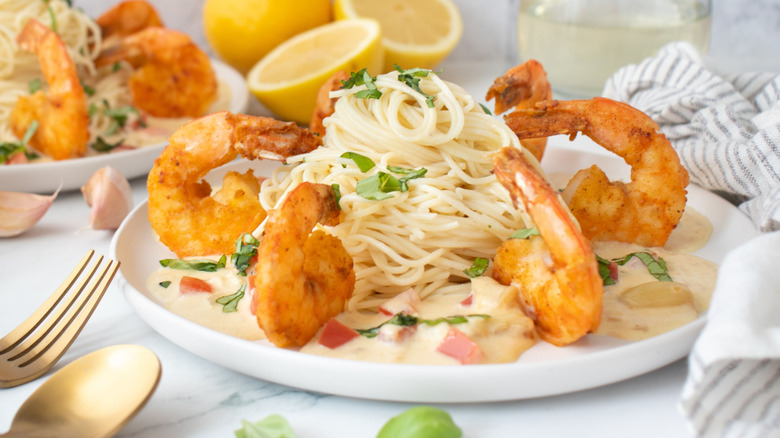
This recipe calls for using large shrimp, and more specifically, Watkins recommends looking for colossal or jumbo shrimp. She also notes that both fresh or frozen shrimp will work here, and there's a good chance that no matter the temperature your shrimp start at, they'll already come deveined. If not, it's pretty easy to clean shrimp, so start by gently peeling each of the shrimp (while keeping those tails intact) and then slide a paring knife down the back of each one. "No need to cut deeply," Watkins advises. "You'll see a dark line indicating the 'vein'. Remove it and you're good to go." Also, if you are working with frozen shrimp, make sure to fully thaw and drain them before proceeding with the recipe.
So, we've covered prepping the big ol' shrimp, but why do they even need to be so big to begin with? For starters, they do look pretty good once plated, but there's a deeper culinary purpose at play here. "We need the added surface area for the crispy coating to work," Watkins explains. "Use smaller and you'll end up overcooking the shrimp before the coating has the opportunity to crisp and set." Plus, smaller shrimp simply won't look as impressive on the plate, nor will they live up to that "bigger is better" Cheesecake Factory standard.
How can I customize this shrimp scampi?
Though this copycat shrimp scampi recipe is already packing in quite a bit of flavor to begin with, from the roasted garlic to the creamy sauce to the fresh basil garnish, there's plenty of room for additions. Watkins specifically thinks asparagus or spinach would make welcome additions to this dish. "Either steam separately or saute it after cooking the shrimp and set aside to add during plating," Watkins advises for the asparagus route. "For spinach, drain it really well before plating."
It's pretty common for shrimp scampi recipes to feature lemon juice, and if you really enjoy that citrusy note, you can certainly add it to this scampi version. If you choose to do so, reduce the amount of white wine you deglaze the pan with by half and sub in lemon juice instead (add it at the same time you add the wine). Cajun seasoning is another bold addition that would amp up the smoky, spicy level of the dish with minimal effort. If you add Cajun seasoning, make sure to reduce the amount of salt you add to the dish, since store-bought blends tend to be very salt-heavy.
Finally, Watkins opted for angel hair pasta to stay true to the Cheesecake Factory version. That said, any long, twirly pasta will work. More specifically, Watkins recommends linguine, spaghetti, bucatini, fettuccine, or pappardelle.